By George Kebaso
For millions of Kenyan children, climate change is not a distant environmental threat or a debate unfolding in international conference halls. It is a growing disruption to the everyday essentials that sustain their lives, including; clean drinking water, nutritious food, access to healthcare and the opportunity to attend school.
This comes as Kenya joins 79 other countries in committing to put children at the centre of climate action.
However, according to health and environmental leadees, the real test will be whether promises translate into stronger healthcare, safe water, food security and protection for vulnerable communities.
“When drought strikes, families struggle to secure food and water,” a joint Ministry of Environment and United Nations Children Fund (UNICEF) leadership in Kenya acknowledges.
When floods sweep through communities, children face displacement, the two institutions note, emphasising that this further disrupts education, heightens health risks and the loss of access to essential services.
The scale of the challenge is significant that about 12 million of Kenya’s 24.6 million children, are facing moderate to very high risks from climate change and disasters.
Joint data released by the Ministry of Environment and UNICEF shows that out of the total number of minors, 2.4 million of them, are living in seven counties classified as having high climate vulnerability.
“The figures expose a growing public-health and child-protection challenge that places climate change firmly within the country’s development and healthcare agenda,” the statement reads.
Against this backdrop, Kenya has signed the Intergovernmental Declaration on Children, Youth and Climate Action, becoming the 80th country to endorse the global commitment to place children’s rights, needs and voices at the centre of climate policies and interventions.
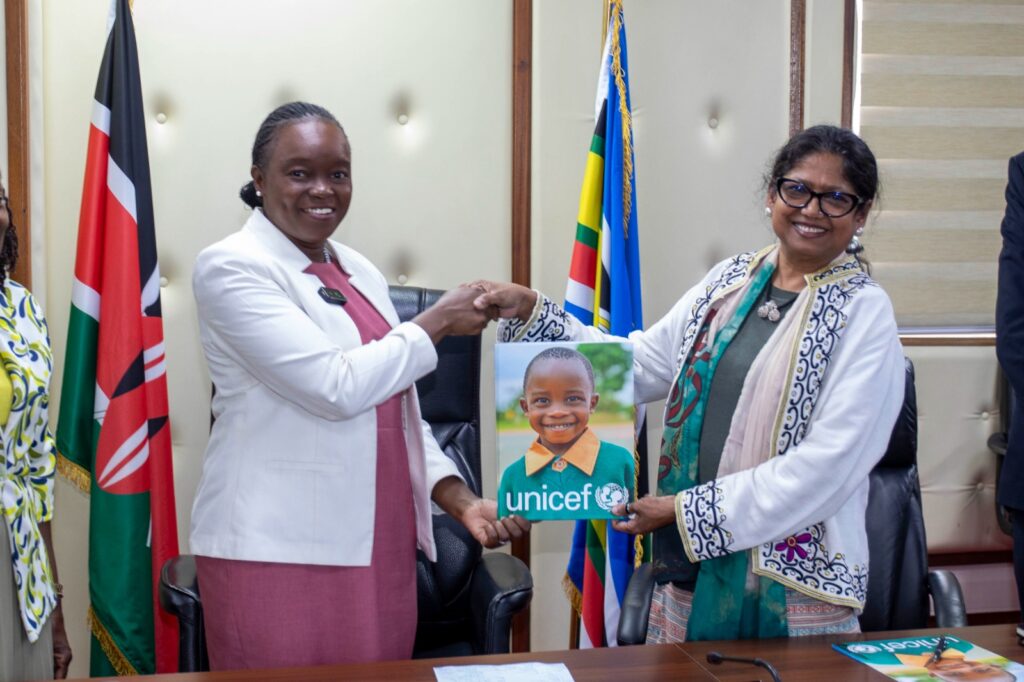
The declaration was signed on November 5, 2026, by Environment, Climate Change and Forestry Cabinet Secretary Dr Deborah Mlongo Barasa, on behalf of the Kenyan Government, in the presence of UNICEF Representative to Kenya Dr Shaheen Nilofer.
But beyond the diplomatic significance of joining 79 other countries, the commitment seeks to protect the millions of children whose health, education, nutrition and wellbeing are increasingly exposed to climate-related shocks.
“The consequences of climate change extend well beyond environmental degradation,” notes Dr. Barasa.
For children, disrupted access to safe water and sanitation can increase exposure to disease, while interruptions to food supplies threaten nutrition and healthy development.
Floods and droughts, the CS says can also undermine access to healthcare, particularly in vulnerable communities where essential services are already difficult to reach.
“Education is equally affected when disasters disrupt schooling, displace families or damage the infrastructure children depend on,” Dr. Barasa says.
UNICEF says children bear a disproportionate share of these consequences, including threats to their health and nutrition, displacement, disrupted education and reduced access to safe water and other essential services.
“Children bear the brunt of climate change through disrupted education, threats to their health and nutrition, displacement, and reduced access to safe water and other child-critical services,” said Dr Nilofer.
She said Kenya’s decision to sign the declaration affirmed the need to make children’s rights, needs and voices central to climate policy, financing and action.
Girls and children with disabilities, Dr Nilofer says, face some of the greatest risks, according to the joint statement, underscoring the need for climate interventions that recognise the different vulnerabilities experienced by children.
“This means climate resilience cannot be measured solely by the number of infrastructure projects completed or the amount of money committed to environmental programmes.
“It must also be assessed by whether children can continue accessing healthcare, safe water, adequate nutrition, education and protection when disasters occur,” she reiterated.
Kenya’s signing builds on existing national commitments, including the National Climate Change Action Plan 2023–2027, which has a dedicated priority area focusing on children and young people.
The country has also incorporated climate commitments into its Nationally Determined Contribution under the Paris Agreement.
It’s understood that the new declaration provides an additional framework for strengthening the connection between climate policy and children’s rights.
Under the commitment, Kenya will advance child-centred climate action through implementation of existing national climate policies, improved planning and targeted investments.
The government also intends to track progress using child-focused climate-risk evidence and indicators.
These will cover the resilience of essential services for children, climate financing directed towards those services and the meaningful participation of children and young people in climate policy processes.
Dr. Barasa said the government was committed to translating policy into practical interventions by investing in climate-resilient essential services, mobilising accessible and inclusive climate finance and strengthening vulnerable communities.
” We recognize children and young people not merely as beneficiaries, but as active partners in shaping climate solutions and building a just, inclusive and climate-resilient future for all,” she said.
Children and young people are often among those most affected by climate decisions, yet their experiences and priorities may not always be reflected in the policies and investments intended to protect them.
The declaration therefore calls on governments to give young people meaningful opportunities to participate in climate decision-making.
Kenya’s commitment comes at a critical moment as world leaders gather for the 31st United Nations Climate Change Conference, COP31, scheduled to take place in Antalya, Türkiye, from November 9 to 20, 2026.
Kenya says it will use the conference to advocate for children’s rights, needs and voices to be placed at the centre of climate policy, financing and action, while urging international partners to support the implementation of these commitments.
.
For Kenya, the challenge is to demonstrate how climate financing and national planning will translate into stronger essential services for children, particularly those living in highly vulnerable communities.
The 12 million children facing moderate to very high climate risks represent more than a statistic in a government press release. They represent millions of young lives whose opportunities to grow, learn and remain healthy may be shaped by decisions being made today.
At COP31, Kenya will have an opportunity to push for greater international support. But the country must also demonstrate how its own national commitments will be financed, implemented and measured.
The declaration is understood to offer an important policy foundation.
Its real value, however, will be judged by whether it changes the circumstances of children exposed to droughts, floods, disrupted healthcare, unsafe water and food insecurity.
For the millions of children at risk, climate action cannot remain a promise made at an international conference. It must become protection they can experience in their homes, schools, health facilities and communities.