
By Milliam Murigi
Africa risks missing out on the economic benefits of its scientific research if universities and research institutions continue producing knowledge without developing mechanisms to turn discoveries into marketable solutions
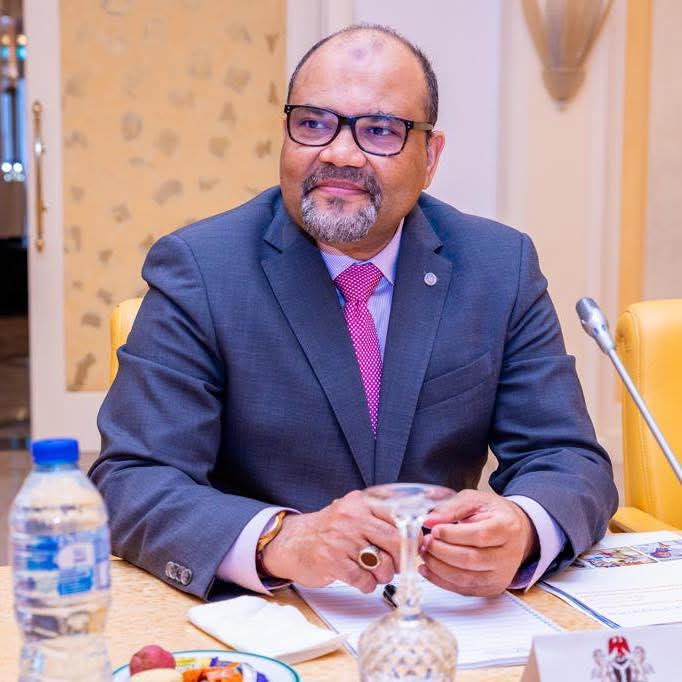
This has been revealed by Kenya’s Principal Secretary for Science, Research and Innovation Prof. Shaukat Abdulrazak during the ongoing 2026 Africa Health and Development Annual Research Symposium.
According to him, the continent must shift from prioritising research publications to building innovation systems that translate scientific findings into technologies, enterprises and employment opportunities.
“Research must not be an end in itself. Its true value lies in how it improves lives, informs policies, strengthens institutions and contributes sustainably to development,” says Prof. Abdulrazak.
He challenges African governments, universities and the private sector to work together in closing the gap between research and commercialisation, arguing that the value of scientific investment should ultimately be measured by its contribution to society.
He says that Africa that must move beyond being a consumer of knowledge and technology developed elsewhere and strengthen its capacity to generate, own, govern and utilise its own knowledge.
The symposium is held under the theme Building African-Centred Data and Knowledge Systems: New Models, New Power.
According to Prof. Abdulrazak, achieving this transformation would require strengthening the entire innovation value chain, from basic and applied research to prototyping, technology transfer, intellectual property protection, incubation and market adoption.
He calls on universities and research institutions to become centres of innovation, enterprise creation and problem-solving, rather than limiting their work to academic research.
The private sector, he says, should also become an active participant in setting research priorities, financing research and taking innovations to market.
The government, he adds, has a responsibility to establish an enabling environment through appropriate policies, financing mechanisms, infrastructure and regulatory frameworks.
“Our mission must be to transform knowledge into solutions, solutions into enterprises, and enterprises into jobs and prosperity,” he says.
Beyond commercialisation, Prof. Abdulrazak calls for multidisciplinary approaches to research, saying the continent’s development challenges are too interconnected to be addressed by individual scientific disciplines or institutions.
He cited health as an example, noting that improving health outcomes requires collaboration among public health specialists, data scientists, engineers, economists, social scientists, technology developers and policymakers.
Similarly, addressing food insecurity requires bringing together agricultural science, biotechnology, climate research, nutrition, engineering and market systems.
” Universities, research institutions, government agencies, communities, development partners and businesses need to pool their expertise, share experiences and establish partnerships that extend beyond institutional and national boundaries,” he says.
However, he warns that these ambitions would remain difficult to achieve without sustained investment in research. He called for stronger financing partnerships involving governments, philanthropic foundations, universities, research institutions and the private sector, arguing that research funding should be considered a strategic investment rather than an expenditure.
Prof. Abdulrazak also acknowledged the contributions of the African Population and Health Research Center (APHRC), GSMA and Science for Africa Foundation in advancing African science, strengthening research capacity and connecting evidence to policy and practice.
He said such partnerships would be essential in building a stronger and more resilient African research ecosystem.
“The future of Africa must be informed by African knowledge, driven by African innovation and sustained through strategic partnership and collective leadership,” he said.
