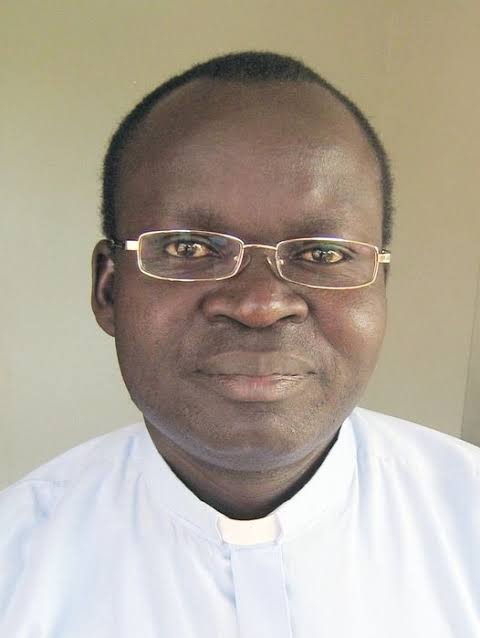
The Catholic Diocese of Maralal has unveiled sweeping reforms aimed at restoring financial discipline, strengthening accountability and reinforcing priestly conduct, with six priests suspended over alleged administrative and financial misconduct as the Church moves to address long-standing governance challenges.
Announcing the reforms during Holy Mass for the 15th Sunday in Ordinary Time at Saints Peter and Paul Parish in Maralal, the Bishop of the Catholic Diocese of Maralal, Rt. Rev. Hieronymus Emusugut Joya, said the measures were informed by the difficult financial and administrative situation he found when he assumed office nearly four years ago.
According to catholic-hierarchy.org, the Maralal diocese had a total of 37 priests in 2023, serving a Catholic population of 144,870. If that figure is still accurate, Joya has suspended roughly a sixth of his priests.
Reflecting on his three years and eight months in the Diocese, Bishop Joya said restoring financial stability had been one of his biggest priorities.
“When I arrived in the Diocese, I found many financial and administrative challenges that required urgent intervention,” he said. “I had to seek donations and grants so that we could restore stability and enable the Diocese to continue serving God’s people effectively.”
He recalled that in December 2022 he convened a meeting of all priests in the Diocese to chart a way forward after assessing the extent of the financial difficulties.
According to the Bishop, the clergy unanimously agreed that parishes and Church institutions would contribute towards reducing the Diocese’s financial burden and rebuilding its financial health.
“We agreed that every parish and institution should support the Diocese financially so that together we could overcome the challenges we were facing,” he said, while acknowledging that “not everyone fully cooperated with these efforts.”
The Bishop defended repeated fundraising appeals that have attracted criticism from some quarters, saying every contribution received had been directed towards genuine institutional needs.
“Some people accuse me of always asking for money,” Bishop Joya said. “But the money and donations received have been used to pay debts, conduct audits, restructure diocesan systems, strengthen administration and support development projects in our parishes and institutions.”
Church administrators say dioceses often rely on contributions from parishes, donors and development partners to finance pastoral programmes, education, healthcare and social outreach. Financial accountability is therefore considered central to protecting Church resources and maintaining the confidence of the faithful.
Bishop Joya stressed that decisions affecting members of the clergy are never made arbitrarily, saying every disciplinary process is guided by evidence and Church law.
“I do not accuse any priest without credible evidence,” he said. “After receiving reliable information regarding misconduct by some priests, I found it necessary to act in accordance with the Code of Canon Law in order to safeguard the integrity of the priesthood and the proper stewardship of Church property.”
The Code of Canon Law provides the legal framework governing the administration, discipline and pastoral life of the Catholic Church. It also outlines procedures for investigating alleged misconduct while safeguarding the rights of those involved.
As part of the reforms, Bishop Joya announced new regulations that all priests serving in the Diocese must observe with immediate effect.
Under the new rules, priests must be in their presbyteries before 7 p.m. for evening prayers unless they have obtained permission from the Bishop. They are also prohibited from spending the night away from their assigned residences without authorization.
The directive further bars lay persons from staying overnight in priests’ residences or religious convents without the Bishop’s approval.
The Bishop also introduced strict regulations on alcohol consumption.
Priests are prohibited from drinking alcohol in bars or within parish and institutional residences and must not celebrate Mass or participate in any liturgical function while intoxicated.
Church leaders have increasingly emphasized that clergy are expected to uphold conduct that reflects the dignity of their office and inspires confidence among the faithful.
Bishop Joya also prohibited priests from engaging in private business ventures except activities directly related to the Church.
“No priest should own or engage in private business except activities related to the mission of the Church,” he directed.
He further warned against acquiring property through relatives or other individuals without being able to account for its legitimate source.
“Priests are also prohibited from owning or acquiring property in the names of relatives without being able to explain its legitimate source,” he said.
The Bishop reiterated that priests must faithfully observe celibacy and avoid relationships that contradict their vocation.
He also issued directives on the use of Church assets, ordering that diocesan vehicles and motorcycles should only be driven by officially assigned personnel, with maintenance costs borne by the respective parish, institution or Church office using them.
To strengthen financial oversight, Bishop Joya directed parish finance councils and institutional finance committees to perform their responsibilities diligently.
“The finances of parishes, institutions, offices and Church groups must be managed transparently and responsibly,” he said. “Finance councils and committees should be allowed to perform their duties effectively, while parish councils and boards must ensure annual budgets and audits are conducted.”
He further instructed Church leaders and accounting officers to comply fully with both Canon Law and government financial regulations.
As part of the disciplinary measures, Bishop Joya suspended six priests pending the determination of cases involving alleged abuse of ecclesiastical authority, negligence in administration and the mismanagement of Church temporal goods.
The suspended priests are Rev. Fr. Paul Maina, Rev. Fr. Peter Musau, Rev. Fr. Stephen Lekasuyan, Rev. Fr. Peter Nderitu, Rev. Fr. Christopher Letikirich and Rev. Fr. John Dida.
The Bishop did not provide specific details of the allegations facing each priest, saying only that the cases would proceed in accordance with established Canon Law procedures.
He appealed to the faithful to refrain from speculation and instead support the affected priests through prayer.
“Pray for the suspended priests as they begin a period of deep reflection on their priestly vocation and service to the Church,” he urged.
Bishop Joya also called on Christians to continue praying for the Diocese and its leadership as it seeks to overcome its current financial and administrative challenges.
Expressing optimism about the future, he said the reforms are intended to strengthen—not weaken—the Church.
“Let us continue praying for our Diocese and for all those entrusted with leadership so that together we may build a stronger Church founded on accountability, integrity and faithful service to God’s people,” he said.