
African governments, Kenya included have been told the phrase “Harnessing the continent’s demographic dividend” is long overdue.
Instead, they are being challenged to rethink – as a matter of urgency – how to utilize the bulging market-ready youth population to accelerate the continent’s transformation ambition, which is believed to be more than ready for deployment.
However, this cannot happen if governments fail to reorganize institutional operations, design and implement working policies.
The African Union Development Agency–NEPAD (AUDA-NEPAD) leadership feels that the continent is at an extraordinary demographic position to achieve its transformational desire with 60 per cent of the population under the age of 25, entering the labour market each year.
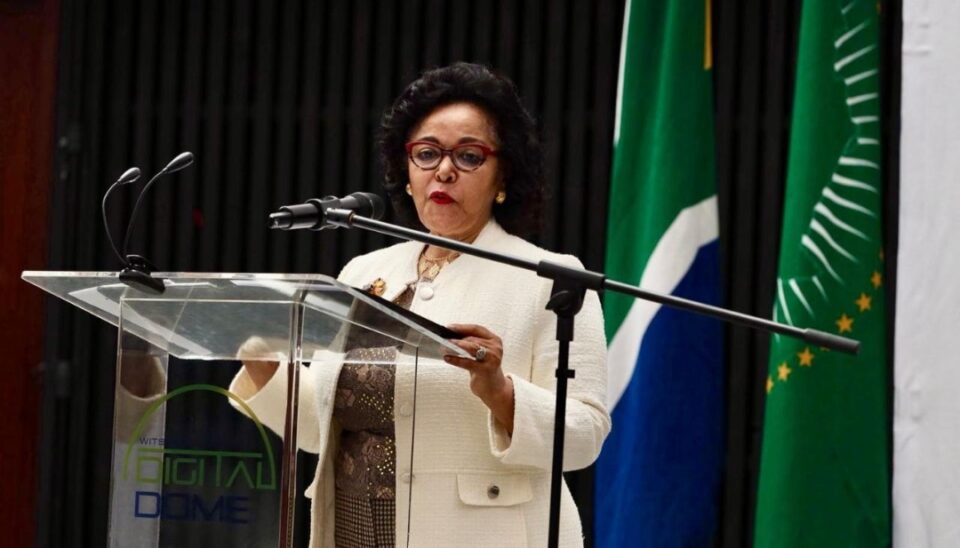
“This demographic dividend is a major opportunity for growth, but it heightens the urgency for effective policies, strong institutions, and leadership that can unlock our economic potential,” AUDA-NEPAD Chief Executive, Nardos Bekele-Thomas told a gathering in Johannesburg, South Africa on Monday evening during the launch of an Executive Management Programme on Public Sector Innovation and Transformation for Sustainable Development.
The launch which saw the AUDA-NEPAD pen a deal with the Wits School of Governance, paved the way for a week-long intensive initiative – bringing together some of Africa’s most senior public servants, diplomats, and policymakers. The programme is aimed at accelerating institutional transformation with major ingredients to deliver on Agenda 2063, the continent’s blueprint and master plan for transforming Africa into the global powerhouse of the future.
Data shows that more than 10 million young Africans below the age of 25 enter the labour market annually. It is projected the continent will contribute a share of nearly one quarter of the world’s working-age population by 2050.
“From rapid technological change and shifting geopolitics to climate pressures and evolving global economic systems, governments must rethink how institutions operate and how policies are designed and implemented,” she told participants, emphasizing that for Africa, these shifts bring challenges that must be confronted by the right human capacity and opportunities that can be utilized to realize this dream.
In a continent where the ambition for transformation has long outpaced the capacity to deliver it, Bekele-Thomas believes that the new programme – whose singular aim is to close that gap – is more than just a ceremonial beginning, but a decisive investment in the continent’s most critical and often under-resourced asset: capable, forward-looking public institutions.
Bekele-Thomas noted that the programme which sits within AUDA-NEPAD’s broader Energize Africa initiative, comes at a moment of heightened difficulties for African governments.
“Rapid technological change, shifting geopolitical alignments, the accelerating consequences of climate change, and a reconfiguring global economy are placing unprecedented demands on public institutions,” she said., noting that the launch, was direct about what this moment requires.
The programme is designed to strengthen public sector leadership and institutional performance across the continent. In articulating the rationale for the programme, Bekele-Thomas diagnosed Africa’s development challenge, noting that the problem is not the quality of the continent’s aspirations, but the gap between those aspirations and their implementation.
“The real challenge lies in implementation. Development frameworks must move beyond declarations to deliver measurable improvements in citizens’ lives,” she said, arguing that the successful realisation of Agenda 2063 depends on institutions that translate ambition into tangible results.
Bekele-Thomas further argued that institutions do not transform themselves, but change requires leadership, skills, and new ways of thinking.
Over the course of the week, participants will engage with leading scholars, practitioners, and policy experts on a curriculum that reflects the breadth of Africa’s development agenda. Topics include global health systems, public sector reform, development financing, institutional development, and the transformative potential of digital technologies and artificial intelligence.
World Bank statistics indicate that the digital economy could add over 180 billion US dollars to Africa’s GDP, reinforcing the trust that the digital dimension of the programme is particularly timely.
Harnessing that potential, however, requires more than connectivity and demands that institutions with the agility to adapt, and leadership capable of designing responsible policy frameworks that ensure new technologies serve inclusive and sustainable development.
The programme is also explicitly designed as a space for peer exchange, with Bekele-Thomas highlighting the value of bringing senior leaders together across national boundaries to reflect, share experiences, and build the relationships that underpin effective collaboration across the AU system.
“In our continent, we have no shortage of talent. We have no shortage of ambition,” she added.
The partnership with the Wits School of Governance brings academic accuracy and institutional credibility to the programme.
The programme also received the endorsement of the South African government, with acknowledgement extended to Minister Maropene Ramokgopa for her leadership on governance and public sector performance.
For Wits School of Governance, the collaboration represents an extension of its continental footprint and an affirmation of the university’s role in shaping the policy and governance landscape of the African Union. For AUDA-NEPAD, it marks a deepening of its investment in human capital as a driver of institutional transformation.
The ultimate benchmark against which this programme will be measured is Agenda 2063 — the African Union’s fifty-year blueprint for the continent’s structural transformation.
“Together, let us strengthen leadership, build resilient institutions, and advance governance systems that drive Africa’s transformation and deliver on Agenda 2063: The Africa We Want,” Bekele-Thomas concluded.
Locally, Kenya is actively delivering on Agenda 2063 through deep integration of the African Union’s 50-year blueprint into its national development strategies, with data showing that the country has achieved a 61 percent rating in the implementation progress as of late 2023.
Kenya aligns its Vision 2030 and the Fourth Medium Term Plan (MTP IV 2023-2027) with Agenda 2063 to drive sustainable development, focusing on industrialization, climate resilience, and economic integration
AUDA-NEPAD, as the continent’s premier development agency, occupies a unique position in this regard. Its mandate is to serve as the bridge between continental policy and practical implementation — working with Member States, Regional Economic Communities, and development partners to convert strategies into programmes, investments, and reforms. The Executive Management Programme is a direct expression of that mandate.
