
By JANE WAITHIRA
Democratic Party (DP) leader Justin Muturi has urged the Independent Electoral and Boundaries Commission (IEBC) to make adequate preparations for the August 2027 General Election to ensure the country gets a free, credible and verifiable poll.
Muturi said the electoral commission must ensure all systems are tested and fully operational before the election to prevent disputes and controversies that have characterised previous polls.
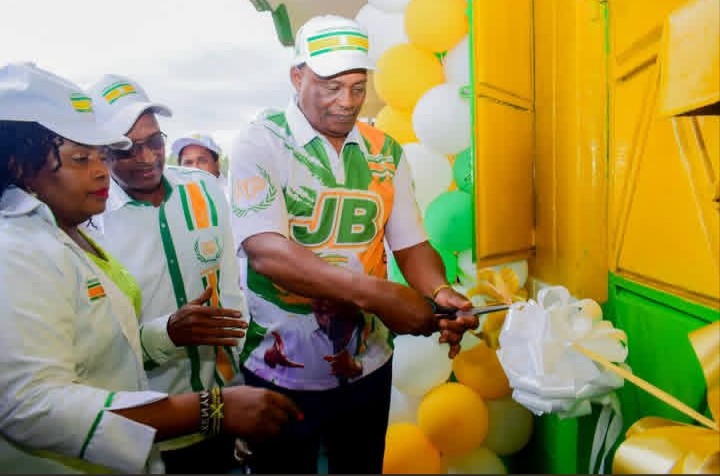
Speaking during a tour of Murang’a, the former Cabinet Secretary said Kenya could not afford another disputed election that could trigger political instability, violence and loss of lives.
“We want a free, credible and verifiable election, one that if the courts order a recount, the outcome will be the same,” Muturi said.
He singled out the IEBC’s procurement of a new service provider for the transmission of election results, saying the process raised questions that needed to be addressed before the poll.
Muturi said the commission should consider engaging a local company capable of providing full access to its systems and data whenever required by the public or the courts.
“The IEBC advertised for a new service provider for the transmission of the results, but I feel it is about to repeat the same mistake it did last time,” he said.
He argued that greater transparency would be achieved if the contracted service provider operated a system that could be accessed for scrutiny whenever necessary, particularly because it would handle sensitive electoral information.
In the 2022 General Election, the IEBC contracted Smartmatic International to provide the Kenya Integrated Elections Management System (KIEMS) and related electoral technology infrastructure used for voter identification and transmission of election results.
During subsequent legal proceedings, the Supreme Court allowed scrutiny of aspects of the electoral technology used in the presidential election. Smartmatic declined to provide unrestricted access to images of servers at the National Tallying Centre, citing intellectual property and copyright concerns over its software, although it said it was willing to provide data and logs relating to the Results Transmission System.
Muturi said the experience demonstrated the need for the IEBC to ensure that future contracts provide adequate safeguards for electoral transparency and access to information.
“In the last election, when the court ordered the opening of the server for that recount of the votes, the company declined, saying it would expose their system, and to date we still do not know the actual outcome of the poll,” he said.
“This time, we want a service provider who can provide all the details as and when required by the public or the courts,” he added.
Muturi also questioned the timing of the current procurement process, arguing that the exercise should have been undertaken earlier to allow sufficient time for testing and preparation ahead of the 2027 election.
He further claimed that a court petition challenging the procurement process could potentially delay the process and create circumstances in which the same service provider used previously could be retained.
“I suspect there is foul play behind the scenes so that everything goes as per the plan of some people who want the election conducted their way,” Muturi said.
He called on the IEBC to maintain transparency throughout the procurement process and ensure that all electoral technology is subjected to adequate testing and scrutiny before the election.
Muturi also urged the National Assembly to expedite consideration and implementation of the National Dialogue Committee (NADCO) report, which was prepared following the political tensions that accompanied the 2022 General Election.
NADCO was established through a bipartisan process in 2023 and made recommendations on electoral justice and other national issues.
Among its recommendations were the evaluation of the 2022 electoral process, restructuring and reconstitution of the IEBC, reforms to electoral laws and changes to timelines for resolving presidential election petitions.
Muturi questioned why implementation of the recommendations had not progressed despite the Senate approving the report.
He said the reforms were intended to strengthen the country’s electoral system and prevent disputes that could undermine future elections.
The DP leader also defended the United Opposition’s criticism of the Kenya Kwanza administration, saying opposition leaders had no reason to apologise for holding the government accountable.
He said the opposition would continue pointing out what it considers failures and shortcomings in government policies and programmes.
Muturi also condemned what he described as intimidation and violence against opposition leaders during political rallies, saying such actions were unacceptable in a constitutional democracy.
He said Kenyans had a right to freedom of expression, association and political participation, as guaranteed by the Constitution.
“People died while fighting for the independence of this country and we cannot afford lives due to political intolerance,” he said.
Muturi urged the government to remain vigilant in protecting citizens’ constitutional rights and safeguarding democratic space as political activity ahead of the 2027 General Election intensifies.
