
By GASTONE VALUSI
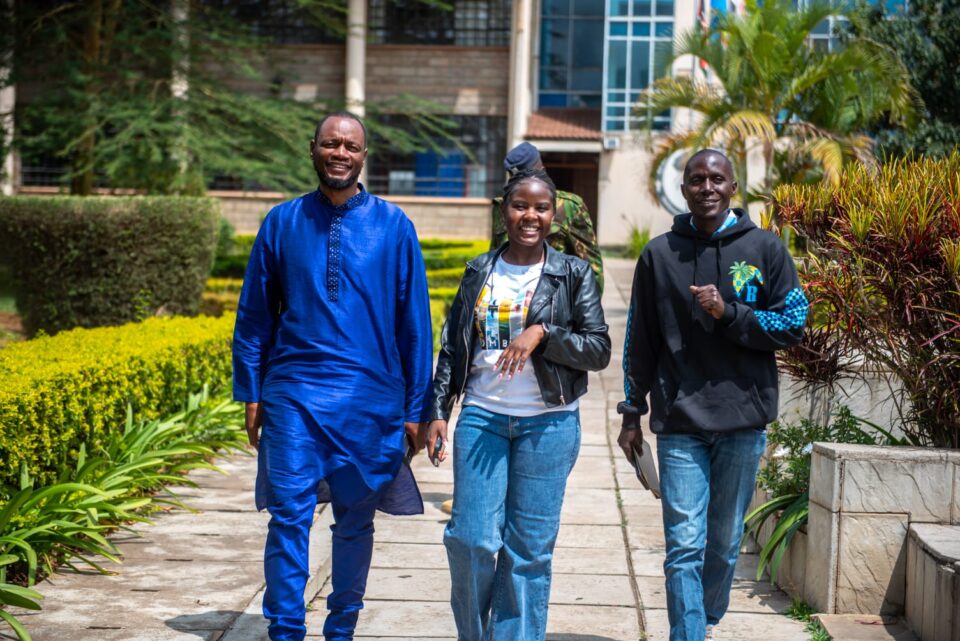
Four years after a Sh1,000 errand landed him behind bars, Mwendwa Kilatya, 34, walked through the gates of Africa Nazarene University (ANU) on Friday, carrying something he once believed he would never possess—an admission letter.
The former inmate has been admitted to pursue a Certificate in Business Management during the August 2026 intake, marking an extraordinary journey from prison to higher education.
His admission was made even more remarkable by the man standing beside him. Senior Resident Magistrate Eugene Pascal—the same judicial officer who sentenced Kilatya to four years in prison in 2021—personally drove him from Machakos to the university’s Ongata Rongai campus to complete his admission.
The magistrate also paid part of Kilatya’s first-semester tuition fees.
“I am truly grateful to see Mwendwa enrol at Africa Nazarene University,” Pascal said after the admission.
“It is my prayer that more well-wishers will come forward and support him so that financial challenges do not interrupt his studies. He still needs assistance with tuition, accommodation, meals and other essential expenses.”
For Kilatya, the admission letter represents much more than an opportunity to study.
“It gives me hope that I can dress smart, get a decent job and rebuild my life,” he said.
“I also hope to continue with my studies as more opportunities arise.”
The Sh1,000 Errand
Kilatya’s story began in 2021 when he was struggling to earn a living through casual jobs.
A man approached him with what appeared to be a simple assignment—to collect a cow from a specified location in Mpeketoni and deliver it to a local butcher. For the job, he would earn Sh1,000.
He accepted.
Unknown to him, the animal had been stolen.
When veterinary officers examined the cow before slaughter, they discovered it was pregnant.
“No genuine farmer willingly sells a pregnant cow for slaughter,” one of the officers observed, immediately raising suspicion.
Police investigations led to Kilatya’s arrest alongside the man who had hired him.
He admitted transporting the animal but maintained he had no idea it had been stolen.
The court gave him two options—pay a Sh100,000 fine or serve four years in prison.
His co-accused paid the fine and walked free.
Kilatya, unable to raise the money, was taken to prison.
Losing Everything
Prison robbed him of more than his freedom.
His marriage collapsed.
His wife, Zipporah Mumbua, visited him only once while he was in remand.
“I explained my situation to her and she promised she would organise money for the fine,” Kilatya recalled.
“She never came back.”
Months later, after finally contacting a neighbour in Kitui, he learnt that his wife had left with their son, taken all the family’s belongings and reportedly remarried.
“I agonised over it, but there was nothing I could do,” he said.
“I never looked for her again.”
The loss compounded earlier tragedies.
His father had died while he was still young, while his mother, who operated a small hotel in Mutomo, passed away nearly two decades ago.
Education Behind Bars
Prison life was harsh.
“One small room can hold up to ten inmates,” Kilatya said.
“Even sleeping is difficult because of the congestion and the heat.”
What troubled him most, however, was the absence of education.
“There was no school section in the prison. Sometimes the warders reminded us that we had not come to prison to study.”
Instead of surrendering to despair, Kilatya approached prison teacher Frank Maduga with an unusual proposal.
Could they establish a school inside the prison?
At the time, there were no classrooms, desks or registered learning facilities.
Maduga took up the challenge.
Following consultations with prison authorities and inspections by the Ministry of Education, a learning centre was eventually registered.
Kilatya became one of its pioneer students.
“He was hardworking and motivated us to continue teaching,” Maduga recalled.
“Despite the congestion and difficult conditions, he remained committed to his studies.”
Books and learning materials slowly trickled in through government support and donations.
By 2025, five inmates had registered for the Kenya Certificate of Secondary Education (KCSE) examination.
Kilatya scored a D Plain.
To many, it was an ordinary grade.
To him, it represented freedom long before his prison gates opened.
Maduga says Kilatya inspired both teachers and inmates.
“There were times I felt like giving up,” he said.
“But Mwendwa always encouraged us to continue. Whenever I missed a lesson, he would ask, ‘Teacher, where were you? We were waiting for you.'”
Seeking Out The Judge
After completing his sentence, Kilatya returned to society carrying his KCSE certificate but little else.
Jobs were scarce.
Stigma followed him everywhere.
Unable to afford college fees, he made an extraordinary decision.
He travelled to Wamunyu Law Courts in Machakos to look for Magistrate Eugene Pascal—the very man who had sentenced him.
“I looked for you because it is difficult to get a job without certificates,” he told the magistrate.
“I wanted to study Business Management.”
The magistrate was deeply moved.
“You say I jailed you in Lamu and now you’ve come looking for me in Machakos. Why?” he asked.
After listening to Kilatya’s story, Pascal promised to help him pursue his dream.
“I am happy that Mwendwa has reformed and is ready to pursue education,” he said.
“I may not have all the money myself, but I will look for friends and well-wishers who can help sponsor him.”
Pascal said Kilatya’s journey reaffirmed the importance of rehabilitation.
“Witnessing Mwendwa’s determination was a lesson in resilience. He didn’t just reform—he rose above his circumstances. His story shows why society should give former offenders a genuine second chance.”
A New Beginning
On July 17, 2026, Africa Nazarene University formally admitted Kilatya to pursue a Certificate in Business Management.
On Friday, his mentor personally drove him from Machakos to Ongata Rongai, where he completed the admission process.
The magistrate also paid part of his first-semester tuition.
Although Kilatya has secured admission, his journey is far from over.
He currently survives through casual construction jobs in Machakos while hoping to raise the Sh56,625 required for tuition, accommodation, meals and other university expenses.
To support his education, well-wishers can contribute through Paybill Number 7291071 and Account Number CBM 2027/083.
Looking ahead, Kilatya dreams of wearing a suit and working in an office one day.
“I will continue studying as opportunities arise,” he said.
The cow that unknowingly cost him four years of freedom ultimately opened the door to education.
Today, the former prisoner is no longer defined by the sentence that sent him to jail, but by the determination that carried him from a prison classroom to a university lecture hall.
