
By DENIS LUBANGA
As the Republic of Kenya gradually builds momentum toward the high-stakes August 2027 General Election, political undercurrents across the nation are beginning to escalate with significant intensity. Already, prominent figures within the leading opposition factions are voicing profound concerns regarding potential political malfeasance and the fundamental integrity of the upcoming electoral process.
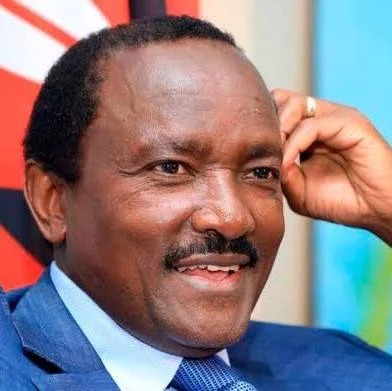
Wiper Democratic Movement leader Stephen Kalonzo Musyoka, who delivered the initial strategic salvo, asserted that the emerging trend of systematically targeting political adversaries is exceedingly perilous and poses a direct threat to Kenya’s long-term democratic stability.
“Not only are we collectively agreeing that President William Ruto must serve only a single term, but we are also tasked with articulating the substantive reasons for it. The historical perpetrators of Nazi Germany initiated their reign by disseminating state-sponsored violence accompanied by sophisticated propaganda,” Musyoka remarked.
In his own poignant words, Kalonzo further elaborated: “And regarding the specific case of Kenya, where we are adamantly stating that we cannot permit the shadow of Nazi Germany to manifest here, it is precisely because the national police service has seemingly abdicated its constitutional responsibility to organized goonism.”
Governor Wavinya Ndeti Rebukes Kapseret MP Oscar Sudi
While hosting an assembly of Wiper Democratic Movement professionals from Kitui County, Kalonzo noted that the burgeoning culture of intimidation witnessed during political demonstrations risks propelling the entire country toward a disastrous trajectory.
Concurrently, Machakos Governor Wavinya Ndeti issued a robust condemnation of the controversial remarks made by Kapseret Member of Parliament Oscar Sudi regarding purported schemes to manipulate next year’s General Election in favor of the incumbent Kenya Kwanza administration.
“Let me be clear with you, Sudi, you are currently sowing a very poisonous seed by suggesting to the Kenyan populace that you intend to orchestrate the rigging of these elections. Let us instead commit ourselves to peaceful, sober, and dignified politics. Whichever individual secures the victory should be allowed to win, and those who face defeat should concede gracefully and peacefully. This sovereign nation of Kenya belongs to every single one of us,” Governor Wavinya declared.
In May 2025, during an address delivered in Eldoret, Sudi allegedly claimed that the United Democratic Alliance (UDA) would strategically “add up” ballot figures in regions where they might experience shortfalls to guarantee President Ruto’s successful re-election. While various critics interpreted these proclamations as a blatant confession of the intent to subvert the electoral will, Sudi subsequently attempted to recontextualize his comments, characterizing them as a legitimate political maneuver rather than an illegal rigging operation.
A Call for Caution Among Kenyan Leadership
Governor Wavinya characterized Sudi’s public assertions as reckless, inflammatory, and fully capable of inciting civil unrest at a delicate time when the nation is organizing for the polls.
“Therefore, if we successfully defeat President Ruto, he will be accorded the respect of a statesman. However, you are presently agitating the vibrant youth of this country. You are profoundly annoying them, despite your full awareness of the hardships they have endured. You are actively seeking a conflict that does not currently exist. Sudi, you must immediately cease making those inflammatory remarks,” the county chief added.
Governor Wavinya additionally implored leaders across the entire political spectrum to prioritize peace, maintain mutual respect, and demonstrate significant restraint in their public discourse as the country navigates toward the next General Election cycle. She emphasized the critical importance of ethical and responsible leadership in protecting the country’s democratic evolution and preserving national cohesion.
The governor, currently fulfilling her inaugural term in office, also petitioned the Kamba community to solidly unite behind Kalonzo’s presidential aspirations, portraying him as the most qualified and capable candidate among the diverse contenders who have formally announced their interest in the presidency as national campaigns intensify.
Reflecting on the 2007-2008 Post-Election Crisis
Kalonzo further underscored that every political leader, regardless of their party affiliation, must be granted sufficient democratic space to campaign transparently and engage in the electoral race without the shadow of fear or physical harassment.
“And for those individuals who are keen on contesting for various elective positions on our party ticket, I wish to emphasize as your leader that we shall have absolutely no involvement in any form of electoral malpractice or violence. Our primary objective is to arrive at the polls and defeat President Ruto through a direct and fair process,” he added.
The fiercely contested results of Kenya’s December 27, 2007, presidential ballot triggered a monumental political and humanitarian catastrophe known globally as the 2007–2008 Post-Election Violence (PEV). Widespread allegations of systematic electoral fraud erupted immediately following the Kenyan Electoral Commission’s official declaration that President Mwai Kibaki of the Party of National Unity (PNU) had narrowly defeated Raila Odinga of the Orange Democratic Movement (ODM).
Historical records indicate there were between 1,133 and 1,500 recorded fatalities during this dark period. Furthermore, there were more than 600,000 internally displaced persons (IDPs) scattered across the country. At least 900 individuals endured widespread sexual and gender-based violence (SGBV) as a direct consequence of the turmoil, which was largely perpetrated by organized gangs and certain security elements. Ultimately, over 100,000 residential houses were completely decimated during the conflict.
