
By SANDRA MULOMI
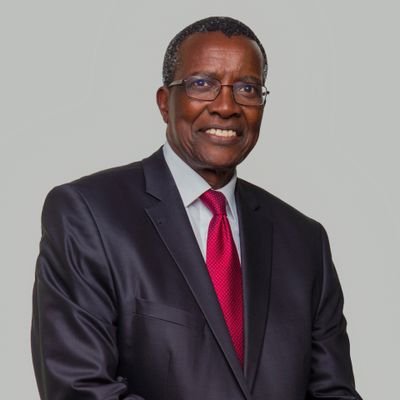
Former Chief Justice David Maraga has accused President William Ruto’s administration of hypocrisy over its handling of a controversial proposal to establish a United States-backed Ebola quarantine facility in Laikipia County, following Health Cabinet Secretary Aden Duale’s declaration that Kenya will not serve as a quarantine centre for any foreign jurisdiction.
Maraga said the government’s latest position contradicted its earlier decision to support an arrangement that would have allowed foreign nationals exposed to Ebola to be quarantined in Kenya, despite public opposition and concerns over national sovereignty and public health.
In a strongly worded statement issued on Thursday, the former Chief Justice questioned why the government was now invoking international health regulations and national sovereignty after previously defending the proposed facility and using police to suppress demonstrations against it.
He accused Ruto of putting foreign interests ahead of the safety and dignity of Kenyans, arguing that the government could not suddenly embrace the position previously advanced by protesters without accounting for the lives lost during the demonstrations.
“The sudden declaration today by Health Cabinet Secretary Aden Duale that ‘Kenya will not serve as a quarantine centre for any jurisdiction’ is a breathtaking display of hypocrisy, and a reminder of this regime’s moral bankruptcy and political cowardice,” Maraga said.
He recalled the June 2026 demonstrations in Nanyuki, where hundreds of residents took to the streets to oppose plans to establish an Ebola quarantine facility at Laikipia Air Base.
The protests followed an announcement that the United States intended to use the Kenyan military installation to quarantine and potentially treat American nationals exposed to Ebola while in affected African countries, particularly the Democratic Republic of Congo (DRC).
Maraga claimed that two young Kenyans were shot dead by police during the demonstrations as residents protested against what they considered an attempt to turn the country into a holding ground for health risks that foreign governments were unwilling to manage on their own territory.
“Five months ago in Laikipia, hundreds of patriotic citizens took to the streets to demand that Kenya’s sovereignty, public health and constitutional dignity not be surrendered to host an Ebola quarantine facility for foreign nationals. The regime’s response was live ammunition,” he said.
The former Chief Justice accused the President and his administration of dismissing public concerns, defending the proposed bilateral arrangement and treating constitutional petitions challenging the facility with arrogance.
He argued that the government had criminalised legitimate dissent instead of addressing concerns raised by residents and civil society organisations.
Maraga’s criticism follows Duale’s announcement on Wednesday at Afya House that Kenya would not allow foreign governments to use its territory as a quarantine centre for travellers seeking to fulfil entry requirements imposed by their home countries.
The Health CS also ruled out the issuance of quarantine certificates or Ebola-free certifications for international travel, saying such requirements had no basis under the International Health Regulations.
Duale maintained that travellers from other countries would not be detained in Kenya to satisfy the entry requirements of foreign jurisdictions.
He further said the country had discharged its last Ebola patient and released the final group of people who had been under quarantine, marking a major milestone in the country’s response to the outbreak.
Kenya is now undertaking a 42-day monitoring period, which began on November 12, and could be declared Ebola-free on December 23 if no new infections are reported.
The announcement has, however, revived debate over the government’s earlier decision to support the proposed Laikipia facility.
Maraga questioned why the administration had defended the arrangement when residents raised concerns about its implications for national security, public health and constitutional governance.
“This regime cannot adopt the protesters’ demands five months later while staying silent on the bullets that killed them. If serving as a quarantine hub had ‘no basis in International Health Regulations’, why was it signed, defended and enforced with police violence in the first place?” he posed.
The proposed facility became a major national controversy in late May and early June after the United States announced plans to establish a 50-bed Ebola quarantine and treatment centre at Laikipia Air Base in Nanyuki.
The arrangement was part of a wider health partnership between Kenya and the United States, with Washington indicating its intention to commit approximately 13 million dollars towards the initiative.
President Ruto defended the arrangement, saying it was based on longstanding bilateral relations between the two countries and would strengthen Kenya’s own preparedness to respond to infectious disease outbreaks.
He argued that the partnership involved the establishment of several health facilities across the country that would also benefit Kenyans.
However, the proposal triggered widespread public opposition, particularly in Nanyuki, where residents feared that hosting foreign nationals exposed to Ebola would place the surrounding population at risk.
Hundreds of demonstrators marched towards the military base on June 1, demanding that the government abandon the plan. The protests turned violent, with two people reported dead and others injured.
The controversy also moved to the courts after the Law Society of Kenya and Katiba Institute filed constitutional proceedings challenging the proposed arrangement.
The petitioners raised concerns over public participation, transparency, national sovereignty and the potential risks posed by bringing foreign nationals exposed to or infected with Ebola into the country.
On May 28, the High Court issued conservatory orders restraining the government from establishing or operationalising an Ebola quarantine, isolation or treatment facility under an arrangement with the United States or any other foreign government pending further court proceedings.
The court subsequently extended the orders and directed the government to disclose agreements, negotiations, public health assessments and other relevant documents relating to the proposed facility.
The dispute escalated in June when Duale was found in contempt of court over continued construction activities at the proposed site despite the existing orders.
He subsequently appeared before the court, apologised and informed it that construction and related activities had been halted. The court accepted his apology but warned against further disobedience of its orders.
The substantive constitutional challenge remained before the court.
In his latest statement, Maraga maintained that the government could not distance itself from the earlier arrangement without addressing the circumstances surrounding the demonstrations and the deaths reported during the protests.
He accused Ruto of treating Kenya’s sovereignty and the safety of its citizens as bargaining tools in pursuit of foreign diplomatic interests.
“The President heartlessly trades the lives of Kenyan citizens for foreign favours,” he said.
Maraga, who is also the United Green Movement presidential hopeful, concluded by declaring that Ruto had forfeited his moral authority to govern.
The latest political confrontation comes at a time when Kenya is seeking to complete its response to the Bundibugyo strain of Ebola, following an outbreak that was first confirmed in October.
The Ministry of Health reported nine confirmed infections, including two deaths, with the remaining seven patients recovering.
The government has intensified surveillance, contact tracing and screening at points of entry as it works towards containing the outbreak and restoring confidence in the country’s public health system.
Duale has also called on foreign governments that imposed travel and visa restrictions on Kenyans following the outbreak to reconsider the measures, arguing that Kenya’s transparency in reporting infections should not be punished.
However, his latest declaration that Kenya will not serve as a quarantine centre for foreign jurisdictions has provided fresh ammunition to critics who opposed the Laikipia arrangement from the outset.
Maraga’s statement has therefore reopened questions about the circumstances under which the Kenya-US arrangement was negotiated, the government’s handling of public opposition and accountability for the deaths recorded during the protests.
