
By SANDRA MULOMI
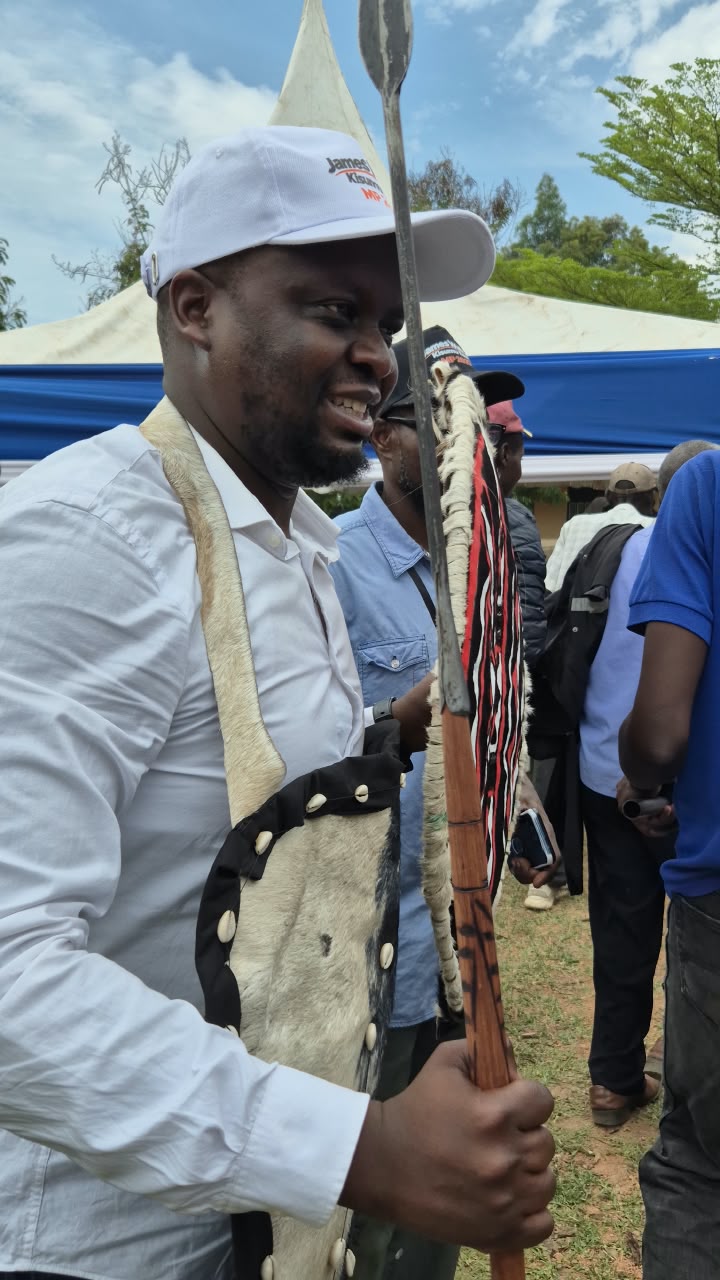
Kisumu East parliamentary aspirant James Waindi has unveiled an ambitious development agenda centred on education, youth employment, environmental conservation, sports development and improved security, as he seeks to unseat Shakeel Shabbir Ahmed in the 2027 General Election.
Waindi, who launched his campaign on November 7, 2026, said his candidature was driven by the need to give the Kolwa community greater political representation, arguing that the area had been sidelined in parliamentary leadership despite commanding the largest voting bloc in the constituency.
He challenged residents of Kolwa, which comprises East and Central wards, to unite behind his bid, saying the community had waited for more than three decades to produce a Member of Parliament.
“Kolwa holds the single largest voting bloc in this entire constituency. We are the engine, the heart and the backbone of Kisumu East,” he said.
“Yet, ask yourselves: When was the last time Kolwa produced a Member of Parliament to lead this constituency? It has been over 30 years. Over three decades of carrying the numerical weight of our elections, yet watching from the sidelines when decisions about our roads, our schools and our resources are made.”
Waindi, is the current Sports Journalists Association of Kenya (SJAK) President, described the forthcoming elections as an opportunity for residents to reclaim their place in the constituency’s political leadership, insisting that the numerical strength of Kolwa should translate into greater influence in decision-making and resource allocation.
“The giant of Kolwa has woken up. It is time for leadership that reflects the true strength and voice of the people,” he said.
Education featured prominently in his campaign agenda, with the journalist promising to prioritise the improvement of public schools through better infrastructure, modern learning facilities and a transparent bursary distribution system.
He expressed concern that some learners were being disadvantaged by inadequate classrooms, poorly equipped science laboratories and what he described as nepotism in the allocation of education bursaries.
Waindi pledged to use the National Government Constituencies Development Fund (NG-CDF) allocation to support the construction and equipping of classrooms and science laboratories in primary and secondary schools across Kisumu East.
He also promised to introduce an automated bursary distribution system designed to ensure that assistance reaches deserving learners regardless of their families’ political connections or social standing.
“We will establish an equitable, automated bursary scheme so that no needy child drops out of school, ensuring every household in Kisumu East feels the benefit of public funds,” he said.
The aspirant said access to quality education was critical in preparing children to compete in an increasingly competitive economy, adding that public resources should be managed transparently to address inequalities in the education sector.
On youth unemployment, Waindi said the constituency was experiencing a contradiction in which industries and commercial establishments were expanding while many local young people remained without employment.
He cited developments in areas including Kibos, Kajulu, Nyalenda, Manyatta and Chiga, arguing that the growth of industrial and commercial activities had not translated into sufficient employment opportunities for residents.
He accused some industries of overlooking qualified local workers in favour of people recruited from outside the constituency, saying the trend needed to be addressed through deliberate policies and partnerships with investors.
“I will push for legislation and local agreements ensuring that every industry setting shop in Kisumu East reserves a guaranteed quota of skilled and unskilled jobs for our local youth,” he said.
Waindi also proposed establishing a Youth Innovation and Micro-Enterprise Fund to provide interest-free capital and vocational training to young people seeking to establish businesses.
He said the initiative would help transform young people from job seekers into entrepreneurs capable of creating employment opportunities for themselves and others.
The proposed fund, he added, would be complemented by stronger links between technical and vocational education and training institutions (TVETs) and industries to equip young people with practical skills relevant to the changing labour market.
Sports development was another key pillar of his campaign, with Waindi promising to sponsor all active football teams in Kisumu East to enable them to participate in Football Kenya Federation (FKF) competitions.
He said several local teams had been unable to participate in county, sub-county and regional leagues because of financial constraints, including affiliation and registration fees, transport expenses and the cost of acquiring playing kits.
Under his proposed programme, the journalist pledged to meet 100 per cent of the FKF affiliation and registration fees for all active football teams in the constituency.
“Many of our local football teams miss matches or get disqualified simply because they cannot afford affiliation fees, transport or kits. This must change,” he said.
He described sports as an important avenue for talent development, employment and social protection, particularly for young people vulnerable to crime and drug abuse.
Waindi further promised to support the development of standard community playing grounds to provide young footballers with opportunities to nurture their talents and progress to higher levels of competition.
On the welfare of persons living with disabilities (PWDs), he said his administration would establish a dedicated constituency empowerment desk to coordinate their needs and improve access to government opportunities.
He pledged to ensure that persons with disabilities benefit from the proposed five per cent procurement opportunities under the constituency’s development programmes, alongside specialised grants and mobility assistance.
He also promised to make accessibility a mandatory consideration in the construction of public facilities, including schools, community halls and constituency offices.
“Inclusion will not be a favour; it will be a right,” he said, adding that persons living with disabilities should be actively involved in decisions affecting their welfare.
Environmental conservation also featured prominently in his address, with Waindi raising concern over what he described as pollution of River Kibos and its surrounding tributaries by industrial effluent and untreated waste.
He warned that industrial expansion should not be allowed to compromise the health of residents, livestock and aquatic ecosystems.
“Industrial growth must not come at the cost of our health,” he said.
Waindi pledged to push for stricter environmental accountability among factories and processing plants operating in Kisumu East, arguing that businesses must comply with environmental standards and take responsibility for the waste they generate.
He said his administration would prioritise the clean-up of River Kibos and surrounding waterways to restore aquatic life and improve the quality of water available for domestic and livestock use.
He also proposed constituency-wide tree-planting and waste-management campaigns to promote environmental protection and improve sanitation across the wards.
On security, he promised to work with community policing structures, including Nyumba Kumi initiatives, and national security agencies to address rising cases of petty crime and insecurity in informal settlements and rural villages.
He said the installation of solar-powered streetlights in trading centres would improve visibility at night, enhance security and create a more conducive environment for businesses.
Waindi also pledged to lobby for the establishment of additional police posts in areas identified as security hotspots, saying residents should be able to go about their daily activities without fear.
He argued that security was essential for economic development, noting that businesses could not thrive in an environment where traders and customers were exposed to crime.
Political representation and development agenda
Waindi’s campaign is anchored on the argument that political representation should translate into equitable access to development opportunities and public resources.
His appeal to Kolwa residents to turn the area’s claimed numerical advantage into political influence, while his development proposals attempt to address issues affecting different segments of the constituency, including students, unemployed youth, sports teams, persons with disabilities, farmers, traders and rural communities.
The campaign also places industrial development and environmental protection at the centre of the constituency’s future, particularly given the concerns he raised over pollution around River Kibos.
Waindi called on residents to support his candidature, saying his ambition was not merely to occupy the parliamentary seat but to provide leadership focused on service delivery and accountability.
“Leadership is not about occupying an office; it is about serving the people with integrity, vision and action,” he said.
He urged the Kolwa community to rally behind his bid, arguing that the constituency had an opportunity to embrace a new political direction.
“Together, we can build better schools, empower our youth, clean our rivers, protect our vulnerable and restore dignity to Kisumu East,” he said.
