
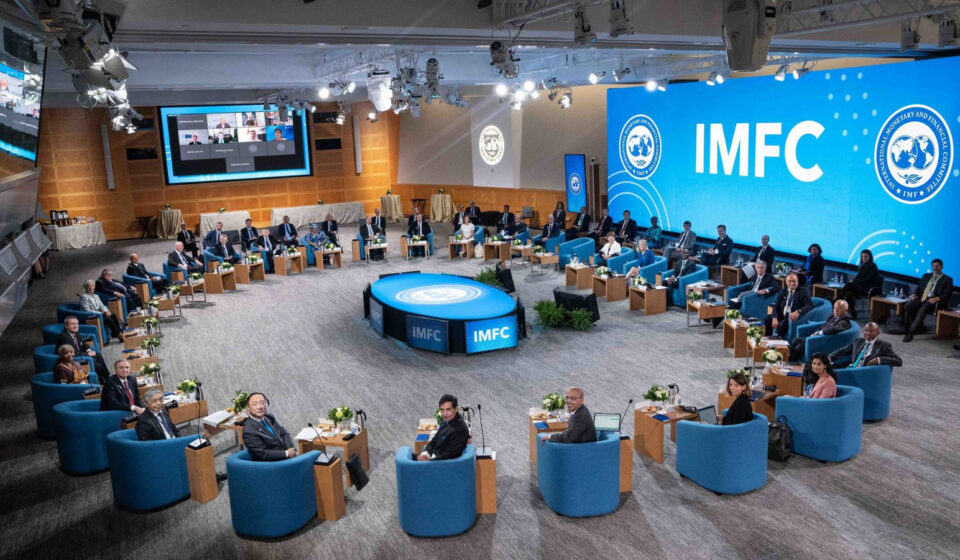
Kenya has opened fresh talks with the International Monetary Fund (IMF) as the country seeks a new financing lifeline to steady its economy, strained by mounting debt and shrinking allocations for development. An IMF staff mission, led by Haimanot Teferra, arrived in Nairobi on September 25 and will be in the country until October 9. The delegation is holding discussions with Treasury and Central Bank officials on a possible Fund-supported programme to replace the $3.6 billion arrangement that expired in April.
Kenya forfeited the final $800 million tranche of that deal after abandoning the program’s last review in March. “At the request of the Kenyan authorities, an IMF staff team will begin initial discussions in the coming days on a possible Fund-supported program,” Teferra said in a statement.
KENYA FORFEITED THE FINAL $800M TRANCHE OF THAT DEAL AFTER
ABANDONING THE PROGRAM’S
LAST REVIEW IN MARCH.
Macroeconomic stability – “The IMF remains committed to supporting Kenya in its efforts to maintain macroeconomic stability, safeguard debt sustainability, strengthen governance, and promote inclusive and sustainable growth for the benefit of the Kenyan people.” Officials including Central Bank Governor Kamau Thugge have publicly backed a new program with a lending component, citing its importance in easing repayment pressures. Analysts say such a facility is vital at a time when tax revenues are underperforming, the shilling is depreciating, and global interest rates remain high.
Treasury data underscores the strain. In the fiscal year ending June 2025, the government spent Sh582.9 billion on development—just 56.4 percent of the Sh1.03 trillion borrowed from domestic and external lenders. That is the lowest share in more than a decade, signaling growing reliance on debt to cover recurrent expenses such as salaries. Economists warn that this trend undermines debt sustainability, delays economic recovery, and weakens public confidence in fiscal management.
By emphasizing “safeguarding debt sustainability” and “strengthening governance,” the IMF has hinted that the talks will zero in on how Nairobi allocates borrowed funds and enforces fiscal discipline. “The uptake of credit has to be tied to real growth,” said a Nairobi-based economist. “Borrowing for salaries only pushes the can down the road. Without discipline and transparency, even IMF support won’t restore confidence.”
Pace of borrowing – Kenya now faces the delicate task of reconciling competing demands: slowing the pace of borrowing while addressing rising living costs, unemployment, and pressure for improved public services. Markets are watching closely for a credible plan that combines fiscal consolidation with protection for vulnerable groups.
The previous IMF program provided critical financing and policy support but ran into political headwinds over unpopular tax hikes and subsidy cuts. Nairobi’s March decision to abandon the last review reflected those tensions. Returning to the table now signals a willingness to reopen difficult conversations on reforms.
For the government, winning over the IMF will not be enough. Citizens—frustrated by high taxes, costly loans, and perceptions of waste—will want proof that borrowed funds translate into tangible development outcomes.
Change your thoughts, you change your world
Treasury eyes domestic market with one-year bills
The National Treasury has raised Sh15 billion from its latest sale of Treasury bills, with most of the funds directed toward refinancing maturing obligations and a smaller portion taken as new borrowing. Data from the Central Bank of Kenya (CBK) show that Sh9.8 billion went into redemptions, including Sh1.4 billion in 91-day bills, Sh1.7 billion in 182-day paper, and Sh6.7 billion in one-year securities that had matured. The balance of Sh4.8 billion counts as net new borrowing to support government spending in the current fiscal year. The auction, held on September 29, was undersubscribed, attracting Sh15.1 billion against a Sh24 billion target. Investor interest was skewed toward the one-year bill, which was oversubscribed at 115 percent with Sh11.5 billion in bids, while the 91-day and 182-day papers drew just Sh1.6 billion and Sh1.9 billion respectively. Nearly all bids were accepted, with CBK taking in Sh14.98 billion or 99 percent of the total. Competitive bids accounted for Sh11.3 billion, while non-competitive applications made up Sh3.7 billion. Yields remained stable at 7.91 percent for the 91-day, 7.99 percent for the 182-day, and 9.53 percent for the 364-day bill. The fresh funds raised feed into a much larger financing program, as the Finance Bill 2025/26 projects a fiscal deficit of Sh923.2 billion. This is to be covered through Sh635.5 billion in net domestic borrowing and Sh287.7 billion in external borrowing, with nearly 70 percent of this year’s deficit expected to be financed by the local market. Kenya’s public debt stood at about Sh11.5 trillion in May 2025, with domestic obligations rising to Sh6.2 trillion from Sh5.3 trillion a year earlier. – Noel Wandera
