
By TONY MUSISI
The Federation of Evangelical and Indigenous Christian Churches of Kenya (FEICCK) has defended President William Ruto’s performance, arguing that his administration has made significant progress in several areas of the economy and infrastructure.
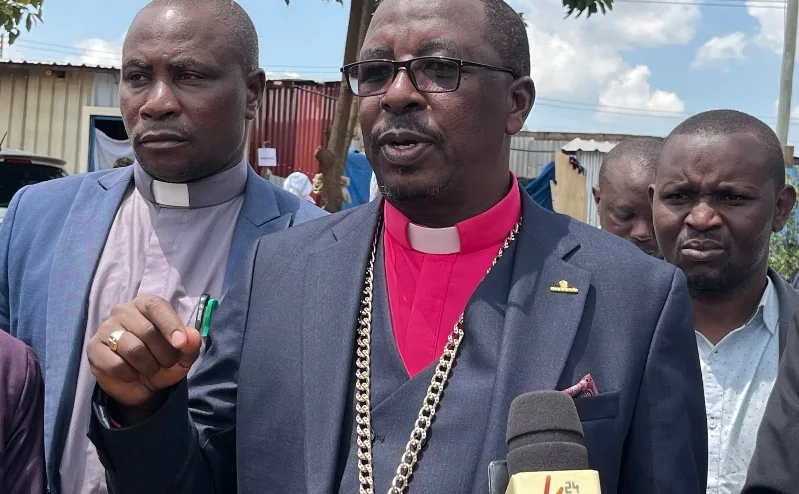
FEICCK chairman Archbishop Samwel Njiriri said it was unfair for critics to portray the government as having achieved little, insisting that projects implemented under Ruto’s administration were visible across the country.
Njiriri, who is also the general overseer of Stewards Revival Pentecostal Church, said some of the criticism directed at the President was motivated more by political differences than an objective assessment of his record.
He pointed to the affordable housing programme, construction and improvement of markets, major road projects and other infrastructure developments as some of the initiatives he said had benefited Kenyans.
“It is not fair for anyone to say that Ruto has done nothing when we can all see the projects being implemented across the country,” Njiriri said.
The cleric also cited the construction of Talanta Stadium and other sports facilities, as well as developments in the agricultural sector, saying they demonstrated the government’s efforts to stimulate economic growth.
He urged Kenyans to give the President an opportunity to complete his programmes, arguing that Ruto had established a foundation that could support the country’s long-term economic development.
At the same time, Njiriri cautioned politicians against using tribal rhetoric, hate speech and inflammatory language, warning that such conduct could plunge the country into violence similar to the 2007-08 post-election crisis.
He called on the Independent Electoral and Boundaries Commission (IEBC), National Cohesion and Integration Commission (NCIC) and security agencies to take decisive action against political leaders accused of promoting violence or inciting communities against one another.
According to Njiriri, politicians who deliberately encourage violence should face legal consequences and, where the law allows, be prevented from participating in elections.
“Some leaders appear determined to create chaos for their own political interests. We are asking the relevant agencies to enforce the law and protect the unity and security of the country,” he said.
Njiriri spoke at Shauri in Eldoret, where Stewards Revival Pentecostal Church is hosting a conference bringing together women leaders.
He further urged security agencies to deal firmly with politicians who allegedly deploy groups of youths or goons to disrupt political meetings and create disorder.
The church leader said the electoral process should give every Kenyan an equal opportunity to choose leaders freely, without intimidation, threats or coercion.
He condemned statements by politicians suggesting that residents of particular regions should vote in a specific manner or risk unspecified consequences.
“It is criminal for leaders to tell people in certain regions that they must vote in a particular way or face consequences. Such behaviour should not be tolerated,” Njiriri said.
Margaret Muthigani, the chairperson of the conference, separately appealed to political leaders to exercise restraint in their public statements as the country approaches the 2027 General Election.
She noted that women and children are often among those who bear the greatest burden whenever political violence erupts.
“Whenever violence occurs, women and children suffer the most. We are therefore asking our leaders to promote peace and unity as we approach the election period,” Muthigani said.
Njiriri and Muthigani said they would continue supporting President Ruto, arguing that he had been given a mandate by Kenyans to govern the country.
Their remarks come as religious leaders increasingly position themselves within the political discourse ahead of the 2027 elections. While Njiriri praised the administration’s development record, he also raised concerns over the potential for political mobilisation along ethnic lines, intimidation and incitement.
His appeal to electoral, cohesion and security agencies to intervene against politicians accused of inflammatory conduct underscores the growing concern over the tone of political campaigns.
At the same time, the church leaders’ open support for Ruto places their institution within the broader political debate over the role of religious organisations in electoral politics. Their position highlights the potential influence of faith leaders in shaping public opinion and political narratives as the country heads towards the 2027 polls.
