
By THE PEOPLE TRIBUNE REPORTER
President William Ruto has directed the Government to deepen engagement with international pharmaceutical manufacturers in an effort to reduce the cost of critical medicines used by Kenyans living with chronic and non-communicable diseases.
The President said the Government would use its purchasing power and the size of Kenya’s patient population to negotiate better prices with multinational drug manufacturers, arguing that collective procurement could significantly lower the cost of medicines for patients and public health facilities.
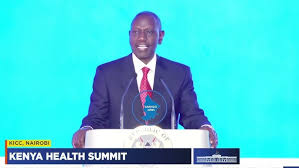
The commitment followed concerns raised by Kenyans during the second and final day of the inaugural Kenya Health Summit in Nairobi, where participants highlighted the high cost of medicines used in the management of chronic illnesses, including cancer.
The cost of treatment for non-communicable diseases has emerged as one of the major challenges confronting efforts to achieve universal health coverage, with patients often requiring prolonged treatment and regular access to expensive medicines.
President Ruto said he would soon engage the leadership of American pharmaceutical multinational Pfizer Plc to explore ways of making essential medicines available to Kenyans at substantially lower prices.
“Quite a substantial amount of the medicine we are using in the country come from Pfizer,” he said during a session with Kenyans on their experiences with the implementation of universal health coverage at the Kenyatta International Convention Centre (KICC) on Wednesday.
He said the Government wanted to move away from fragmented procurement by individual health facilities and instead leverage its purchasing power to secure better prices.
“Our engagement with Pfizer would be on drugs being supplied collectively to many facilities rather than individually. There is power in negotiating as Government,” the President said.
The proposed engagement reflects a broader shift by the Government towards using pooled procurement and economies of scale to address the affordability of medicines.
Under such an approach, the Government can negotiate with manufacturers on the basis of the combined demand from public hospitals and the millions of Kenyans who require treatment, potentially giving it greater leverage than individual hospitals or patients purchasing medicines separately.
Ruto cited the Government’s 2025 partnership with Roche East Africa as an example of how such negotiations could reduce the cost of cancer treatment.
Under the arrangement, the price of Herceptin (trastuzumab), a key medicine used in the treatment of certain breast and gastric cancers, was reduced from Sh120,000 to Sh40,000 per treatment session.
“Our argument was that we have a pool of patients, and therefore we need to benefit from economies of scale. They agreed to bring the price down substantially to a third of the original cost,” he said.
The reduction is significant in a country where cancer treatment can place a heavy financial burden on households, particularly because many patients require multiple treatment sessions.
The high cost of medicines has also been identified as one of the factors that can undermine continuity of treatment, especially for patients who have to meet costs not fully covered by insurance or public health programmes.
The Government’s strategy, therefore, is increasingly centred on negotiating prices directly with manufacturers while expanding coverage under the Social Health Authority.
The President said the same principle of collective bargaining had been applied in the acquisition of medical equipment.
He said collaboration between the national Government and the Council of Governors had enabled Kenyan hospitals to acquire modern medical equipment worth Sh9.8 billion without direct expenditure by taxpayers.
The arrangement, he said, demonstrated how the Government could use its collective purchasing power to secure essential health infrastructure and technology at lower costs.
The President also outlined plans to strengthen the local pharmaceutical manufacturing industry, which currently supplies about 30 per cent of Kenya’s medicine market.
Increasing domestic production is seen as an important component of reducing Kenya’s dependence on imported medicines, particularly because international supply disruptions, foreign exchange fluctuations and import-related costs can affect the final price paid by patients.
Ruto said the Government would seek a balance between lowering the cost of medicines and supporting local manufacturers.
He cited packaging materials as one of the areas where interventions could help reduce production costs without undermining local industries.
The Government, he said, would pursue a “win-win” arrangement aimed at lowering the cost of packaging materials used by pharmaceutical manufacturers while at the same time supporting Kenyan paper manufacturers.
The approach comes as the Government seeks to address the broader affordability question under its universal health coverage agenda.
While insurance coverage and financing are critical components of healthcare access, the availability and affordability of medicines remain equally important. A patient who is registered under a health insurance scheme may still face challenges if essential medicines are unavailable or if some treatments require substantial out-of-pocket expenditure.
The discussions at the summit also extended beyond medicines to the human resources needed to deliver healthcare.
President Ruto said the National Government would work with county governments and the Salaries and Remuneration Commission to resolve the ongoing dispute over the pay of nurses and clinical officers.
The dispute has affected health services in some parts of the country and added pressure to an already stretched public healthcare system.
The involvement of the national and county governments is particularly important because healthcare delivery is largely devolved, with counties responsible for most public health facilities and the employment of a significant proportion of healthcare workers.
Council of Governors chairman and Wajir Governor Ahmed Abdullahi, meanwhile, commended the National Government for releasing the shareable revenue allocated to counties for the 2026/27 financial year on time.
He said timely disbursement of funds was critical to ensuring that counties could meet their obligations and maintain essential services, including healthcare.
Abdullahi attributed delays in the payment of some health workers’ salaries to challenges normally experienced during the transition between financial years, as well as delays associated with budget approval by the Controller of Budget.
The summit also addressed the financing of healthcare education.
President Ruto announced that students at the Kenya Medical Training College will soon qualify for full funding through the Higher Education Loans Board, similar to university students, once the Tertiary Education, Placement and Funding Bill currently before Parliament is enacted.
The move is expected to ease the financial burden on students training as nurses, clinical officers and other healthcare professionals at KMTC, while potentially supporting efforts to increase the country’s health workforce.
The shortage and uneven distribution of healthcare workers remain major challenges, particularly in counties that struggle to attract and retain specialised personnel.
The Government’s health agenda is therefore increasingly being framed around several interconnected issues—affordable medicines, sustainable healthcare financing, adequate staffing, improved infrastructure and prevention.
Closing the inaugural Kenya Health Summit, President Ruto urged Kenyans to look beyond hospitals and treatment when discussing the country’s healthcare needs.
He said preventing disease through healthier lifestyles and better nutrition should form a central part of Kenya’s long-term health strategy.
“We need to control sickness through what we eat. In the conversation of Kenya Beyond 2030, we should think about health beyond hospitals,” he said.
Health Cabinet Secretary Aden Duale, Mombasa Governor Abdulswamad Nassir, who chairs the Council of Governors Health Committee, Principal Secretaries and other senior Government officials attended the summit.
The President’s renewed focus on medicine prices comes at a time when Kenya is attempting to shift from a predominantly treatment-based approach to healthcare towards prevention, early intervention and broader financial protection.
The success of the strategy, however, will ultimately depend not only on agreements with pharmaceutical companies but also on whether lower negotiated prices translate into reliable availability of medicines in public facilities and lower costs for patients.
For a country facing a growing burden of cancer, diabetes, hypertension and other chronic diseases, the affordability of long-term treatment is likely to remain one of the most important tests of Kenya’s universal health coverage programme.
