
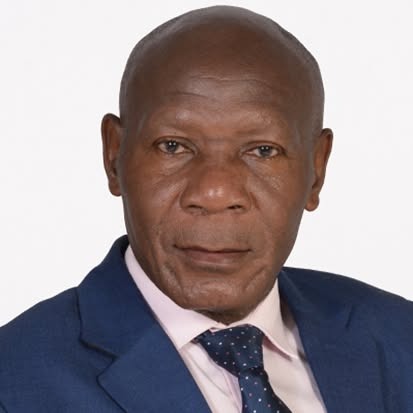
By KENNEDY BUHERE
“A well-educated man must know a little bit of everything and one thing well.” — Abbott Lawrence Lowell, former Harvard president
In the late 1980s, one of the pioneer students at Egerton University, who had been admitted to pursue a bachelor’s degree in Economics, told me something that has remained etched in my mind.
The student had gained admission after sitting the then Kenya Advanced Certificate of Education (KACE), commonly referred to as A-levels. Upon joining the university, students were asked by the administration to register for two other academic disciplines offered by the institution.
Mr Zablon Khisa, who later joined the Public Service as a film officer in the Department of Film Services, told me he had registered for Sociology and another discipline whose name I can no longer recall.
The thinking of the university Senate was that Economics, like other subjects, formed part of a broader undergraduate education. A general degree must provide multidisciplinary breadth, enabling students to develop a dual perspective on issues. The critical-thinking and problem-solving skills that undergraduate programmes seek to cultivate are more creatively and imaginatively applied when students have a multidisciplinary outlook.
Ideally, students should study up to three academic disciplines in their first year, then proceed with two or one in their second and third years. The choice of subjects to pursue would depend on their demonstrated ability, interests and career aspirations.
The Senate’s approach at Egerton University was consistent with practices in Bachelor of Arts and Bachelor of Science programmes at the University of Nairobi during the 1980s. Students admitted to pursue either degree were required to study three disciplinary areas in their first year. In subsequent years, they could continue with two disciplines or specialise in one, depending on their ability, interests and professional ambitions.
At the heart of undergraduate programmes in world-class universities is the principle of breadth and depth: students should acquire an in-depth understanding of at least one discipline while gaining exposure to other fields of knowledge.
University education serves several purposes. One of its principal roles is to prepare students for careers and professions. However, higher education should also help them become better citizens, deeper thinkers and more ethically responsible members of society.
Preparing students for employment alone undermines their potential as thoughtful citizens, community leaders and problem-solvers. Universities must equip graduates not only with professional expertise but also with the capacity to understand society, interrogate assumptions and respond to complex challenges.
This is why policymakers in countries such as the United States expect students to master one disciplinary area while gaining broad exposure to other kinds of knowledge. Such exposure helps students, both during their studies and after graduation, identify the right questions to ask and the answers to seek when society faces difficulties or yesterday’s solutions no longer address today’s and tomorrow’s challenges.
“In a society that depends critically upon expert knowledge, one kind of valuable education is a curriculum shaped by the research mission of a great university. Such a curriculum should demand that undergraduates learn one scholarly discipline in depth, expose them to other disciplines, give them opportunities to participate in research, and immerse them in an environment where they encounter the quest for knowledge often and in many forms,” Princeton University President Christopher L. Eisgruber observed in a lecture at the University of California, Berkeley, titled The American University in Crisis.
Regardless of the academic and professional programmes universities offer, they should provide a rigorous core curriculum for all students. These courses, known in Kenya as common units, should expose students to a variety of perspectives on universal issues, irrespective of their majors, career goals or degree specialisations.
A strong core curriculum should cultivate critical and creative thinking while exposing students to a broad range of ideas and disciplines. Leading institutions such as Columbia University, Stanford University and the Massachusetts Institute of Technology (MIT) place significant emphasis on general education as part of their undergraduate programmes.
Kenyan universities also offer common units. However, these courses often lack the rigour, coherence and centrality that comparable core curricula have in some American universities. The challenge is not simply to offer common units, but to ensure they form a well-designed and intellectually demanding part of undergraduate education.
Undergraduate education is the heartbeat of university learning. For more than 70 per cent of students, it may be the highest level of formal education they attain. Society relies on these graduates to manage institutions, shape public policy, influence opinion and contribute to national development.
Although career preparation is important, it should not overshadow or replace the wider purposes of university education. Universities should produce graduates who can earn a living, but who can also think independently, exercise sound judgement, engage constructively with others and take responsibility for the communities in which they live.
Strong academic curricula and career preparation are not mutually exclusive. Universities can equip students with the skills employers need while also preparing them for leadership and responsible citizenship. Indeed, many entry-level workplace skills could be taught within a relatively short period, particularly where students have received a strong secondary education.
The more enduring task of a university is to nurture intellectual curiosity, sound judgement and the capacity to keep learning. That is why undergraduate education must go beyond training students for their first jobs. It should prepare them to understand the world, adapt to change and contribute meaningfully to society.
