
Kenya’s healthcare system is at a breaking point as the nation grapples with a “fiscal trilemma,” balancing ballooning debt, increasing development needs, and managing citizen resistance to taxation. Leading health advocates warned today that the country’s path to Universal Health Coverage (UHC) is being systematically undermined by a debt burden that now consumes nearly all new borrowing.
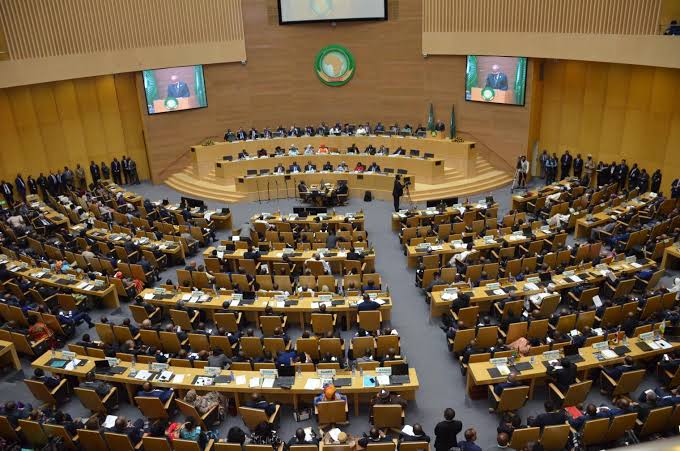
And ahead of the AU Heads of State Summit scheduled for February 14–15, 2026, in Addis Ababa, Ethiopia, AHF Africa, in partnership with WACI Health and a host of other Civil Society Organisations (CSOs), have urged the AU to secure the continent’s health sovereignty, which they said is at a critical intersection.
“By sovereignty, we are not cutting ties or disengaging. Instead, it’s about shifting power dynamics toward stronger, respectful, and mutually reinforcing partnerships. To achieve this, the focus must shift inwards,” said Rosemary Mburu, Executive Director, WACI Health.
These urgent warnings were issued during the “CSO Webinar on Africa Leadership for Health Sovereignty,” a high-level forum convened by the AIDS Healthcare Foundation (AHF) Africa, in collaboration with Africa Reaching the End of AIDS in Children and Young People (AFRICA REACH), WACI Health, and Resilience Action Network Africa (RANA). The webinar brought together civil society leaders, policymakers, and health experts to deliberate on a critical agenda focusing on sustainable financing, regional manufacturing, and the transition from donor reliance to health sovereignty ahead of the upcoming African Union Heads of State Summit.
In the National assembly’s 2025 Medium Term Debt Management Strategy, debt servicing costs were projected to rise to Sh1.87 trillion by June 2025, absorbing an average of 60 percent of national revenue. This financial stranglehold has forced a direct trade-off between “people and payments,” with the government spending significantly more on interest than on the health of its citizens.
The Kenyan situation mirrors a broader continental emergency. Data from the Africa Centers for Disease Control (CDC) and the United Nations Economic Commission for Africa (UNECA) presented at the webinar reveals that Africa faces an annual health financing gap of $66 billion (approximately Sh9 trillion). While the continent bears 23 percent of the global disease burden, it accounts for only 1 percent of global health expenditure.
It’s understood that most African nations spend just $8 to $129 per capita (Sh1, 028.96 to Sh16, 591.98), far below the $4,000 (Sh514, 480) seen in high-income countries.
“Closing this gap is an economic imperative,” experts emphasized noting that every dollar invested in health yields a four-fold return in economic growth.
The crisis is exacerbated by a “funding collapse” in external aid. Between 2021 and 2025, Official Development Assistance (ODA) to Africa is projected to contract by 70 percent. In Kenya, the impact has been devastating, with approximately 54,000 health workers losing their jobs due to the termination of donor-funded programs. Furthermore, funding for the Global Fund, which targets HIV, TB, and Malaria, was slashed from Sh28.7 billion in 2024/25 to Sh17.3 billion in the latest budget.
“Africa is at a decisive moment to reshape the future of its health response,” said Dr. Penninah Iutung, AHF Executive Vice President, during her keynote address.
She added, “We cannot beg our way out of a $43 (Sh5, 530.66) per person deficit. Our leaders must renegotiate debt terms as a block to reclaim the fiscal space for health investments. Investing sustainably in health is providing security for the future of our nations.”
The event culminated in the adoption of a strategic Call to Action, titled “Securing Africa’s Health Sovereignty.” The document serves as a blueprint for the way forward, demanding that African leaders prioritize domestic resource mobilization and “supply sovereignty” to protect the continent’s future.
To break the cycle of dependency, AHF, AFRICA REACH and WACI Health, and RANA are demanding the renegotiation of unfair global financing terms where African nations pay 10 percent interest compared to two percent in high-income countries.
They are also calling for a shift to domestic manufacturing to move beyond the current three percent (3%) local production of vaccines, and a move from “state-centered” to “people-centered” sovereignty that ensures communities have a formal role in policy decisions.
The speakers emphasized that Africa is at a defining moment for global health as health financing declines sharply and donor priorities grow increasingly unpredictable.
“Africa can no longer rely on external aid to sustain its health systems,” they stated.
Dr. Julius Otim, Senior Health Officer, EAC Secretariat, emphasized that pooled procurement as a strategic mechanism to improve access to medicines, is critical.
Bhebe Nomathamsanqa, programme officer Africa Union Development Agency (AUDA-NEPAD) emphasized the importance of blended interventions and alignment of partners at country level and the need to crowd in private capital and public resources to strengthen health systems amid the shrinking fiscal space.
Oluwakemi Gbadamosi, Deputy Executive Director, AHF Global Public Health, stressed the need for alignment between legal and policy frameworks and implementation, calling for stronger regional partnerships and a unified African position to strengthen regional partnerships, cross-border surveillance, pooled procurement, and South–South learning.
