
By ZADDOCK ANGIRA
Unknown people broke into three private aircraft parked at the Jomo Kenyatta International Airport (JKIA) and stole several components in a fresh security breach that has raised questions about surveillance and access controls at the country’s main aviation gateway.
According to Kenya Airports Authority (KAA) security officer George Gitau, the three aircraft were parked in the area between Parking H8 and H10 when the intruders struck.
One of the aircraft, registration number 5Y-CHW and operated by SAK Executive Air Limited, had its window, static wicks and audio control panel removed.
The tail stand of another aircraft, a Grand Caravan registered as 5Y-SXN, was also stolen.
A third aircraft, registration number 5Y-MHJ and operated by Bayline Ltd, was found with its emergency window broken, although nothing was reported stolen from it.
The incidents have raised fresh concerns over the security of aircraft and facilities at JKIA, particularly the ability of unauthorised persons to access aircraft parked in restricted areas without being detected.
Authorities said all the affected aircraft were subsequently checked using police sniffer dogs and examined by detectives from the Bomb Disposal Unit as investigations got underway.
The latest incident came after another security breach involving an aircraft operated by Kasas Limited.
On June 24, unknown people tampered with the cockpit door seal of an aircraft registered as 5Y-CGD.
The aircraft’s captain, Wilson Nganga, said he was preparing to fly to Baidoa, Somalia, for a medical evacuation when he noticed that the cockpit door seal had been interfered with.
The First Aid kit inside the aircraft had also been opened, although nothing was reported missing.
According to authorities, the aircraft had been parked the previous day at 7.21pm between Parking H8 and H9.
The incidents have added to a growing list of security concerns at JKIA, including a breach that occurred barely a month earlier when an unknown man gained access to the Fly Jambojet integrated control centre on the airside and stole five laptops valued at about Sh600,000.
CCTV footage showed the man gaining entry through a sliding window next to an emergency exit door, exposing vulnerabilities in access control at a highly sensitive section of the airport.
The latest cases also come against the backdrop of a major security breach at JKIA in October last year when thousands of mourners and boda boda riders forced their way into restricted areas during the arrival of the body of former Prime Minister Raila Odinga.
The October 16, 2025 incident was particularly significant because the breach occurred during a high-profile state reception attended by senior government officials and security officers.
Crowds overwhelmed security personnel, breached barriers and gained access to restricted areas at the airport. Some boda boda riders reportedly rode into areas where they were not authorised to be.
The incident was serious enough to force the Kenya Civil Aviation Authority (KCAA) to temporarily suspend operations at JKIA as security agencies worked to restore order and ensure the airport was safe.
The disruption lasted about two hours, with the airport resuming normal operations after security teams completed their assessment.
Although the circumstances surrounding the October breach were different from the latest cases involving aircraft and airport facilities, the incidents have revived questions about the effectiveness of security arrangements at JKIA.
The latest breaches are particularly concerning because the aircraft were parked in designated areas and some of the tampering involved components that are critical to aircraft operations.
The fact that intruders were able to interfere with aircraft, remove parts and in another case access a cockpit area raises questions about the effectiveness of perimeter surveillance, patrols, access control and monitoring of aircraft parking zones.
Investigators will now be expected to establish how the intruders gained access to the aircraft, how long they remained in the restricted area, whether CCTV captured their movements and whether anyone with authorised access to the parking areas could have assisted them.
They will also need to determine whether the incidents were isolated cases or part of a wider pattern of security weaknesses at JKIA.
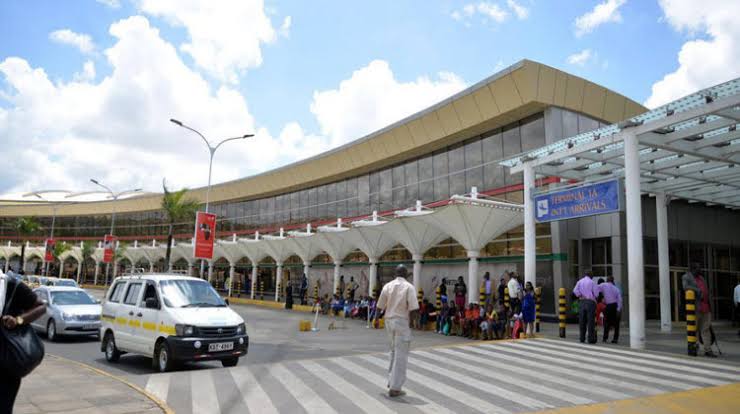
The airport is Kenya’s main international aviation gateway and handles thousands of passengers, aircraft and tonnes of cargo every year.
The repeated breaches therefore present more than a theft problem. Any unauthorised access to an aircraft, particularly interference with a cockpit door, emergency equipment or other flight-critical components, could potentially have serious aviation-safety implications.
The discovery that an aircraft’s First Aid kit had been opened, while nothing was stolen, is also likely to attract investigators’ attention as they seek to establish what the intruders were looking for.
Similarly, the removal of static wicks, an audio control panel and a tail stand from the other aircraft suggests that the intruders were not simply looking for easily portable valuables.
The circumstances have consequently placed renewed focus on the need for tighter security around aircraft parked at JKIA, including more effective monitoring of parking areas, stronger physical controls and rapid detection of unauthorised access.
The investigations into the latest incidents are expected to establish whether there were weaknesses in the airport’s security system that allowed the intruders to operate undetected and whether any insiders may have had information about the aircraft and their parking locations.
For now, the thefts and tampering incidents add to a troubling record of security breaches at JKIA, with questions likely to persist over whether the country’s most important airport has sufficient safeguards to prevent unauthorised persons from accessing sensitive aviation facilities.
