
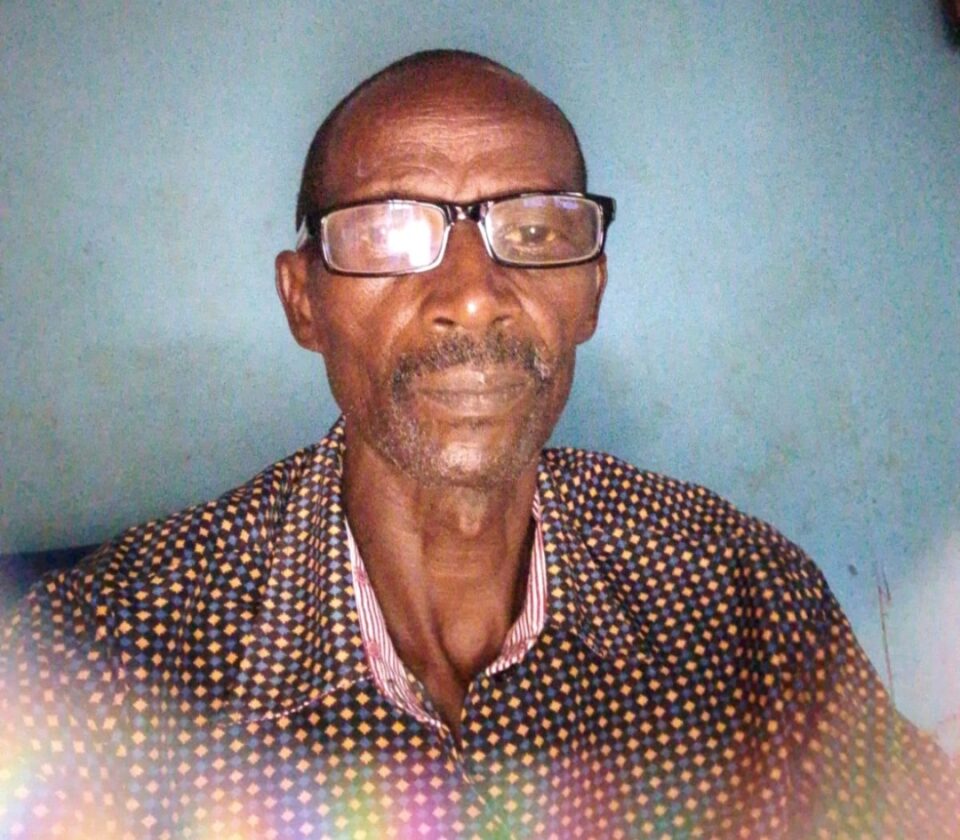
Joseph Muthuri Raiji knows what tuberculosis can take from a person.
He has survived both pulmonary tuberculosis and multidrug-resistant TB — experiences that left him with a firsthand understanding of the physical, emotional and financial toll of a disease that continues to claim lives despite advances in diagnosis and treatment.
So when he read preliminary modelling suggesting that new TB vaccines could potentially save more than seven million lives by 2050, Joseph did not see just another global health statistic.
He saw people who might never have to go through what he went through.
“Saving over seven million lives is real to me, my brother,” Joseph says. “I know what it means to be stagnated by TB.”
For Joseph, the prospect of an effective vaccine represents something that decades of TB control efforts have struggled to achieve — preventing people from becoming sick in the first place.
“I know the trauma, physical toll and financial ruin of MDR-TB,” he says. “To prevent that with a vaccine is the way to go.”
But his hope comes with a warning.
The same findings that have given him reason to believe that TB could finally be pushed towards the end also raise fears about what could happen if funding and rollout are delayed.
“Gavi’s warning about funding and rollout delay is terrifying,” he says. “The world cannot afford to treat these findings like a luxury for the future.”
The missing piece
That sense of possibility is shared by Evaline Kibuchi of Stop TB Partnership Kenya, who has spent years advocating for greater investment in TB vaccine research.
For Kibuchi, the excitement comes from what an effective vaccine could add to a toolbox that already includes modern diagnostics, treatment and behaviour-change interventions.
“We have modern diagnostics, credible treatments and a lot of behaviour-change communication,” she says. “Why have all these interventions not ended TB?”
Her answer is simple:
“One thing has been missing from the basket of all these prescriptions — an effective vaccine.”
Kibuchi points to the experience of COVID-19 as an illustration of the transformative potential of vaccination.
“COVID taught us that treatment is good and social behaviour change is perfect. But we could not end COVID until the entry of a vaccine.”
Now, she believes, TB could have its own turning point.
“TB will be next if we embrace the vaccine,” she says.
From promise to people
Preliminary modelling by the London School of Hygiene & Tropical Medicine, cited by Gavi, estimates that novel TB vaccines could potentially save more than seven million lives by 2050 under a vaccination scenario targeting high-risk populations and adolescents through routine immunisation, combined with targeted catch-up campaigns in high-risk populations and high-burden settings.
The modelling assumes 50 per cent efficacy against TB disease regardless of previous exposure, with immunity waning exponentially over 10 years.
But a vaccine sitting in a laboratory, or even one that has received regulatory approval, cannot save a life.
It has to reach people.
That is why Gavi’s work through the WHO TB Vaccine Accelerator’s Finance & Access working group is focusing on ensuring sufficient, timely, affordable and sustainable vaccine supply; supporting widespread uptake through routine immunisation and targeted catch-up campaigns; and encouraging a competitive and geographically diverse pipeline of vaccine candidates that meet country preferences.
Several high-burden countries, including some hosting vaccine trials, are already preparing for eventual rollout.
For Joseph, that preparation cannot begin later.
“Governments need to fund and prepare the infrastructure today because patients cannot afford to wait.”
His concern is rooted in experience.
A person with TB may already be fighting pain, stigma, lost income and prolonged treatment. For someone with MDR-TB, the burden can become even greater.
“A day’s drugs delay could translate as the last ever delay in anything,” Joseph says.
For him, therefore, the promise of a vaccine is both a reason for hope and a demand for urgency.
“We might as well see the end of TB in our lifetime,” Kibuchi says.
For Joseph, that possibility is no longer an abstract ambition.
He has lived through the disease.
He knows what preventing it could mean.
This is the direction I would take. Joseph gives us the emotional entry point, the seven-million-lives figure then acquires meaning, Evaline explains why the vaccine has been missing from the TB response, and Gavi’s three objectives answer the crucial question: how do we get from a promising vaccine to the people who need it?
It also leaves room to bring in Kenya’s TB burden, current vaccine trials/research, and a Kenyan health-system preparedness voice without losing Joseph as the emotional anchor.
