
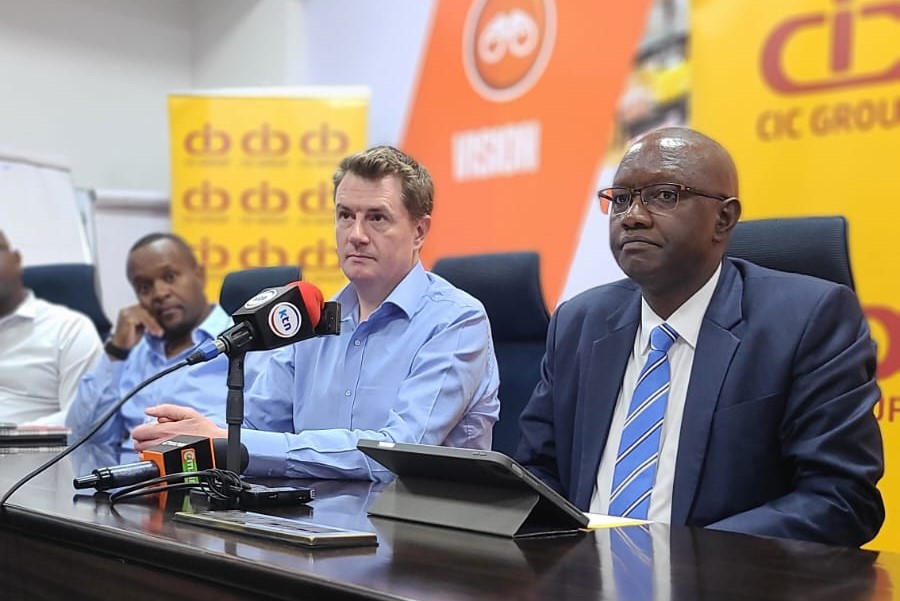
By Milliam Murigi @millymur1
When anti-government demonstrations erupted across parts of Kenya in 2025, the impact on businesses was immediate.
Shops were forced to close, shelves were emptied during looting incidents and operations in some areas came to a halt.
For many small traders, the losses were severe and largely uninsured. But for some larger businesses, the story unfolded differently.
Retail chain Naivas Supermarket was among the companies affected. Several of its branches were vandalised and looted during the unrest, resulting in significant losses. However, unlike many small enterprises, the company had taken up Political Violence and Terrorism (PVT) insurance.
This is a cover that provides clients with financial protection against property damage and business interruption resulting from acts of terrorism or politically motivated violence. It is designed to protect businesses against losses linked to riots, civil commotion, strikes and terrorism.
“Recurring political unrest is what made us take this cover. Repeated episodes of unrest have led to significant disruptions, including property damage, stock losses and temporary closure of stores,” says Naivas CEO Andreas von Paleske.
Through this cover, Naivas received a payout of about Sh134 million from CIC Insurance Group in February this year for damages linked to the protests. But this was not an isolated payout. Over the past two years, the insurer has paid Naivas more than Sh300 million in claims related to political unrest.
Naivas is not the only business that has taken up this cover. According to CIC Group MD Patrick Nyaga, in 2024 alone CIC Insurance Group paid about Sh400 million in political violence-related claims, with banks, retail outlets and office premises among the main beneficiaries of the payouts. Separately, Britam General Insurance reported about Sh400 million in payouts linked to both floods and protests in the same year.
The 2024 claims followed a clear trend of increasing political risk exposure, prompting a noticeable rise in uptake of Political Violence and Terrorism (PVT) covers among businesses seeking protection against unrest-related losses.
Across the industry, exposure to political violence and terrorism cover has grown significantly, with more insurers such as, Old Mutual, Liberty Kenya and Occidental Insurance Company coming onboard offering PVT cover either as a standalone policy or as an extension to property insurance.
According to Jackson Theuri, Regional CEO General Insurance at Britam Holdings Plc, PVT product has been picking up in the last seven years with many of its clients now taking it up but as an extension to their existing covers.
“With political unrest now one of the biggest threats to business continuity globally and locally, more companies are realising they are exposed. We expect a significant uptake in political violence and terrorism cover going forward,” said Fred Ruoro, CIC General Managing Director.
Kenya is not the only country where experiencing political unrest. There have been more than 800 significant anti-government protests across over 150 countries since 2017, with over 160 major unrest events recorded in 2024 alone. Notably, around 18 per cent of these protests have lasted more than three months, signaling not just frequency but persistence of instability.
According to the Allianz Risk Barometer 2025, political violence continues to rank among the top global business risks. The report notes that businesses with multi-country exposure are increasingly prioritising political violence coverage, while engagement from SMEs and mid-sized companies is also rising, reflecting growing concern across all business segments.
A separate security assessment by G4S also warns that political instability and civil disorder are likely to remain defining business risks through 2026, forcing companies to rethink how they protect operations in uncertain environments.
“It’s important to recognize that civil unrest isn’t only an emerging-market risk, recent years have shown how developed regions also contend with their share of unrest,” explains Gaone Sibanda, MD of Old Mutual Short-Term Insurance. “These situations are often unpredictable, arising from a wide variety of factors, from regulatory changes, economic developments to broader social issues, and the effects can be severe.”
According to her, coverage of political violence and terrorism is essential for companies seeking to protect their operations amid socio-political uncertainty. The reason is such conflicts can disrupt business sectors, damage infrastructure and put employees at risk.
She reveals that, the changes in the region’s politics also generate additional risks for businesses operating, particularly concerning assets and supply chains. Growth oriented enterprises operating in risk-prone areas face increasing exposure to service interruptions caused by industrial unrest, protests and civil commotion.
“In today’s unpredictable world, PVT insurance has become a critical component of risk management strategies for companies operating in uncertain environments,” she says.
Adding that “we’ve seen instances regionally where unrest has disrupted business operations significantly, underscoring the need for businesses to have sound contingency plans in place.”
According to Ruoro, the uptake of this policy is growing because businesses are realising that some of the biggest risks are not fires or accidents, but disruptions linked to political events. Those events can wipe out revenue in hours.
However, while uptake among large corporations is growing, small and medium enterprises remain largely outside this protection net. Many SMEs either lack awareness of PVT insurance or assume general policies already cover political unrest only to discover exclusions when filing claims. This gap leaves smaller businesses highly exposed during periods of instability, even as insurers brace for rising demand.
“Not many SMEs know about the product despite it being available in Kenya for more than 10 years now. SMEs need to get advice on insurance matters to be able to mitigate unforeseen risks,” says Abud Jamal, Kenya National Chambers of Commerce and Industry (KNCCI) Mombasa chapter chairman.
PVT cover is not the only gap in the market. Over half of small-scale businesses in Kenya remain uninsured. According to AAR Insurance’s Insurance Usage & Awareness Report 2024, about 53 per cent of SMEs lack any form of insurance coverage, while 52 per cent rely on a single provider.
The findings highlight a significant protection gap, presenting insurers with an opportunity to innovate and diversify their products while also addressing low awareness of available insurance solutions.
In conclusion, Ruoro says that as countries continue to experience recurring political unrest, the insurers expects the scale of these losses to accelerate uptake of political violence cover among businesses, turning what was once a niche product into a business necessity.
