
By GASTONE VALUSI
Nabuzare Pendwa crossed into Kenya from Uganda in 2018 carrying one thing heavier than her travel bag—hope. A friend had promised her a hotel job in Nairobi: work, wages, and a fresh start.
But that hope quickly hit a wall at the hotel door.
“I realized I could not work without a valid ID,” she says. She had travelled using a chief’s letter and did not have a national identity card. Without it, there was no job.
Pendwa rushed back to Uganda to obtain her ID. When she returned to Nairobi, the vacancy was gone—already filled. Her opportunity had slipped away.
What followed was a slow descent into survival.
She took a live-in job washing clothes for a couple. For months, she received no pay—only small portions of food. When she asked for her wages, she says she was met with threats instead.
“The boss would become violent and tell me to leave. But to where?” she recalls. His wife would throw her clothes outside, showing little concern for where she would sleep or what she would eat.
Then in 2019, the COVID-19 pandemic deepened her struggles. Around the same time, a Kamba man entered her life, professing love. Pendwa, a mother of one, believed him—until she asked him to accompany her to Uganda to formalize the relationship.
“He said Uganda was too far,” she says. The relationship collapsed. It was, she later realized, based on convenience rather than commitment.
Heartbroken and broke, Pendwa was forced to start over once again.
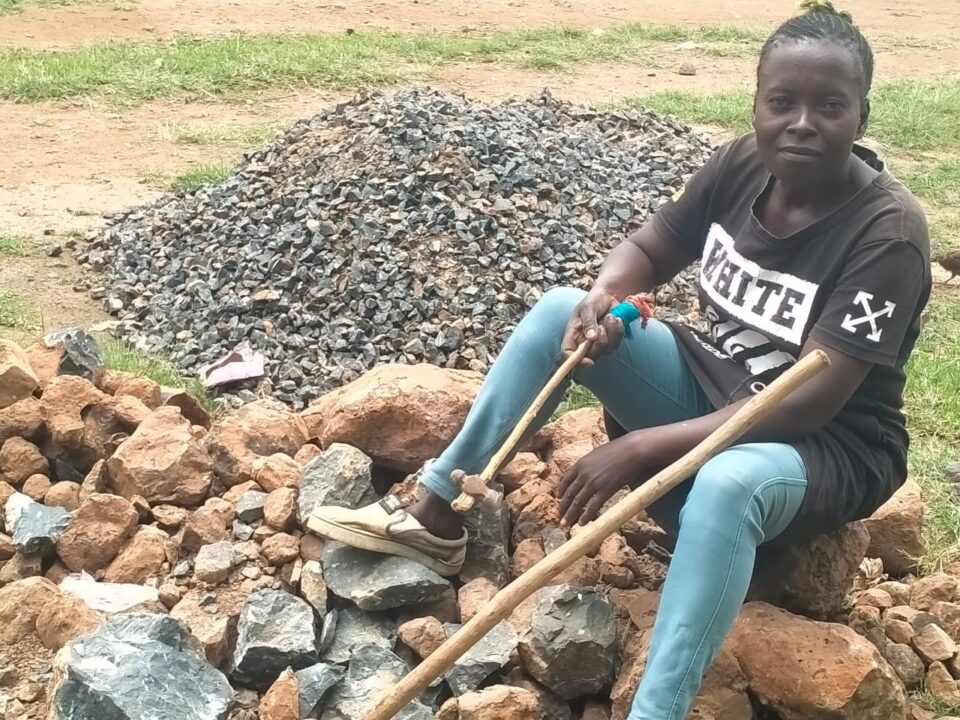
Today, she crushes stones into ballast in Matungulu Sub-county to survive.
Each dawn, she wakes up in her rented room in Kaumoni village, hammer in hand. Dust fills the air, yet the earnings remain painfully low. The work barely covers food, let alone three months of unpaid rent or a bus fare back home.
Her life is now defined by extreme poverty, forcing her into the physically demanding and risky work of manual stone crushing just to survive.
Every day, especially on Sundays, she heads to her working site where she breaks stones for a living. Without protective gear, she uses a simple iron-bar hammer—her only tool.
She works on the rocky terrain hoping that the crushed stones will be bought by builders who use them for concrete slabs and foundations for houses and roads. A wheelbarrow of crushed stones sells for about Sh100.
“When my Kenyan husband left me, I had no source of income to support myself or pay rent. My friend saw my situation and advised me to join her. I had no choice,” she says during an interview with People Tribune.
She adds that she had no job and no capital to start a business after the separation.
“When I started this work, I thought I could not manage because it is very difficult. But someone encouraged me to go ahead,” she says.
Often considered a man’s job, manual stone crushing has become a survival option for many due to rising unemployment and poverty.
Pendwa works without shelter, exposed to harsh weather as she breaks rocks. Her face and legs are often covered in dust and dirt. The once smooth palms of her hands have hardened from daily contact with stones and the hammer.
“It is difficult to lift heavy stones and break them every day, but what can I do? I have no choice but to continue working to survive,” she says, her voice flat.
She also notes that at times her landlord sympathises with her situation and gives her Sh200 for supper.
Pendwa’s story is not hers alone. It reflects the struggles of many foreigners who arrive in Kenya chasing opportunity, only to find themselves trapped between dwindling job prospects and a home they cannot return to—too broke to thrive, too stuck to leave.
For now, she swings her hammer, one stone at a time, hoping that one day a well-wisher will cross her path and offer her a chance at a better life.
