
By ADEN KIPRUTO
Four armed robbers have been sentenced to death after being convicted of robbery with violence, abduction, and the brutal murder of former Kabete MP George Muchai, alongside his two bodyguards and driver.
The suspects—Erick Munyera, Raphael Kimani, Mustafa Kimani, and Stephen Asitiva—faced the charges in an Eldoret court, where Senior Chief Magistrate Lucas Onyina condemned their actions as carried out with extreme brutality, hostility, and impunity.
“The law under which you were charged provides for a death sentence. I hereby order that you suffer death as prescribed by law,” ruled Onyina, emphasizing the gravity of the multiple murders and the premeditated nature of the offences.
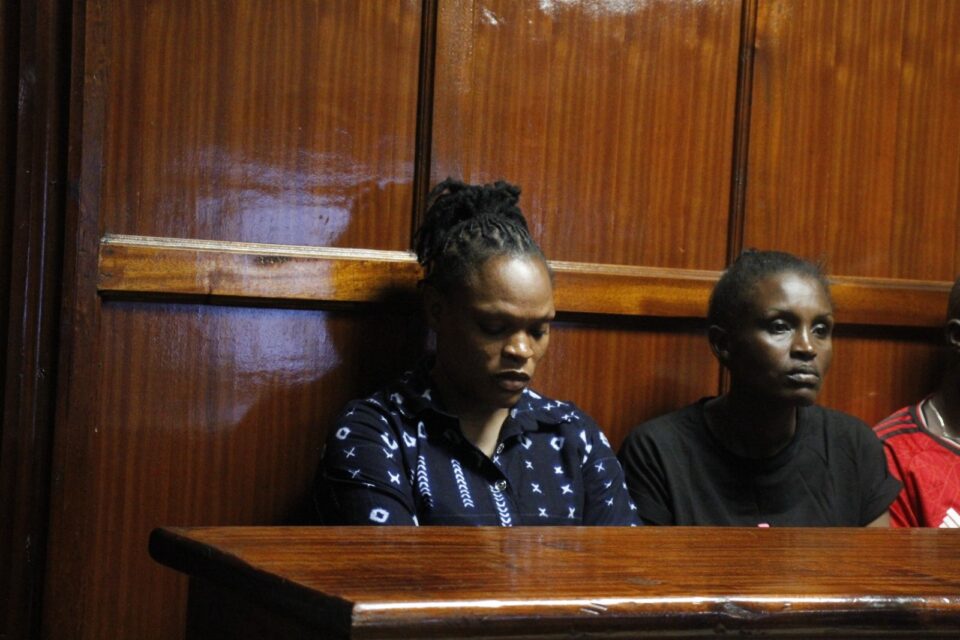
Two female accomplices, Jane Wanjiru and Jane Njeri, received lighter sentences of 10 years in prison, with the terms running from the date of their committal to custody.
Prosecutors told the court that the attacks were executed using dangerous weapons, including firearms, which compounded the severity of the crimes. The Office of the Director of Public Prosecutions (ODPP) had strongly recommended the death penalty, noting that the murders were highly organised and intentional, leaving multiple families bereaved.
The case has also brought a sense of relief to Central Organization of Trade Unions (COTU) Secretary General Francis Atwoli, who had come under scrutiny following Muchai’s killing.
Days after the MP’s death, a section of politicians from Central Kenya publicly called for Atwoli’s arrest, alleging that he had had long-standing differences with Muchai, who was then serving as his deputy at COTU.
The allegations placed Atwoli in a politically sensitive position, with opponents suggesting he could have had a motive to harm Muchai.
This led to public speculation and reputational risk, with Atwoli’s detractors using the incident to question his integrity and influence in the labour movement.
Three of the then lawmakers from Kiambu county, Moses Kuria (Gatundu South), Alice Ng’ang’a (Thika Town) and Francis Waititu (Juja) had claimed that Atwoli was behind the financing of the MP’s murder following his differences with the late.
The legislators were later supported by then Labour Cabinet Secretary Kazungu Kambi called for thorough investigations into the murder, claiming that Atwoli was fully behind the murder.
But, Atwoli who later moved to court and barred the four from linking him to the murder, denied the allegations.
Justice Alfred Mbeya then ruled that Kambi, MPs Kuria, Ng’ang’a and Waititu should not utter any defamatory words against Atwoli, pending the determination of the suit.
In an urgent application then , Atwoli said Kambi, Kuria, Ng’ang’a and Waititu made utterances that have put his life and those of his colleagues in danger.
With the sentencing of the four convicted robbers and murderers, Atwoli’s name has effectively been cleared of any connection to the crime. The ruling provides a significant personal and reputational reprieve for the veteran trade unionist, ending months of political tension surrounding the case.
During the court proceedings, the prosecution highlighted the meticulous planning behind the attacks, describing how the suspects ambushed Muchai and his entourage, leading to the death of the MP, his two bodyguards, and driver. The use of firearms and the aggressive nature of the assault were cited as aggravating factors, strengthening the case for the maximum sentence under Kenyan law.
Defence lawyer Danstan Omari, representing the second convict Raphael Kimani, criticized the ruling, arguing that the court did not give sufficient weight to the mitigation presented by the accused. Omari indicated his intention to challenge the death sentence at the High Court, arguing that certain factors, including personal circumstances and remorse, were not adequately considered during sentencing.
