
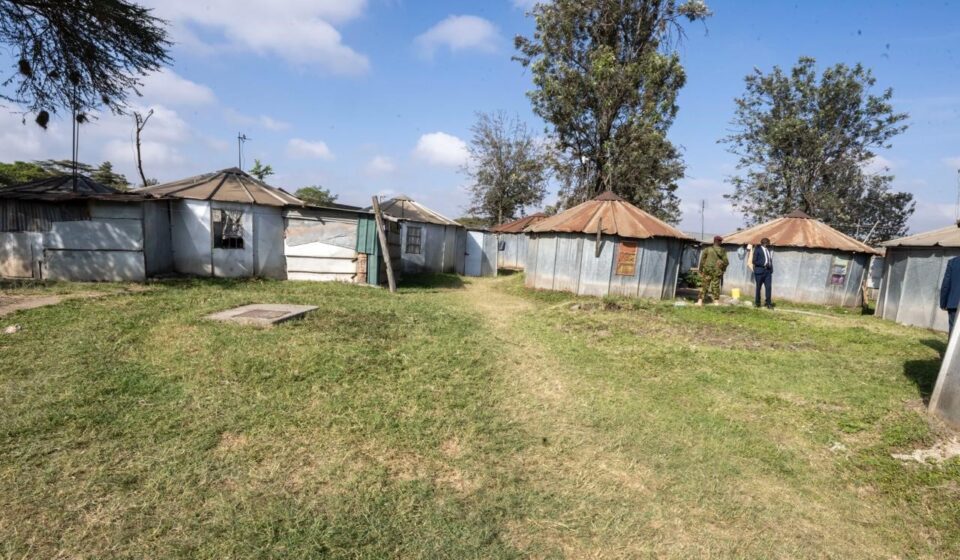
Thousands of police officers across Kenya could soon move out of dilapidated iron-sheet houses into modern homes, as the government rolls out an ambitious plan to construct 47,000 housing units under the Affordable Housing Programme.
Championed by President William Ruto, the initiative aims to address the long-standing housing crisis within the police service, where many officers have for decades lived in cramped, ageing barracks built during the colonial era. Government officials say the programme is intended not only to provide decent housing but also to boost morale and improve service delivery.
Interior Cabinet Secretary Kipchumba Murkomen highlighted the poor conditions many officers endure. “Many live in deteriorating structures commonly referred to as ‘mabati houses,’ some of which lack basic amenities and privacy,” he said. Murkomen noted that such living conditions have historically affected officers’ morale and productivity.
Inspector General of Police Douglas Kanja told the People Tribune that the housing scheme, part of the Sh28 billion government effort, seeks to improve the welfare and working conditions of the National Police Service. “It is something in progress, and very soon our officers will be living in a friendlier environment,” Kanja said.
Under the new plan, officers will have access to affordable mortgage financing at interest rates as low as three per cent per year, allowing them to gradually own their homes.
A senior government official involved in the programme described it as a major step in improving officers’ welfare. “For many years, our officers have been working under very difficult living conditions. Providing decent housing is not just about comfort; it is about dignity and motivation,” the official said. “When officers live in secure and comfortable homes, their morale improves significantly, which translates to better service to the public.”
For many officers, the promise of moving from ageing iron-sheet barracks to modern housing estates represents a long-awaited transformation. A constable at Nairobi’s Kasarani Police Station described the harsh reality. “Some of the houses we live in were built decades ago. The roofs leak during heavy rains, and the rooms are extremely small,” he said, requesting anonymity due to the sensitivity of the matter.
He added that several families often share common sanitation facilities, creating discomfort and health concerns. “You find a whole block sharing very few toilets and bathrooms. It becomes very difficult, especially for officers with families,” he said.
The officer said better housing would improve welfare and motivation. “When you leave a good home in the morning, you go to work with a positive mindset. Living in poor conditions affects your morale,” he said.
Another officer welcomed the affordable mortgage scheme, saying the three per cent interest rate would make homeownership realistic. “Most of us cannot afford commercial mortgage rates. With this rate, owning a home becomes possible,” he said.
Security expert George Musamali emphasized the link between housing and productivity. “Decent housing protects officers’ human dignity. It’s good that the government is now implementing it,” he told the People Tribune. However, Musamali questioned whether units would be converted into individual officers’ homes or remain police lines. “As a lasting solution, officers should receive housing allowances aligned with market rates to enable them to rent good houses. The affordable housing scheme may not be viable for officers who are transferred after being allocated homes,” he said.
Housing policy analyst Eric Were said proper housing is critical for professionalism. “When officers live in dignified conditions, they feel valued by the state and are more motivated to serve the public effectively. Poor living conditions can contribute to frustration, affecting performance,” he said.
The housing units, to be constructed across the country, will feature modern amenities including sanitation, water supply, and electricity. National Police Spokesman Michael Muchiri Nyaga said the homes will be built close to stations to ensure officers remain accessible. Projects include 540 units at Kilimani Police Station in Nairobi, with others under way in Ruaraka, Kiganjo, and Garissa.
Government planners say the programme is part of a broader Affordable Housing initiative to construct hundreds of thousands of homes nationwide to address Kenya’s housing deficit.
Security experts note that prioritizing police housing could also enhance discipline and professionalism. “When officers feel their welfare is taken seriously, they develop a stronger sense of commitment to their duties,” said Johnstone Kavuludi, former chairman of the National Police Service Commission (NPSC). He added that housing reforms have historically improved morale in disciplined forces worldwide. “Security personnel perform best when basic needs such as housing are well taken care of,” he said.
For officers who have spent years in ageing barracks, the housing plan represents hope. “If this programme is implemented well, it will change the lives of many officers and their families,” the Nairobi-based constable said. “Having a decent home is something every officer dreams of.
