
By OLIVER MUSEMBI
The Federation of Evangelical and Indigenous Christian Churches of Kenya (FEICCK) has defended Inspector-General of Police Douglas Kanja against growing calls for his resignation, saying removing him would not address the wider challenges facing the country’s security and criminal justice system.
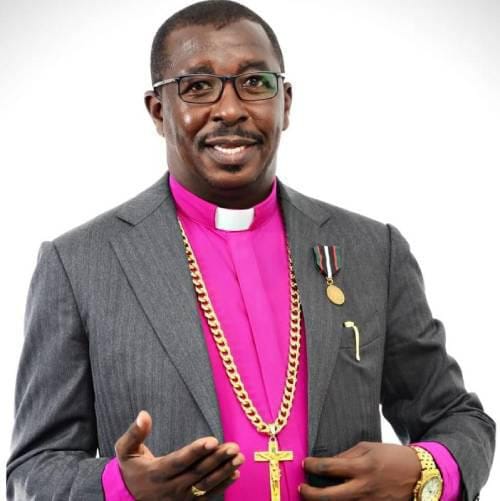
FEICCK chairman archbishop Samuel Njiriri said the National Police Service should instead be supported and strengthened to tackle criminal gangs, organised crime and the proliferation of illegal firearms, while other institutions within the justice chain must equally be held accountable for their roles.
Njiriri said policing was only one component of the criminal justice system and warned against blaming the Inspector-General for outcomes that depended on several other institutions.
“The Inspector-General and the National Police Service cannot single-handedly determine the final outcome of criminal cases,” Njiriri said in a statement on the state of the nation.
He said police officers were responsible for investigating and arresting suspects, while prosecution, evidence, witness protection and judicial processes determined what happened after an arrest.
“Police investigations, prosecution, witness protection and court processes must complement one another so that cases are determined efficiently, fairly and according to the law,” he said.
The church leader said calls for Kanja’s resignation should not become a substitute for addressing weaknesses within the wider security and justice system.
FEICCK said that where there was evidence of misconduct, corruption or failure of duty, the appropriate constitutional accountability mechanisms should be followed.
“Changing an individual without strengthening the system may not solve the underlying problem,” Njiriri said.
He called for stronger coordination between the National Police Service, the Office of the Director of Public Prosecutions, the Judiciary, witness protection agencies and other institutions involved in the administration of justice.
“Kenya needs stronger institutions, better coordination and effective justice—not simply a change of personalities,” he said.
The statement comes amid public debate over the effectiveness of the country’s security agencies in dealing with serious crimes and the subsequent prosecution of suspects.
Njiriri said the Church was particularly concerned when suspects arrested over serious offences were subsequently released on bail or bond and returned to communities, sometimes creating fear among victims and witnesses.
He, however, acknowledged that bail was a constitutional and legal right where applicable, stressing that FEICCK’s concern was not with the rights of accused persons but with ensuring that the entire justice process worked effectively.
“We should not blame one institution for every failure. Let us strengthen the entire system,” he said.
Gangs, illegal guns concern
FEICCK also raised alarm over the emergence of criminal gangs, organised crime, drug abuse and illegal firearms, warning that the threats could undermine security and social stability if not decisively addressed.
Njiriri commended the National Police Service and other security agencies for their efforts to protect Kenyans, investigate crime and confront criminal networks.
He called for sustained intelligence-led policing and community policing, as well as stronger action against organised criminal groups.
Of particular concern, he said, was the recruitment of young people into criminal gangs.
“A young person should be in school, training, employment, business, sports or productive community activity—not being recruited into crime,” Njiriri said.
He argued that security interventions must therefore be accompanied by programmes that give young people alternatives to crime.
FEICCK called for greater investment in youth employment, technical and vocational education, entrepreneurship, digital skills, agriculture, sports, creative industries, apprenticeships and mentorship.
“We must protect our young people before criminal networks capturing them,” Njiriri said.
He said the Church, parents, schools, private-sector players and communities must work alongside the Government to prevent young people from being lured into criminal activities.
Njiriri said the country could not successfully combat gangs by relying solely on arrests and prosecution after young people had already been recruited.
He urged the Government to combine security operations with opportunities that would enable young people to earn a living and participate productively in society.
Church backs security agencies
FEICCK said security remained one of the most important responsibilities of Government and urged Kenyans to support lawful efforts to maintain peace and protect lives and property.
The Church also called on political leaders to avoid rhetoric that could inflame ethnic, regional or political divisions, particularly as the country moves closer to the 2027 General Election.
Njiriri said Kenya could not afford to remain in permanent campaign mode and urged leaders to focus on development, employment, education, healthcare, agriculture and security before campaigning for the next election.
“Kenya needs stability, patience, patriotism and cooperation—not permanent political confrontation,” he said.
He said the Church’s support for Government did not mean it would remain silent on matters affecting Kenyans, saying its responsibility was to commend what was working while offering constructive criticism where necessary.
The FEICCK chairman also urged Kenyans to reject tribalism, political hatred, criminal gangs, illegal firearms, mob justice, domestic violence and the political manipulation of young people.
He said strengthening institutions was more important than constantly changing individuals whenever problems emerged.
“Let us strengthen institutions rather than weaken them,” Njiriri said.
He urged Kenyans to give security and justice institutions an opportunity to work together, while insisting that officers and other public officials found to have violated the law should face established accountability mechanisms.
Njiriri further called on the Church to pray for Kanja, security officers, the Judiciary, prosecutors, President William Ruto, Parliament and other leaders entrusted with running the country.
He said Kenya needed stronger institutions, responsible leadership and a united citizenry to confront its security and social challenges.
“Let us govern before we campaign. Let us build before we divide. Let us counsel before we condemn. Let us strengthen institutions rather than weaken them,” Njiriri said.
He added: “Above all, let us choose Kenya.”
