
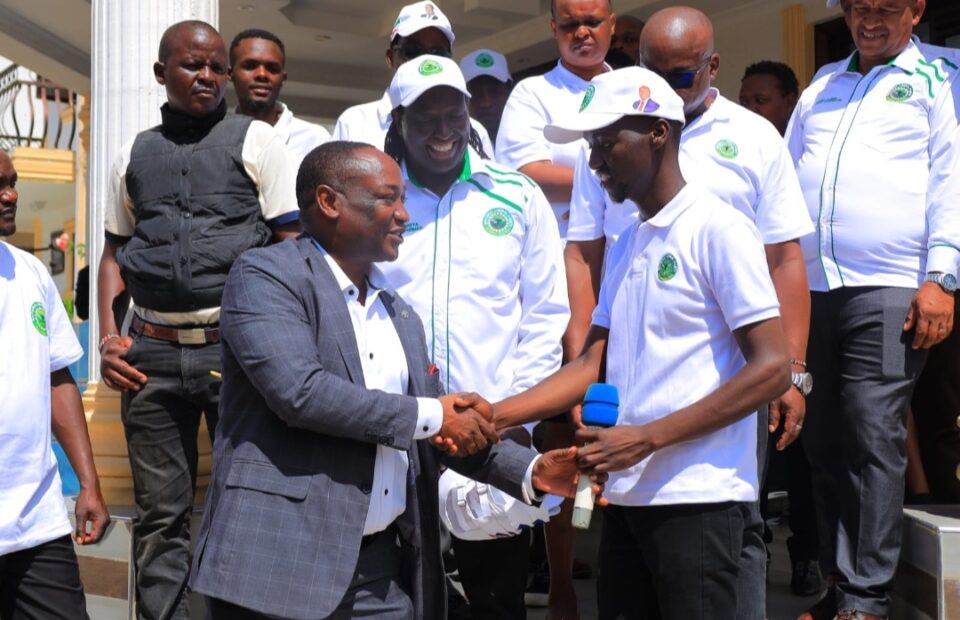
The political landscape in Kitui Central is quickly transforming into a dramatic duel between National Liberal Party (NLP) leader, Dr. Augustus Kyalo Muli and possible contestants as current Member of Parliament, Dr. Makali Mulu is eyeing the Kitui Gubernatorial seat in 2027.
Dr. Makali is serving his third term as Kitui Central MP.
However, the NLP leader – who has steadily cultivated a national profile – has had to make a quick decision following a mounting pressure from residents to bring his influence home by contesting the Kitui Central parliamentary seat in 2027.
The departure of Dr. Mulu, who has shifted his ambitions to the Kitui governorship, has created a vacuum that many believe only Muli can credibly fill.
“For years, aspirants in the constituency defined themselves by their opposition to Makali’s dominance, but with that as a barrier now removed, the race is being shaped anew, and Muli’s candidacy is gathering momentum,” a local political analyst who sought anonymity, summed up the situation.
Muli boasts of a consolidated base within the Anzauni community and a reputation built not just on electoral contests but on sustained grassroots engagement. Through the Kyalo Kya Maendeleo Foundation he has embedded himself in community development initiatives ranging from education bursaries to water projects in what residents say has earned him trust that extends beyond the fleeting enthusiasm of campaign seasons.
“We have seen Dr. Muli with us even when there was no election. He has supported our schools and helped our youth. That is why we believe he should represent us in Parliament,” said Jane Mwanzia, a teacher in Kitui town.
Residents argue that Muli’s national stature as NLP leader gives Kitui Central a unique opportunity to send a representative to Parliament who can influence alliances rather than chase them. His independent standing, they say, offers continuity of policy‑oriented representation without the fatigue of incumbency.
“Makali gave us visibility, but Muli can give us influence. He is already a national figure, and if he becomes our MP, Kitui Central will not be sidelined” noted Peter Mutua, a local businessman.
Still, Muli faces a delicate balancing act. His role as party leader requires him to shape a coalition capable of challenging establishment politicians at the national level. Yet the grassroots call for him to vie locally is growing louder, and ignoring it risks alienating a constituency that has long been his political and social foundation.
“We want him to listen to the people. Kitui Central needs a strong voice in Parliament, and Muli is the one we trust. He should not leave us behind while he builds his national career,” urged Mary Ndunge, a youth leader in Mulango.
Muli’s candidacy, they argue, is gaining traction precisely because it is defined by a proactive agenda rooted in community development and national relevance.
As 2027 approaches, Muli’s decision will carry weight far beyond Kitui Central. Should he heed the grassroots call, he would enter a race shaped from scratch, bringing with him both the organizational strength of the Anzauni community and the national reach of the NLP. For residents, the hope is clear: that their long‑time ally will translate his national profile into local representation.
For Muli, the challenge is equally clear — balancing the demands of a constituency eager for his leadership with the responsibilities of a party leader positioning himself as part of Kenya’s “third force” in national politics.
