
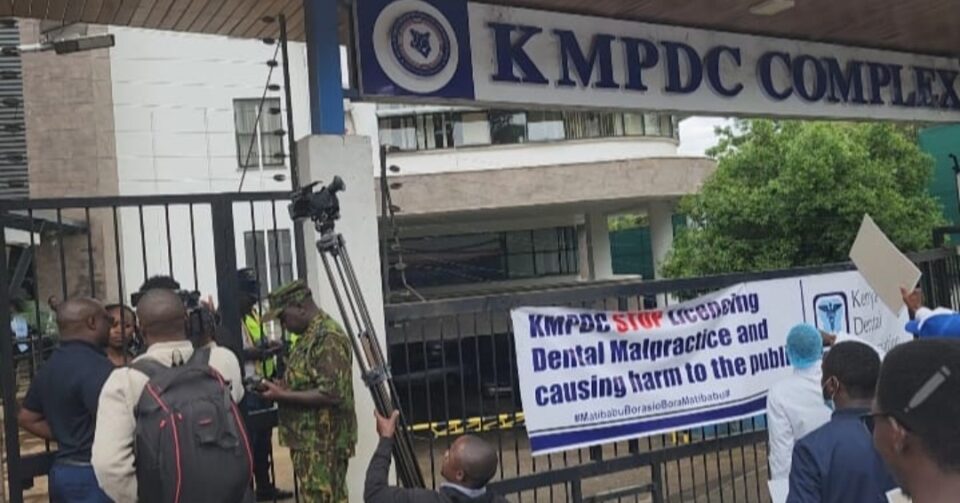
The High Court has issued conservatory orders suspending the implementation of administrative decisions that sought to expand the scope of dental practice for non-dentists, pending the hearing and determination of a constitutional petition challenging the legality of the move.
The orders, issued on July 30, 2026, temporarily bar the Kenya Medical Practitioners and Dentists Council (KMPDC) from implementing and enforcing the contested decisions until the court determines the petition.
The case, Nairobi HCCHR PET/E499/2026, was filed by Dr. Kahura Mundia, Dr. Arnold Malit and the Kenya Dental Association (KDA) against the KMPDC, with the petitioners arguing that the Council unlawfully expanded the scope of practice for non-dentists through administrative action without adhering to the legal framework governing dental practice or established professional standards.
“The impugned decisions could expose patients to increased risks by permitting individuals without appropriate dental qualifications to undertake procedures traditionally reserved for licensed dentists,” the Kenya Dental Association (KDA) argues in the petition.
The petitioners sought conservatory orders suspending the implementation and enforcement of the impugned decisions pending the hearing and determination of the constitutional petition.
By granting the interim orders, the High Court has effectively preserved the status quo until the legal questions raised in the case are fully determined.
The ruling comes at a time when concerns over patient safety and professional accountability in oral healthcare have taken centre stage following the death of Amos Isokha, a 27-year-old Nairobi resident whose quest for relief from a toothache ended in tragedy.
As earlier reported by The People Tribune, Isokha visited Life Clinic in Kawangware on January 1, 2026, seeking treatment for what appeared to be an ordinary toothache.
Following the extraction of a wisdom tooth, he developed life-threatening complications and later died, a case that has since reignited national debate over professional competence, scope of practice and patient safety.
The tragedy mirrors growing concerns raised by dental professionals worldwide. The FDI World Dental Federation has recently warned that oral diseases affect nearly half of the global population and stressed that quality oral healthcare depends not only on access to services but also on treatment being provided by appropriately trained and regulated professionals.
Against this backdrop, the KDA says the dispute before the High Court is not about limiting the contribution of other oral health professionals but about ensuring that every cadre practises strictly within the limits prescribed by law.
“This petition is about protecting the public. Every oral health professional has an important role to play, but each must practise within the scope of competence established by law. Patient safety must always come first,” said Dr. Mundia.
The Association maintains that expanding professional mandates outside the existing legal framework could expose patients to preventable harm, blur professional accountability and undermine confidence in Kenya’s healthcare system.
Healthcare experts say the constitutional petition raises broader questions about the powers of regulatory councils and whether professional scopes of practice can be altered through administrative directives without legislative backing or meaningful stakeholder consultation.
For many observers, the case is no longer merely a legal contest between a professional association and its regulator. It has evolved into a test of how far regulatory bodies can go in redefining healthcare practice while balancing innovation, workforce needs and the constitutional obligation to protect patients.
The Law Society of Kenya (LSK) was enjoined in the case as a petitioner, through advocate Catherine Kihiu.
The matter is scheduled for mention on October 8, 2026, when the court is expected to highlight submissions before giving further directions on the hearing of the petition.
The outcome is expected to shape the future regulation of dental practice in Kenya, with far-reaching implications for patient safety, healthcare governance and the legal limits of administrative decision-making by professional regulatory bodies.
