
Regina, a corporate expert who stays in the upmarket Nairobi, has not stepped out of her house for the last one week since she took a 10-day off at work.
She runs all her errands through the mobile phone, which is ever fixed on the charging system and never leaves her hands. Eye specialists have warned that Regina, who’s barely 30 years old is taking a wrong direction.
According to Dr. Monicah Bitok, acting Head of Eye Health at the Ministry of Health, Regina risks a confrontation with diabetic retinopathy, which occurs when high blood sugar levels damage the tiny blood vessels in the retina—the light-sensitive tissue at the back of the eye.
And with the number of Kenyans needing eye care services and cataract surgeries growing significantly, she thinks that with the changing lifestyles, a number of Kenyans are becoming more sedentary.
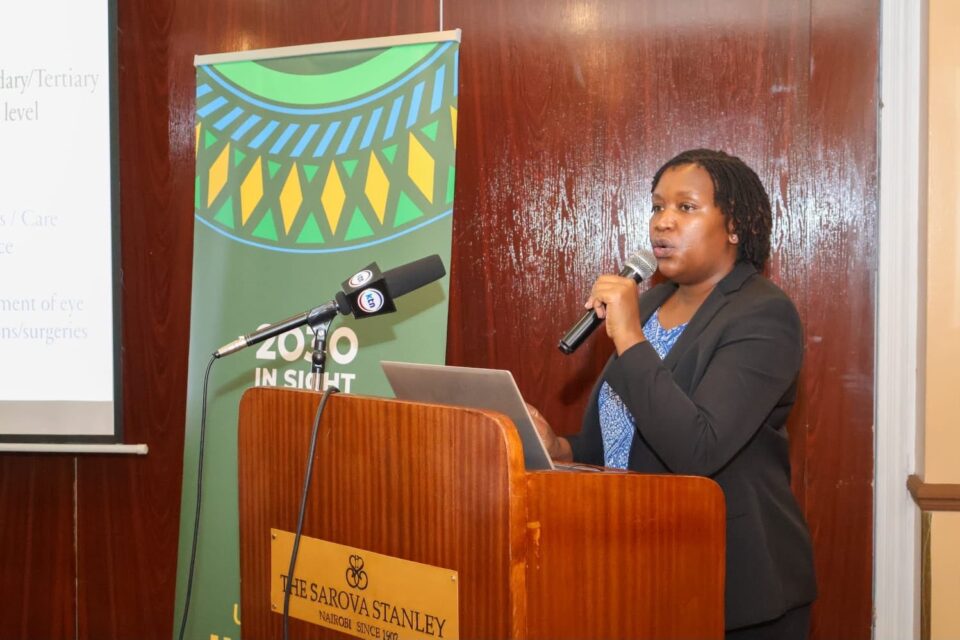
“And therefore, we have noticed that without physical exercises as it was in the past, there’s an increasing prevalence of non-communicable diseases such as diabetes, which affects the eyes,” she said ahead of the 2030 IN SIGHT LIVE KENYA Conference scheduled for Nairobi this week between 4–6 June 2026.
To be hosted by the International Agency for the Prevention of Blindness (IAPB), the conference bringing together 500 delegates from across the globe, is focused on advancing eye health, innovation, artificial intelligence (AI), and efforts to eliminate avoidable blindness.
It is estimated that nearly 700,000 Kenyans require eye care services and cataract surgeries, and this number could be rising significantly as the scale on the access to digital devices is tilting.
Dr. Bitok highlighted that one of the complications of diabetes is in the eyes, a condition called diabetic retinopathy.
“Studies have shown that diabetic retinopathy can lead to vision loss or blindness if not managed early,” she noted, encouraging people who have been diagnosed with diabetes to have their eyes checked at least once a year.
The thing with diabetes, according to Dr. Bitok, it affects mainly the productive age group, if not screened early and put on treatment immediately.
Another emerging concern is the rising exposure to digital screens, especially for children.
“You’ll find that we don’t have controls over how long our children are using the screens,” she said, noting that in most of these cases a child would be seated on the tablet the whole day, and in the process this has an impact on the development of the eyes.
Globally, there is an increasing prevalence of what’s known as short-sightedness or myopia. Dr. Bitok attributes this to the change in lifestyles for the children.
Previously, children would go outside to play, participating in a lot of outdoor activities, but current observations indicate that most of them are staying indoors and being exposed to screens.
Eye specialists are consequently warning that this situation has an impact on the children’s vision.
“I really urge parents to control how much time their children are on the screens,” she said, calling on the parents to encourage their children to have some outdoor play so that their eyes develop normally. She explained that a failure on the parents’ side risks having a lot of children with short-sightedness in the future.
“And for a child who’s less than two years, they really have no business being on a screen, because we need their eyes to develop, we need them to play, so we really need to limit the screen time,” she added.
The IAPB 2030 Insight Live conference provides an opportunity to accelerate progress towards universal access to eye health services.
“Kenya has made important progress in reducing blindness, but preventable vision impairment remains a significant public health challenge,” Dr. Bitok said.
Conditions such as cataracts, refractive errors, glaucoma, and diabetic retinopathy continue to affect health, education, and economic productivity.
The conference, she said offers an important platform to strengthen partnerships, showcase innovation, and accelerate solutions that will improve access to eye care.
Cataracts remain the leading cause of blindness in Kenya, accounting for nearly half of all blindness cases.
An estimated 9.6 million Kenyans live with refractive errors, while approximately 15,000 children are affected by preventable or treatable vision loss.
Delegates will discuss key priorities including workforce development, financing, service delivery, digital transformation, and strategies to address the growing burden of eye diseases associated with non-communicable conditions. A key focus of the conference will be the use of artificial intelligence, digital health technologies, and tele-ophthalmology to improve diagnosis, expand access to specialist services, and strengthen eye health systems, particularly in underserved communities.
The conference aligns with Kenya’s commitment to Universal Health Coverage (UHC), and is co-hosted by the Ministry of Health, Sightsavers, CBM, Fred Hollows and Good Vision.
“So when we bring all these people together, then we are able to talk about eye health together, and see how we can advance the eye health agenda,” she added.
In conclusion, while screen media and digital devices are increasingly prevalent in young children’s daily lives, managing screen time thoughtfully is essential.
