
By Milliam Murigi @millymur1
Africa’s urban future will depend on how the continent solves its housing crisis. This was revealed during the second Africa Urban Forum.
Speaking during the event, Anacláudia Rossbach, UN-Habitat Executive Director, said that Africa’s rapid urbanization is no longer just a demographic shift it is a defining moment that will determine whether cities become engines of opportunity or epicenters of inequality.
“This is not merely a demographic shift it is a systemic crisis,” she said.
Currently, Africa is urbanizing at about 3.5 per cent annually. By 2050, majority of Africans will be living in urban areas, placing unprecedented pressure on housing systems, infrastructure and services.
According to her, even though cities drive economic growth accounting for roughly 60 per cent of GDP, an estimated 60 per cent of urban residents lack access to adequate housing. This vulnerability is deepening because of limited access to land, commodification of housing and intensifying climate risks.
“Housing has shifted from a basic need to a commodity. In that shift, entire populations are being locked out of dignity and security,” she said.
A recurring theme throughout the forum was the need to rethink housing not as a social cost, but as core economic infrastructure. According to Kenya’s President, William Ruto, housing is not only a social expenditure but it is foundational infrastructure for jobs, dignity and socio-economic transformation.
According to him, cities generate over 75 per cent of national income yet many remain underfunded and poorly planned. He pointed to a stark contradiction, while Africa needs up to $170 billion annually to close its infrastructure gap, more than $400 trillion exists in global capital.
“Housing is one of the most powerful economic multipliers we have. Each dollar invested can generate up to 2.5 dollars in economic activity and create jobs at scale,” said president Ruto.
According to Alice Wahome, Cabinet Secretary, Ministry of Lands, Public Works, Housing and Urban Development in Kenya, Kenya is positioning itself as a test case for turning housing ambition into reality.
The country is treating housing as a system that links land, finance, labour, and markets unlocking economic activity across sectors.
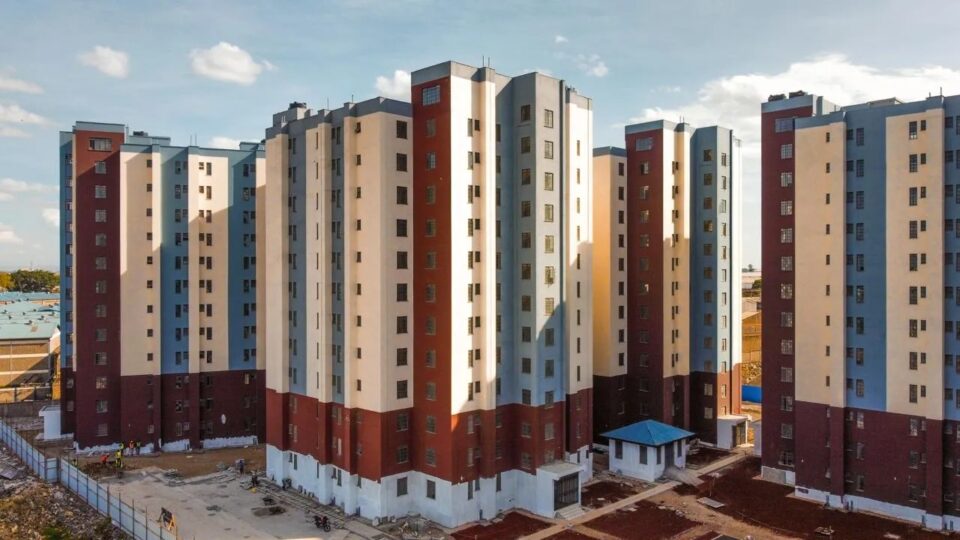
The results are beginning to show. Nearly 300,000 housing units are under construction across over 200 sites, employing hundreds of thousands of Kenyans from engineers and architects to informal artisans now transitioning into formal businesses.
“Rather than treating housing as a standalone sector, Kenya is reframing it as a system. A system that when structured effectively, unlocks economic activity across multiple value chains,” said Wahome.
According to Malawi Minister of Lands, Housing and Urban Development, Chimwemwe Chipungu, other African countries have also started to work to make their cities better. In Malawi, for example, they have begun upgrading informal settlements to ensure that residents have access to safer housing, basic services such as clean water and sanitation, and improved infrastructure that enhances resilience to climate risks.
He revealed that working with local councils, organisations such as Habitat for Humanity and community groups, the government has supported interventions that go beyond physical infrastructure.
These include securing land tenure for hundreds of households, improving access to water through communal systems, upgrading roads and drainage, and introducing planned layouts to guide safer and more orderly development.
“We are working with the communities, because the approach has to be bottom-up. Without their involvement, we cannot achieve the intended objectives. We want people living in informal settlements to be part of decision-making and policy processes. Only then can we deliver solutions that are truly effective and sustainable,” said Chipungu.
When asked what should be done to address the housing crisis currently facing the continent, Chimwemwe Chipungu says African countries must adopt a more unified and collaborative approach, similar to the collective models seen in parts of Europe and the United States.
He argues that one of the biggest challenges is fragmentation, with countries often pursuing development goals in isolation rather than through shared strategies.
“Countries tend to think and act individually, sometimes in a unilateral way, yet the scale of the challenge demands cooperation,” he notes.
By working together, Chipungu believes African nations can accelerate progress not only in housing, but across broader areas of development.
“Africa has to be united. We need to think as one and align our ambitions with the kind of future we want to build,” he says, adding that coordinated action could unlock more inclusive and sustainable growth across the continent.
On her side, Rossbach said that governments also need to move investments and developments beyond the megacities to the rising secondary urban centers.
According to her, while megacities often dominate headlines, much of Africa’s urban growth is shifting toward secondary and intermediary cities.
These emerging urban centers according to her can be planned proactively ensuring access to land, housing and infrastructure before informal settlements take hold.
“Done right, they could drive balanced regional development. Done poorly, they risk replicating the same inequalities seen in larger cities,” said Rossbach.
