
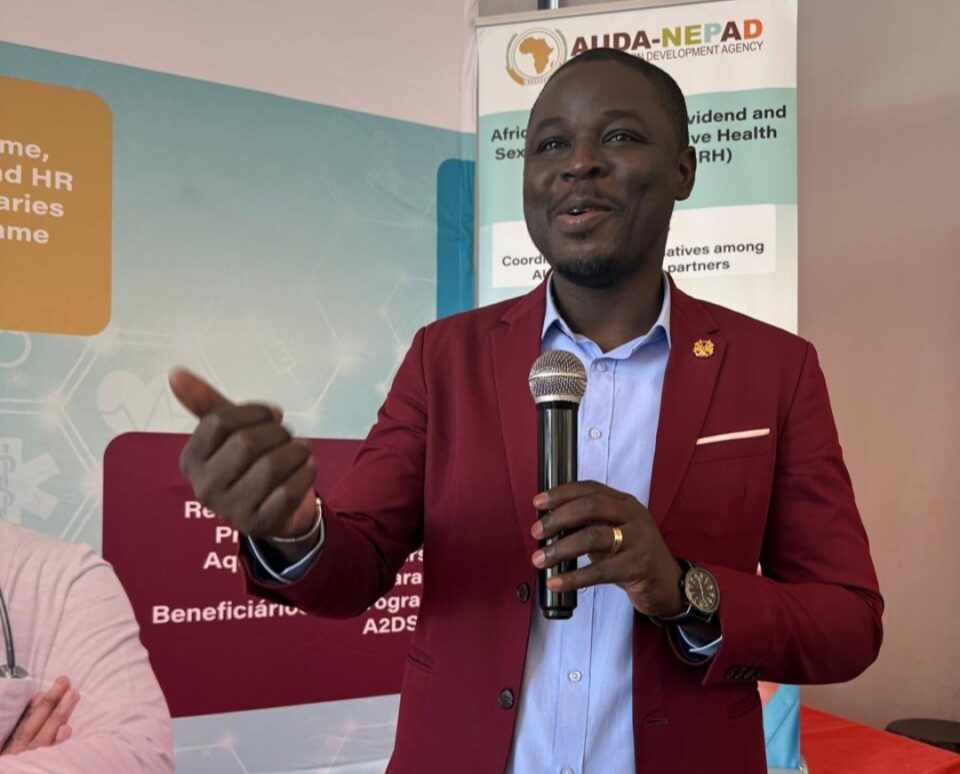
By George Morara
A five-day workshop on the Africa Demographic Dividend and Sexual and Reproductive Health (A2DSRH) Programme to strengthen programme, finance, procu rement, and human resource systems could not have come at the right time like now.
Held in Mombasa this week and concluding later today, the workshop comes in the backdrop of important progress witnessed in advancing sexual and reproductive health and rights (SRHR) in Africa.
However, this is also not without significant challenges still in the background, with countries trapped in stagnated efforts to improve SRHR, a programme seen as fundamental to health and well-being for all. It’s also an initiative aimed at enabling young people to fulfil their potential, and contribute to sustainable social and economic development.
“In alignment with the broader vision of harnessing Africa’s demographic dividend, and in synergy with the ongoing Sexual and Reproductive Health (SRH) and demography dividend efforts, AUDA-NEPAD is providing financial support (through “A2DSRH” project) which aims at, among other things, supporting the establishment of regional health organizations and advancing the operationalization of regional health financing hubs in Africa,” says African Union Development Agency- NEPAD says in a concept note for the workshop.
To achieve this objective, AUDA-NEPAD notes that there is a need to strengthen the capacity of the project executing agencies. This, therefore prompted the AUDA-NEPAD, in collaboration with the Intergovernmental Authority on Development (IGAD) to organize the five-day capacity-building workshop under the A2DSRH programme.
The training brought together staff working in management, finance, and procurement departments within the Regional Economic Communities (RECs) and programme piloting countries.
“The workshop aims to build institutional capacities in financial management, procurement systems, and human resource development to ensure the effective and sustainable implementation of SRH-related programmes across the IGAD region,” says AUDA-NEPAD leadership.
Several recent studies are presenting a grim image of the SRHR status despite the progress recorded, calling for more focused efforts to address the existing gaps.
In April last year for instance the United Nations Population Fund (UNFPA) released a report that showed that despite the colourful global gains in sexual and reproductive health and rights over the last thirty years, yet they were marred by an ugly truth. That, millions of women and girls have not benefited because of who they are or where they were born.
The 2024 State of World Population report: “Interwoven Lives, Threads of Hope: Ending inequalities in sexual and reproductive health and rights”, highlighted the role racism, sexism and other forms of discrimination continue to play in blocking broad gains in sexual and reproductive health for women and girls.
“The data are damning. Women and girls who are poor, belong to ethnic, racial and indigenous minority groups, or are trapped in conflict settings, are more likely to die because they lack access to timely health care,” UNFPA noted in the report, citing that an African woman who experiences pregnancy and childbirth complications is around 130 times more likely to die from them than a woman in Europe and Northern America.
However, this might change as shown at the conclusion of the A2DSRH Programme workshop, where participants are expected to demonstrate enhanced competencies across key operational areas critical to the successful implementation of the SRH programmes.
Through a combination of technical sessions, practical exercises, and peer-to-peer learning, participants have gained improved knowledge and skills in financial management, procurement processes, and human resource development tailored to the needs of regional SRH programming.
“These strengthened capacities will contribute to more efficient, transparent, and accountable institutional performance within their respective organizations,” AUDA-NEPAD highlights.
In addition to individual skill-building, as a follow-up programme to ensure participants gained, the workshop will foster regional collaboration by facilitating the formation of a professional network of financial management and procurement experts across IGAD member states, to serve as a platform for ongoing exchange of best practices, technical support, and harmonization of approaches aligned with regional strategies.
Ultimately, the workshop will support the creation of a more integrated and responsive regional health architecture capable of advancing Africa’s demographic dividend agenda.
It’s also understood that strengthening staff capacity in these key areas is highly likely to improve SRHR outcomes, and by improving the systems and processes that support programme delivery, organizations can become more effective, accountable, and sustainable, directly benefiting the quality and reach of SRHR initiatives.
“The A2DSRH training will strengthen staff capacity in programme planning and implementation, financial oversight, procurement and grants compliance, human resource management, and audit and risk mitigation to ensure effective, accountable, and sustainable programme delivery,” according to the workshop organisers.
