
By REBECCA WANGARI
The Kenya Organic Agriculture Network (KOAN) has urged farmers to embrace organic agriculture, saying growing demand for safer and healthier food presents an opportunity for producers to increase their incomes while contributing to sustainable food production.
KOAN Programmes Manager Samuel Ndung’u said the market for organically produced food was expanding both locally and internationally, creating lucrative opportunities for farmers willing to adopt environmentally friendly farming practices.
Ndung’u said the country currently has about 64,000 certified organic producers, up from 62,000 recorded last year, reflecting growing interest in organic agriculture.
He said avocados and macadamia nuts account for a significant share of Kenya’s organic exports, while herbs and spices are also emerging as important products in the sector.
The organic agriculture market is estimated to have generated approximately Sh3 billion from local and international sales, highlighting its potential as an alternative source of income for farmers.
“Farmers need to take advantage of the growing demand for organically produced food. There is a huge market both locally and internationally, and producers stand to make good returns if they embrace the practice,” Ndung’u said.
He said KOAN had been working with farmers’ groups and individual producers by providing training on appropriate farming practices and technical support to ensure they produce quality organic food that meets market requirements.
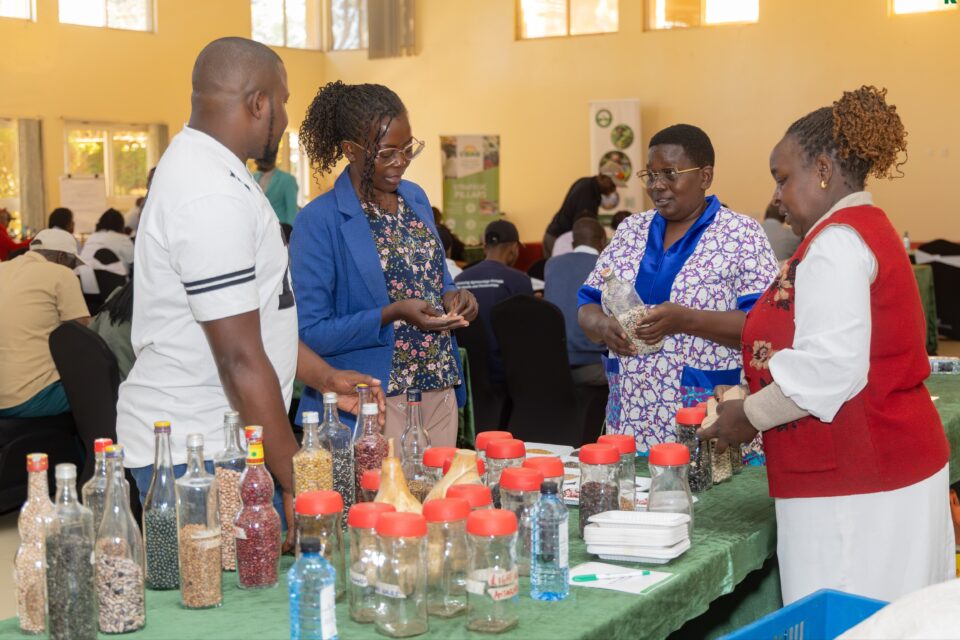
Speaking during the National Participatory Guarantee System (PGS) Workshop, which brought together more than 40 registered groups, Ndung’u also called for the establishment of more organic food markets across the country to improve access to consumers.
He said expanding the markets would provide farmers with reliable outlets for their produce while making organically grown food more accessible to households.
A key focus of the workshop was the Participatory Guarantee System, a farmer-led approach to ensuring the integrity and credibility of organic produce.
The system enables farmers to establish internal standards and collectively monitor compliance through peer inspections, shared responsibility and knowledge exchange.
Unlike conventional third-party certification, which often involves expensive inspection and certification procedures, PGS relies on trust, social networks and active participation among producers to ensure accountability.
Ndung’u said the model was particularly beneficial to small-scale farmers who might otherwise be unable to meet the cost of conventional organic certification.
“Third-party certification system is expensive, and many farmers cannot afford it, but the PGS offers a more affordable way for small-scale farmers to demonstrate the quality and integrity of their produce,” he said.
He urged county governments and other stakeholders to increase investment and support for agroecology, saying stronger collaboration would expand access to safe, quality food while helping farmers secure sustainable incomes.
Ndung’u said the National Agroecology Strategy, launched last year and currently being domesticated by county governments, was an important policy framework for promoting sustainable food production, strengthening food security and improving farmers’ livelihoods.
Murang’a, Busia, West Pokot, Vihiga and Taita Taveta are among the counties that have already domesticated and adopted the strategy.
He said wider implementation of the policy would encourage farming methods that protect the environment, conserve natural resources and reduce dependence on harmful agricultural chemicals.
Meanwhile, Miriam Muriithi, Director of Fine Aromas of Kenya, said her experience sourcing produce from PGS groups had demonstrated the commercial potential of organic agriculture.
Muriithi said she had established working relationships with farmer groups in Kiambu, Kirinyaga, Machakos and Uasin Gishu counties, from which she sources quality organic produce for distribution to various markets.
“The demand for organic produce is high, and working with these groups has made it easier for me because I supply the produce to major supermarkets, schools and hotels,” she said.
She encouraged farmers with available land to join PGS groups, saying participation in the organic value chain could provide opportunities for increased earnings through access to established buyers.
David Maina, an organic farmer from Kiserian and a member of the Nooya PGS group, said the initiative had helped farmers diversify production, improve the quality of their produce and access better markets.
Maina said members of the group grow different food crops and herbs, while also undertaking value addition to increase the market value of their products.
He said the group had additionally established a local farmers’ market that serves as an outlet for fresh organic produce and processed products, giving members an opportunity to sell directly to consumers.
Maina explained that the PGS model requires participating farmers to undertake annual peer inspections, with technical support from organisations such as KOAN.
The organisation’s assessors help verify whether farmers are adhering to agroecological practices, including avoiding harmful pesticides and synthetic fertilisers.
He said the inspections and collective accountability were essential in maintaining production standards, strengthening consumer confidence and protecting the credibility of organic food.
Maina added that the system had enabled farmers to consolidate their produce, making it easier to meet the requirements of buyers seeking large quantities.
“The PGS model has helped us access better markets because we aggregate our produce to be able to meet the demand from buyers who require large quantities,” he said.
He said the model was not only helping farmers improve their production practices but also strengthening their bargaining power by enabling them to operate collectively rather than individually.
With demand for organic products continuing to grow, KOAN says strengthening farmer organisations, expanding market access and supporting county governments to implement agroecological policies will be critical to unlocking the sector’s economic potential.
