
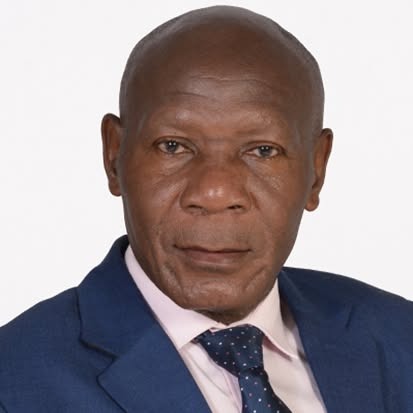
By KENNEDY BUHERE
I often think about the head teachers of Kivaywa Secondary School and Kakamega High School whenever the administration of KCPE and KCSE examinations begins. The memories became particularly vivid during my tenure as a Public Communications Officer in the State Department for Basic Education, whenever former Principal Secretary for Basic Education, Dr Belio Kipsang, visited primary and secondary schools where candidates were sitting their national examinations.
The late Mr Raza Mwanzo of Kivaywa Secondary School and Mr John Kinaro of Kakamega High School were outstanding leaders who made education meaningful beyond the classroom and the school system.
I remember them for two outstanding qualities.
First, they guided teachers to prepare us not merely for examinations but for something far greater: life.
Whenever they addressed us during morning assembly, they always had something meaningful to say. Their messages often touched on public affairs, citing relevant data or the personalities involved in unfolding events.
They connected these issues to our lives and the future ahead of us. They used them as opportunities to offer advice, provide examples and impart wisdom.
Neither head teacher showed contempt for any subject in the prescribed curriculum or syllabus.
At Kivaywa Secondary School, for instance, Physical Sciences was the only optional subject offered to students sitting the Kenya Certificate of Education (KCE). Physical Sciences, which combined Physics and Chemistry, was offered in schools that lacked separate laboratories for Physics, Chemistry and Biology.
Otherwise, all students studied English, Kiswahili, Geography, History, Christian Religious Education (CRE), Literature and Biology.
I cannot recall any science teacher at Kivaywa belittling arts-oriented subjects or discouraging students with an aptitude for the sciences from appreciating the humanities. Every subject had its place in the curriculum, and every learner deserved an opportunity to develop their abilities.
Neither do I remember the two head teachers patronising the teachers under their charge. There was mutual respect between the school heads and their teachers. Teachers went about their duties without being unnecessarily pushed around or micromanaged.
The second quality I remember vividly was the composure with which the two head teachers approached the national examinations season.
Why were they so calm and collected when examinations began? I believe there were two principal reasons.
First, during the four years leading to the examinations, Mwanzo and Kinaro had provided strong instructional leadership that supported effective teaching and learning. At the same time, they exercised equally sound administrative leadership within their respective school communities.
Effective instructional leadership enables teachers to achieve both individual and collective goals. Mwanzo and Kinaro managed the curriculum, school finances and the delegation of responsibilities to teaching and non-teaching staff with remarkable competence.
Their management ensured that school duties were shared equitably. Teachers were not unnecessarily drawn into financial and administrative matters that had little to do with their primary responsibility of teaching.
The result was a smooth teaching and learning process. Teachers taught without discernible constraints, and we learnt without unnecessary interruptions.
As students, we approached examinations without panic because our teachers had adequately prepared us. Through appropriate teaching methods, they had exposed us to the knowledge, skills and competencies required by the curriculum and the examinations.
I recall that the third term was generally more relaxed. This is not to suggest that the preceding terms were tense. Our official classroom and instructional hours ran from 8am to 3.30pm on school days, while our self-directed study sessions, commonly known as preps, began at 7am and ended at 9pm.
That teaching and learning environment empowered not only our teachers but also us, the students, to take responsibility for our education.
John W. Gardner, who served as United States Secretary of Health, Education and Welfare under President Lyndon B. Johnson, observed: “The ultimate goal of the educational system is to shift to the individual the burden of pursuing his own education. This will not be a widely shared pursuit until we get over our odd conviction that education is what goes on in school buildings and nowhere else.”
I do not know whether my two great head teachers were familiar with Gardner or his philosophy. Nevertheless, each of them independently created an environment in which students had the freedom and confidence to take charge of their learning.
That is why students, including yours truly, did not panic as national examinations approached in the third term. We were equally composed during the mock examinations, which were administered only once, in the second term.
The second reason for the head teachers’ composure was perhaps even more important: they did not allow competing interests to distract them from their central mission of developing the potential of every learner.
They understood that they had been entrusted with the responsibility of nurturing young minds to the fullest extent possible. Their task was to expose learners to the knowledge, skills, attitudes, values and habits of thought that society expects education to cultivate.
They also understood the fundamental purpose of examinations: to assess a learner’s ability to master and apply the knowledge and skills prescribed by the curriculum.
Their responsibility was to coordinate teaching and learning, prepare students adequately and present them for assessment without interfering with the administration of the examinations.
Beyond creating a conducive environment for candidates, Mwanzo and Kinaro continued to discharge their duties normally during the examination period. Their schools remained in session, unlike the situation today, when schools largely close for learners who are not sitting examinations, leaving only candidates in class.
Neither head teacher appeared to be competing with colleagues in other schools, nor did either give the impression of pursuing interests unrelated to the welfare and development of learners.
They conducted the affairs of their respective schools calmly and with the highest standards of integrity. They implemented the curriculum with dedication and managed national examinations with equal composure.
The late Mwanzo and Kinaro were gentlemen in the truest sense of the word. Their leadership demonstrated that successful school management is not about anxiety, rivalry or the spectacle surrounding national examinations. It is about preparing learners well, empowering teachers, upholding integrity and keeping the interests of students at the centre of education.
I salute them both, albeit posthumously.
Kennedy Buhere
Communication Specialist
