
Faith and Community Organisations Warn Against Global Health Funding Retreat as HIV, TB and Malaria Gains Face Threat
By George Kebaso
Efforts to end AIDS, tuberculosis and malaria could suffer serious setbacks if mounting global health financing pressures translate into reduced support for prevention, treatment and community-based services, a coalition of faith-based, community and civil-society organisations has warned.
The organisations say the growing pressure on international assistance, rising public debt and constrained national budgets threaten to reverse gains made over the past two decades in controlling the three major infectious diseases.
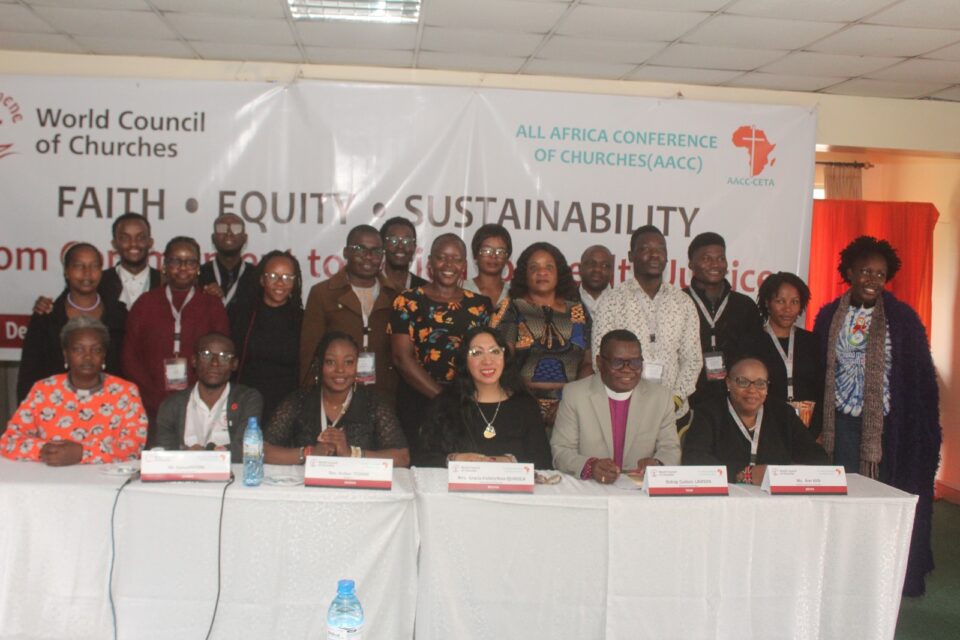
In a statement delivered in Nairobi, the coalition urged governments and international partners to protect health investments, honour funding commitments and ensure that the transition towards greater domestic financing does not leave vulnerable communities without essential services.
The coalition comprises the National Empowerment Network of People Living with HIV/AIDS in Kenya (NEPHAK), LVCT Health, Faith to Action Network, African Jesuit AIDS Network (AJAN), Ecumenical Pharmaceutical Network (EPN), International Community of Women Living with HIV (ICW), Y+ Kenya, NINERELA+, INERELA+ Nigeria, Zambia Network of People Living with HIV (ZNNP+) and Zambia’s UTH Movement.
This intervention comes at a critical moment for global health financing, as countries and partners consider ha number of sustainable programmes that have helped save millions of lives through HIV, TB and malaria initiatives.
It cautioned that sustainability must not become a justification for international partners to withdraw support, describing it instead as a shared responsibility that requires stronger domestic investment alongside continued global solidarity.
“International solidarity and partnership remain indispensable for sustainability,” the organisations said in the joint statement delivered by Gracias Ross from the World Council of Churches (WCC).
They warned that sustainability should not be treated as an exit strategy from existing partnerships.
While acknowledging the importance of countries strengthening domestic investment in health, the Coalition maintained that governments, international partners, communities and faith actors have a role in protecting the gains made against the three diseases.
“We welcome the international commitments demonstrated towards the Global Fund,” said Ross.
However, the organisations called on donors to honour their pledges and ensure that the promised resources are rapidly translated into funding that reaches communities and saves lives.
“We are also urging governments to strengthen domestic resource mobilisation, protect health budgets and prioritise high-impact interventions targeting HIV, tuberculosis and malaria,” said Ann Kioi from the host, All Africa Conference of Churches (AACC).
Beyond financing, the organisations noted that sustainability depends on accountable leadership, meaningful community participation and continued attention to the needs of people most affected by the diseases.
They warned that prevention programmes, community-based services, community-led monitoring and faith-based health responses must not be weakened as countries prepare for the Global Fund’s Grant Cycle 8 (GC8), a funding period expected to involve difficult decisions on priorities and resource allocation.
“We are calling for the meaningful participation of faith actors, civil society and affected communities in Country Coordinating Mechanisms (CCMs) and other national decision-making structures,” Bish. Godson Lawson, the presiding bishop of the Methodist Church of Togo added his voice.
The organisations are advocating for a strong voice if communities in determining health priorities, influencing funding decisions and monitoring how resources are used.
“We also feel that there’s need for equitable access to new prevention tools, diagnostics and treatments, saying life-saving innovations must be affordable and accessible to the people who need them most,” said Samuel Nyoni from the Youth Movement for HIV/TB/Sexual Reproductive Health Rights Advocacy in Zambia.
The organisations further urged governments and partners to uphold human rights, dignity and inclusion, and to confront stigma and discrimination that continue to undermine access to health services.
They welcomed the direction set by the 2026 Political Declaration on HIV/AIDS and the Global Fund Strategy 2023–2028, particularly their emphasis on sustainability, community leadership, human rights, equity and country ownership.
The coalition outlined seven priorities: protecting and increasing investments in HIV, TB and malaria programmes; translating Global Fund pledges into action; strengthening domestic resource mobilisation while maintaining international solidarity; supporting meaningful community leadership; expanding equitable access to health innovations; upholding human rights and dignity; and strengthening accountability for health commitments, budgets and results.
For the organisations, the financing debate is ultimately about more than budgets and technical decisions. It is also about whether people living with and affected by the three diseases can continue to access treatment, prevention and support without discrimination or interruption.
“Communities should not be made to bear the cost of financing shortfalls or the transition towards greater domestic responsibility,” Jerope Limo, ambassador for Youth & Adolescents Reproductive Health Program stated.
The coalition urged leaders to ensure that the promise of ending AIDS, TB and malaria as public-health threats remains a practical commitment backed by resources, inclusive decision-making and measurable accountability.
“Health is not only a technical or financial issue. It is a matter of dignity, justice and solidarity,” the statement said.
It added: “The time for pledges has passed. The time for action is now.”
