
By OLIVER MUSEMBI
African universities should move beyond their traditional roles as institutions of t
eaching and knowledge dissemination and become centres of innovation, entrepreneurship and practical solutions to societal challenges, a Kenyan scholar has said.
Mount Kenya University (MKU) Pro-Chancellor Dr Vincent Gaitho said the rapidly changing global environment, driven by artificial intelligence (AI), digitalisation, climate change and emerging technologies, requires universities to rethink their approaches to education, research and innovation.
He said higher education institutions must equip graduates with skills that enable them to respond to evolving workplace demands and develop practical solutions to challenges facing businesses and society.
“Education must equip graduates with not only academic qualifications but also critical thinking, creativity, digital competencies, problem-solving abilities and an entrepreneurial mindset,” he said.
“Our graduates should be prepared not merely to seek employment but to undertake research into the operations of prospective employers and propose practical, innovative solutions that address challenges unique to those organisations,” he added.
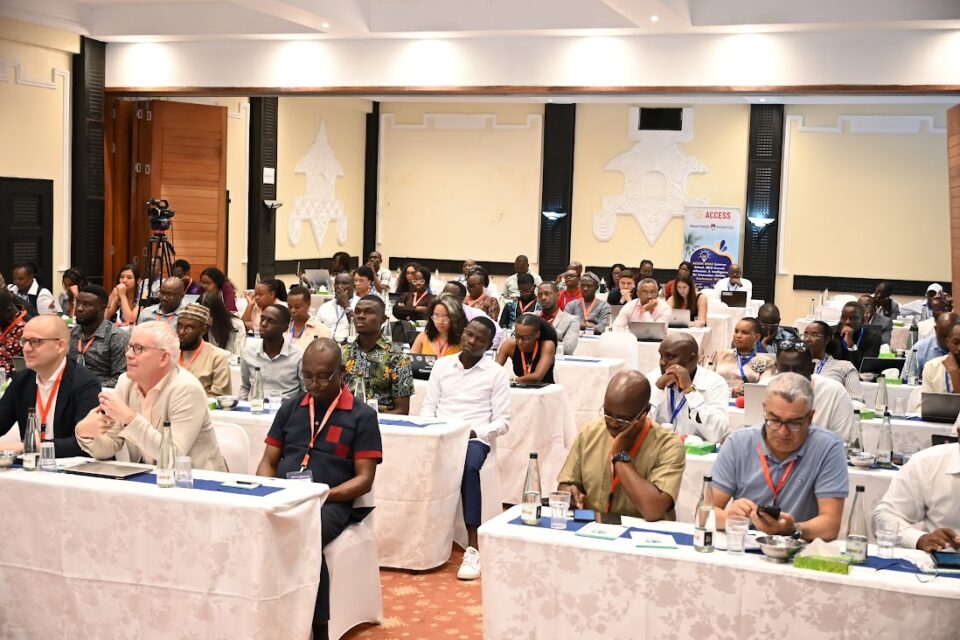
Dr Gaitho spoke during two international conferences held at MKU’s Mombasa Campus and sponsored by the German government under the theme, The Triple Synergy: Building Sustainable Innovative Ecosystems.
The events brought together international partners to exchange ideas, promote innovation, strengthen institutional collaboration and explore ways of building sustainable innovation ecosystems through education and strategic partnerships.
The November 5–13 Access 2.0 Summer School ran alongside the International IN4IN Conference 2026, held on November 12–13.
As a guest speaker, Dr Gaitho highlighted MKU’s investment in emerging technologies, including the acquisition of a humanoid robot to give students hands-on experience in robotics, artificial intelligence and computer programming.
He said the initiative provides learners with opportunities to move beyond theoretical instruction and engage directly with emerging technologies.
“Through developing code that enables the robot to interpret commands and execute instructions, students gain practical exposure to intelligent systems and experiential learning,” he said.
Dr Gaitho also acknowledged the support of Germany’s German Academic Exchange Service (DAAD) and Federal Ministry for Economic Cooperation and Development (BMZ), as well as Leipzig University, in strengthening African universities through mentorship, institutional collaboration and capacity building.
He said international partnerships should be measured by the practical benefits they deliver rather than the number of agreements signed by participating institutions.
“Partnerships must move beyond signing memoranda of understanding to delivering tangible outcomes through joint research, technology transfer, industrial attachment, entrepreneurship and commercialisation of innovative ideas,” he said.
Dr Gaitho reaffirmed MKU’s commitment to its strategic leadership role as the United Nations Academic Impact (UNAI) Sustainable Development Goal 9 Hub Chair for Industry, Innovation and Infrastructure for the 2025–2027 period.
Meanwhile, in a keynote presentation titled Unlocking Business Potential Through University Living Labs, Leipzig University Director of the SEPT Competence Center and ACCESS Project Director Prof Dr Utz Dornberger outlined how universities can connect academic knowledge with real-world business and community challenges.
Prof Dornberger introduced University Living Labs as an innovative approach through which institutions can bring together researchers, businesses and communities to develop, test and refine practical solutions to existing problems.
He explained that universities have evolved through different generations, moving from traditional teaching and research institutions to entrepreneurial, ecosystem-based and digital universities.
He emphasised the growing role of universities in establishing industry partnerships, creating opportunities for start-ups and promoting AI-driven open innovation.
Drawing from Leipzig University’s experience, Prof Dornberger showcased various Living Lab models focusing on artificial intelligence, smart farming, business process optimisation, logistics, international business development and digital education.
He described Living Labs as user-centred, open innovation ecosystems built around systematic collaboration and co-creation, with research and innovation activities embedded directly within real-life communities and working environments.
The approach brings together universities, businesses, government agencies and civil society organisations to identify challenges, develop solutions and test innovations in authentic settings.
Prof Dornberger also highlighted opportunities for international collaboration between Leipzig University and African institutions, particularly in supporting start-up development and international business expansion.
Of particular relevance to African universities was the presentation of Process Living Lab Africa, a proposed initiative aimed at helping African start-ups improve their operational processes and business efficiency.
The programme outlines a structured approach through which early-stage enterprises can assess their operations, simulate production processes and strengthen decision-making as they prepare to expand.
The initiative offers African universities an opportunity to strengthen their innovation infrastructure while creating practical environments in which students can work alongside businesses and communities to develop solutions to real challenges.
In remarks delivered on his behalf by MKU Deputy Vice-Chancellor Prof Peter G. Kirira, Vice-Chancellor Prof Deogratius Jaganyi challenged universities to move beyond counting conferences, boot camps and participants and instead demonstrate the actual impact of their innovation and entrepreneurship programmes.
“The real measure of our success is not the number of conferences we hold, the number of boot camps we organise or the number of participants who attend our programmes. The real measure of success is the difference we make in people’s lives,” he said.
Prof Jaganyi further stressed the importance of documenting success stories, conducting impact assessments and maintaining contact with programme beneficiaries to establish what has changed, what has worked and what requires improvement.
He reaffirmed MKU’s commitment to entrepreneurial education, citing the University’s Graduate Enterprise Academy, established in 2013 to identify, nurture and support the growth of young entrepreneurs across East Africa.
