
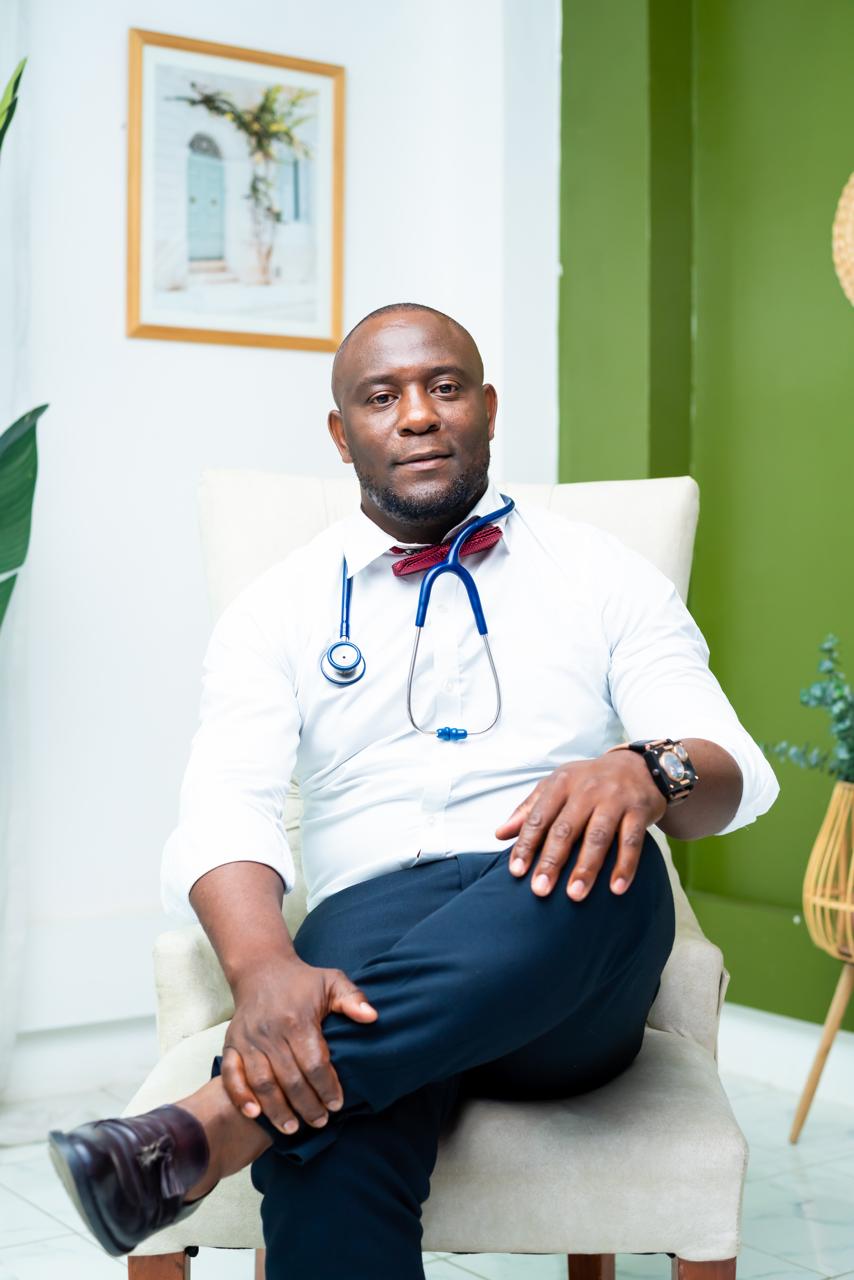
By CHRIS OTIENO
The first thing that strikes you when you walk into the Nairobi City Cancer Diagnostic and Treatment Centre is not the equipment, the consulting rooms or the laboratory. It is the courtesy of the people who work there.
From the gatekeeper who welcomes visitors with a warm smile to the reception staff, cleaners, nurses, clinical officers and doctors, there is a reassuring sense that patients are not merely being processed but received with dignity.
“Good morning, sir, and welcome to the Nairobi City Cancer Diagnostic and Treatment Centre,” the watchman greets visitors at the gate, physically directing them towards the main reception.
There, another staff member is ready to receive them and guide them through the next steps.
At every stage, visitors encounter cheerful and courteous employees who appear eager to help and attend to patients as promptly as possible. One phrase recurs among the staff: “Sorry for keeping you waiting for long.”
It may sound ordinary, but in a country where patients in some public health facilities have grown accustomed to long queues, uncertainty and hurried interactions, such an apology can make a difference.
For someone anxious about a possible cancer diagnosis, the manner in which they are received can be as important as the medical services they are seeking. A welcoming environment cannot eliminate the fear associated with cancer, but it can make the journey towards diagnosis and treatment less intimidating.
That spirit of courtesy is an early defining feature of Nairobi County’s newest public health facility, which has opened its doors to residents seeking cancer screening, diagnosis and, eventually, treatment.
The Nairobi City Cancer Diagnostic and Treatment Centre, an annex of the Level Five Mama Lucy Kibaki Hospital, represents a significant addition to the county’s public healthcare services. It also brings renewed attention to the importance of early cancer detection, access to treatment and the need to ensure that public investments translate into services for ordinary citizens.
The facility, located in Parklands, along Swaminarayan road, is fully owned by the Nairobi City County Government under Governor Johnson Sakaja’s administration.
Its opening, however, is also a story of delayed public investment, renewed efforts to put an idle facility to use and the challenges that accompany the establishment of a specialised medical centre.
The centre was constructed around 2022 by the Nairobi Metropolitan Services (NMS), then led by Major General (Rtd) Mohamed Badi, during the administration of former President Uhuru Kenyatta.
Despite its completion, the facility remained idle for years because of inadequate funding, delaying the delivery of specialised cancer services to Nairobi residents.
Its eventual opening marks an effort by the county government to turn that investment into a functioning healthcare service at a time when access to cancer diagnosis and treatment remains a major concern for patients and their families.
The centre officially opened its doors to the public on Thursday, October 15, 2026. Since then, more than 34 people have visited for cancer screening under a free screening programme running until the end of October.
For the county, the immediate priority is to encourage residents to take advantage of the opportunity to undergo screening, identify potential cases early and establish a pathway for patients who require further investigations or treatment.
Dr Titus Lubobi, the clinical oncologist in charge of the centre, says the facility is apparently screening and diagnosing breast, cervical and prostate cancers.
These services target three cancers for which early detection can be important in determining the course of treatment and improving a patient’s prospects.
“During this month, all the screening is free, but starting from next month, all individuals covered by the Social Health Authority (SHA) will receive the services. Those who test positive and need chemotherapy will have their treatment from here,” Dr Lubobi says.
The arrangement gives residents an opportunity to access screening without paying during the launch period, while the planned transition to SHA-supported services is expected to provide a framework for continued access.
For patients, however, the real test will be whether screening leads to timely diagnosis, appropriate treatment and reliable follow-up care without unnecessary delays.
Behind the courteous reception is a team of healthcare workers preparing to establish the centre as a dependable destination for cancer-related services.
The facility has 25 staff members, including Dr Lubobi, medical officer Dr Abdikadir Ahmed, five clinical officers, seven nurses, three pharmacists, an administrator and three laboratory technicians, among others.
The team combines medical expertise with the administrative and technical support needed to run a specialised facility.
Some staff members are directly employed by the county government, while others, including Dr Lubobi and Dr Ahmed, have been seconded from Mama Lucy Kibaki Hospital.
The arrangement provides the new centre with experienced personnel as it builds its capacity and establishes its operations.
For Dr Lubobi, the opening also represents an opportunity for cancer patients who have been forced to travel long distances to get services to seek them from here.
Before his secondment to Mama Lucy Kibaki Hospital, he worked at Mbagathi County Referral and Teaching Hospital.
His subsequent assignment to the new centre has placed him at the heart of another attempt to expand access to cancer care within Nairobi’s public health system.
“The facility is scheduled to begin offering chemotherapy services in the week following its opening, a development that would allow eligible patients to receive part of their cancer treatment without having to travel elsewhere,” Dr Lubobi affirmed.
“This will obvious reduce the congestion at both Kenyatta National Hospital (KNH) and Kenyatta University Teaching, Referral and Research Hospital (KUTRRH) which are the only public facilities offering the treatment,” Dr Lubobi explained during the interview.
Chemotherapy involves the use of medicines to destroy cancer cells or slow their growth. Depending on the patient’s diagnosis and treatment plan, it may be used alone or alongside other forms of cancer treatment.
Despite the progress made in opening the centre, it is not yet fully equipped to provide every service that a cancer patient may require.
Dr Lubobi says the facility does not currently have radiotherapy machines. Patients requiring radiotherapy will therefore have to be referred to other hospitals or specialised facilities.
Radiotherapy uses radiation to destroy cancer cells or shrink tumours and is an important component of treatment for several types of cancer.
Patients requiring these investigations will similarly need referrals to facilities with the necessary equipment.
The gaps mean that, while the centre is expanding access to screening, diagnosis and planned chemotherapy, patients with more complex needs will continue to depend on other institutions.
“Referral arrangements will consequently be important in ensuring that patients do not get lost between facilities or experience unnecessary delays in receiving further investigations and treatment,” Dr Lubobi says.
Dr Lubobi, however, is optimistic about the diagnostic capacity already available at the centre, particularly its laboratory.
“But we are very happy with the standard of our laboratory, which will enable us to undertake thorough investigations into individual cases,” he says.
A properly equipped laboratory is an important component of cancer diagnosis and management. Laboratory investigations can help clinicians assess a patient’s condition, guide further tests and monitor aspects of treatment, depending on the tests available.
Even as the centre prepares to introduce chemotherapy, the management acknowledges that the transition from an idle building to a fully functioning specialised facility has brought operational challenges.
Dr Ahmed says the team is grappling with inadequate staffing and resources, as well as difficulties arising from the transition from the former AfyaKe health management system to the newly introduced AfyaApex platform.
Digital health systems are important in managing patient information, recording clinical encounters, coordinating services and supporting administrative processes. Any disruption during a transition can create additional pressure on staff as they adapt to new procedures.
For a cancer centre, where patients may require repeated visits, investigations and long-term follow-up, reliable access to records is particularly important.
Dr Ahmed says the facility will require regular supply of non-pharmaceutical medical consumables needed for routine operations.
This, Dr hmed says, would enable them undertake routine examinations, procedures and patient care, making reliable procurement and stock management important as the centre expands its services.
The planned introduction of chemotherapy presents another financial consideration: the need to provide meals for patients undergoing treatment.
Dr Ahmed says the facility will require sufficient funds to prepare meals for patients receiving chemotherapy.
“This is an important practical concern because patients undergoing cancer treatment may need supportive care alongside their medication and clinical monitoring. Ensuring that their basic needs are addressed can contribute to a more humane treatment experience,” Dr Ahmed said in an interview.
The challenge is to ensure that the centre’s operational budget grows in line with the services it is expected to provide.
