
By TONY MUSISI
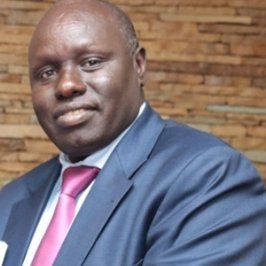
Billionaire businessman David Langat, popularly known as DL, has left residents and political players in Nandi and Uasin Gishu counties guessing as he weighs whether to make his debut in elective politics by seeking the gubernatorial seat in either of the two counties in 2027.
For a businessman who has traditionally maintained a low political profile, Langat’s recent remarks have triggered considerable speculation in the North Rift, with political leaders and grassroots networks keenly watching his next move.
The tycoon recently hinted at joining elective politics, saying he was weighing pressure and requests from the community and grassroots leaders to offer himself for political leadership.
He has specifically mentioned Nandi and Uasin Gishu as possible destinations, a decision that could significantly alter the political calculations in the two neighbouring counties.
In Nandi, Governor Stephen Sang’ is serving his final constitutional term, leaving the seat open for a succession battle. In Uasin Gishu, Langat would be seeking to unseat his friend, Governor Jonathan Bii, whom he is said to have supported during the 2022 campaigns.
Langat has, however, remained deliberately non-committal.
“The citizens will tell me where to go; whether Nandi or Uasin Gishu,” he said in an earlier interview, adding that the decision would depend on consultations and the direction taken by the people.
The ambiguity has provided fertile ground for speculation, particularly because Langat has deep connections in both counties.
Born and brought up in Nandi, Langat has established a significant economic footprint in the county through his investments in the tea industry. His DL Group owns the extensive Koisagat Tea Estate in Nandi Hills, a major agricultural enterprise that has employed local residents and maintained links with tea farmers.
The Koisagat estate covers about 1,342 acres and has approximately 2.47 million tea bushes, alongside a processing factory and other facilities. The enterprise has also been associated with the introduction and processing of purple tea, making it one of Langat’s most visible investments in his home county.
His business interests have extended beyond Kenya. In 2018, Langat’s DL Koisagat acquired majority stakes in three Tanzanian tea companies in a deal reported at about Sh6 billion, expanding his presence in the East African tea industry.
But it is his footprint in Uasin Gishu that makes the gubernatorial dilemma particularly interesting.
Langat is behind the proposed Africa Economic Zones Pearl River Industrial Park in Eldoret, an ambitious private-sector industrial project conceived as a hub for manufacturing, agro-processing and other investments.
The project grew from Langat’s desire to establish an industrial facility that would enable farmers in Uasin Gishu and the wider North Rift to add value to their agricultural produce rather than selling raw commodities.
The businessman has also envisioned a wider development around the industrial park, including commercial, residential, educational, hospitality and recreational facilities.
His economic footprint has therefore given him a constituency of sorts among sections of the business community and residents who view investment and employment creation as important measures of leadership.
It is this combination of business interests, community activities and political connections that makes a Langat gubernatorial bid potentially disruptive.
In Uasin Gishu, he could face Bii, who is seeking another term, as well as Tourism Principal Secretary Prof Julius Bitok and businessman Zedekiah Kiprop Bundotich, popularly known as Buzeki, among others.
Bii and Bitok are no strangers to each other. They faced off in the 2022 UDA gubernatorial nominations, with Bii emerging as the party’s candidate.
Langat’s entry could therefore reopen political alliances that were forged during that contest.
In Nandi, the field is also expected to attract several high-profile contenders, among them Tinderet MP Julius Melly, Nandi Woman Representative Cynthia Muge and lawyer Allan Kosgey.
Kosgey unsuccessfully contested the Nandi governorship in 2017 and is preparing for another bid. His political calculations could, however, be complicated by the ambitions of his brother, former Emgwen MP Alexander Kigen Kosgey, who is reportedly eyeing the Nandi Senate seat.
Langat’s recent meeting with Muge at a Nairobi hotel has consequently attracted attention, with political observers interpreting the engagement as another possible indication that he could be leaning towards Nandi.
There is, however, no public confirmation that the meeting resulted in a political pact, though sources indicate that Ms Muge has hinted of back down and instead throw her weight behind Langat.
For Langat, philanthropy could prove just as important as business in determining his political appeal.
One of his most significant documented philanthropic interventions in Nandi was the donation of a private primary school valued at about $1 million (approximately Sh 130 millon ) to the Anglican Diocese of Kapsabet in 2023.
The school, now known as ACK Dr David Langat School, was reported to be serving about 600 pupils and was intended to support the education of children while also providing a sustainable income stream for the church.
His community footprint is also intertwined with his investments. The Koisagat estate, for instance, contains schools and other facilities serving the surrounding community.
In Uasin Gishu, his industrialisation ambitions have similarly been framed around employment creation, value addition and opportunities for local residents.
Langat has previously said his original motivation for the Eldoret project was to help farmers earn more from their produce by creating an agro-processing industry.
These activities have helped create a public profile that is different from that of conventional politicians.
While politicians are often judged on promises, Langat can point to businesses, investments, schools and development projects that already exist or have been proposed in the region.
That could become a powerful political narrative if he decides to enter the race.
But his wealth and proximity to political power could equally become the subject of scrutiny.
Langat is a prominent ally of President William Ruto and was appointed to the National Investment Council after the President assumed office. He was also widely identified as one of the businessmen who supported Ruto’s 2022 presidential campaign.
His entry into the gubernatorial race would therefore have implications beyond Nandi and Uasin Gishu.
A businessman with substantial resources and relationships across the North Rift could potentially influence other races, shape alliances and become a major player in determining who wins key seats in 2027.
This is why some political figures are understood to be watching his movements closely.
There is also speculation among political actors that Langat could emerge as a kingmaker even if he ultimately decides against running himself.
His endorsement of a candidate could potentially attract business networks, community support and political goodwill accumulated over years of investment and philanthropy.
Yet there is a fundamental question that Langat must answer before making the transition from businessman to politician: can the networks built through business and philanthropy be converted into votes?
Running a county is fundamentally different from running a conglomerate. It requires managing public resources, navigating competing political interests, building a grassroots political organisation and surviving the intense scrutiny that comes with elective office.
For now, Langat appears to be keeping his options open.
Nandi offers him the advantage of being his home county and presents an open succession race after Sang’. Uasin Gishu offers an equally attractive platform because of his extensive business interests and community links, but would require him to challenge an incumbent who happens to be his personal friend.
His eventual decision could therefore reshape the North Rift’s political landscape.
If he chooses Nandi, he could enter a fiercely contested succession battle as a wealthy home-grown candidate with a substantial development and philanthropic record.
If he chooses Uasin Gishu, he would trigger a much more complicated contest involving an incumbent, established political figures and competing business interests.
And if he chooses neither, he could still emerge as one of the region’s most sought-after political kingmakers.
For now, however, DL appears content to let the speculation run.
With the 2027 General Election drawing closer, residents of the two counties will be watching his movements, meetings and community engagements for clues.
The biggest question in the North Rift is therefore no longer whether David Langat has the resources to run for governor.
It is which county he will choose — and whether he is prepared to leave the boardroom for the political battlefield.
