
By ADEN KIPRUTO
The United Green Movement (UGM) Party has urged the Independent Electoral and Boundaries Commission (IEBC) and Parliament to fast-track the implementation of campaign financing regulations ahead of the 2027 General Election, warning that further delays could undermine the credibility of the country’s electoral process.
In a statement released on Monday, the party welcomed the IEBC’s proposed campaign spending limits, including a presidential campaign expenditure cap of Sh4.44 billion, but argued that the framework remains riddled with structural weaknesses that could render the regulations ineffective if not addressed before the next General Election.
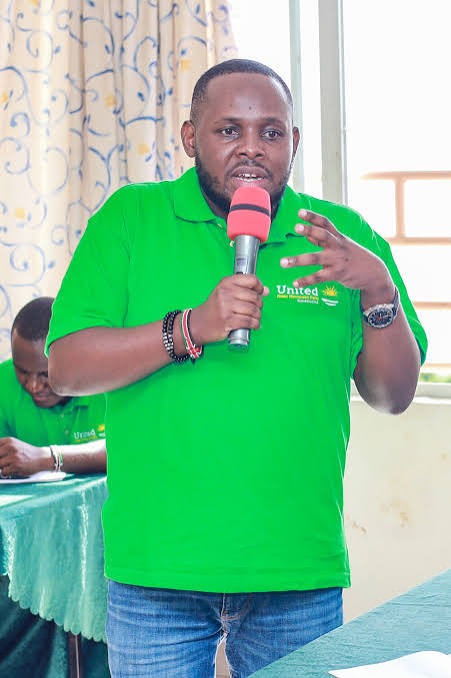
UGM Co-Secretary General Katto Wambua said Kenya has spent more than a decade without operational campaign financing regulations despite constitutional provisions requiring the regulation of election spending.
“The 2027 campaign finance framework must prioritize equity and enforcement over procedural delay,” Wambua said. “While the proposed ceilings are a progressive step, they are hamstrung by structural gaps that threaten to leave the 2027 election as unregulated as its three predecessors.”
Campaign finance regulation has remained one of Kenya’s unresolved electoral reforms despite the enactment of the Election Campaign Financing Act. Although the law was intended to regulate political campaign spending and promote fairness among candidates, implementation has repeatedly been postponed, leaving elections largely unregulated in terms of campaign expenditure.
According to UGM, the continued delay in operationalizing the regulations undermines the constitutional obligation placed on the IEBC to regulate election spending.
The party cited Article 88(4)(i) of the Constitution, which mandates the electoral commission to regulate the amount of money that may be spent by or on behalf of candidates and political parties during elections.
“The constitutional mandate to regulate election spending is a duty, not a discretionary policy choice,” Wambua said. “The current delay in parliamentary approval is an affront to the principles of free and fair elections enshrined in Article 81 of the Constitution.”
UGM identified what it described as the “parliamentary approval bottleneck” as one of the biggest threats to the proposed framework, arguing that legislators who are themselves subject to campaign spending limits should not have the final say on regulations governing their own elections.
The party noted that with the statutory deadline for gazettement set for August 10, 2026, Parliament and the IEBC have limited time to complete public participation, review stakeholder submissions and finalize the regulations before the legal deadline expires.
“Any delay beyond this twelve-month window should be viewed as a deliberate attempt to sabotage the integrity of the 2027 electoral cycle,” Wambua warned.
The party also raised concern over what it termed a major loophole in the proposed framework by limiting expenditure controls to the official campaign period beginning May 29, 2027.
According to UGM, substantial campaign resources are already being deployed long before the official campaign period through public donations, empowerment programmes and philanthropic activities that often double as political campaigns.
The party argued that excluding such expenditure from regulation gives wealthy candidates and incumbents an unfair advantage while making it increasingly difficult for women, youth and persons with disabilities to compete on equal footing.
“This structural loophole rewards well-resourced incumbents and wealthy aspirants while effectively pricing out women, youth and persons with disabilities, thereby eroding the constitutional guarantee of political rights under Article 38,” the statement said.
UGM further questioned the country’s ability to enforce campaign financing rules, saying the current framework lacks a dedicated enforcement mechanism capable of detecting and prosecuting violations.
The party argued that while the IEBC oversees elections, it does not possess prosecutorial powers, while the Office of the Director of Public Prosecutions has historically struggled to secure convictions in electoral offence cases.
It cited the July 2026 Ol Kalou by-election as an example of persistent allegations of voter bribery and inducements, saying stronger enforcement structures are needed to curb electoral malpractices.
“The normalization of bribes and other forms of inducement requires more than paper regulations. It requires a dedicated, ring-fenced enforcement unit capable of cross-checking campaign spending against real-time financial and procurement data,” Wambua said.
The party urged the IEBC to immediately finalize the gazettement of campaign spending limits and called on Parliament to prioritize the passage of the Election Campaign Financing (Amendment) Bill, 2024, to eliminate legal and procedural obstacles that have delayed implementation of the law.
UGM said effective regulation of campaign financing would help level the political playing field by ensuring electoral contests are determined by policies and leadership rather than financial muscle.
“We remain committed to a level playing field and will continue to advocate for an environment where ideas, not private capital, determine the outcome of our electoral contests,” Wambua said.
The IEBC is expected to conclude public participation on the proposed campaign financing framework before finalizing the regulations for implementation ahead of the 2027 General Election, which will mark the first time Kenya attempts to enforce comprehensive campaign spending limits if the regulations receive the necessary approvals.
