
Stakeholders implementing the Financing Locally-Led Climate Action (FLLoCA) programme in counties have blamed the slow implementation of climate investments on bureaucratic budgeting processes, delayed release of funds by the National Treasury and lengthy procurement procedures.
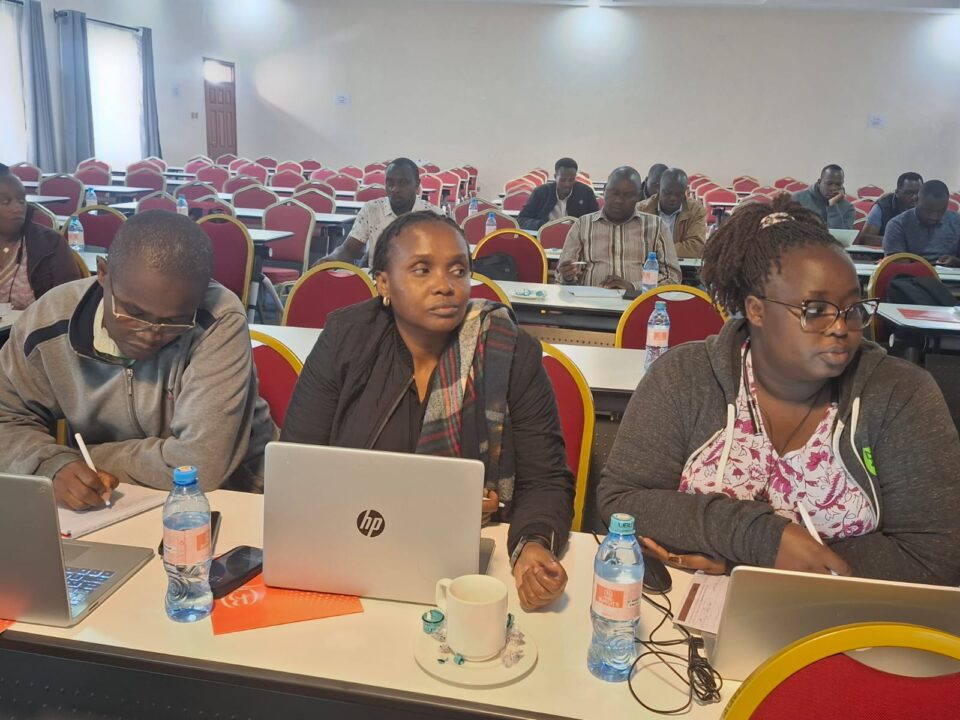
Speaking during a three-day workshop that brought together technical teams from Nyamira, Siaya, Nyandarua, Turkana, Laikipia and Nandi counties, participants said the challenges had hampered implementation of the first phase of FLLoCA investments, which ends in December 2026. They called for the issues to be addressed before Phase II begins early next year.
Led by Nyamira County Chief Officer for Climate Change Mwencha Nyasimi and his Siaya counterpart Jared Abayo, the stakeholders argued that existing financial management laws and procedures do not align well with the unique requirements of the FLLoCA programme.
“The programme initially allowed counties to use existing financial management structures, including planning and budgeting processes under the government cycle. However, FLLoCA has several bureaucratic requirements that counties must meet before accessing the funds,” said Nyasimi.
He noted that Nyamira County was still awaiting the disbursement of FLLoCA funds for the 2024/2025 financial year despite the country already being in the 2026/2027 financial year.
Nyasimi regretted that county budget planning cycles are often completed before FLLoCA allocations are communicated.
“Counties are still waiting for the release of FLLoCA funds by the Treasury. The delay has been compounded by the recently conducted Annual Performance Assessments, whose reports determine the amount each county will receive,” he said.
“We do not yet have the FLLoCA budget estimates needed to prioritise projects in county budgets. Once the budget cycle is completed, the only option is to seek supplementary budgets, which county assemblies are sometimes reluctant to approve.”
He added that even after planning and budgeting challenges are resolved, the actual release of funds remains problematic.
“If the Treasury releases funds in June and counties are expected to implement projects thoroughly, does that really work? At times, auditors question us over slow absorption of funds,” he said.
Nyasimi proposed the development of a special FLLoCA implementation manual anchored in the Public Finance Management Act to allow the programme to operate on a different cycle from the normal government budgeting process.
Abayo echoed the concerns, noting that transferring funds from County Revenue Fund (CRF) accounts to Special Purpose Accounts remains a challenge in many counties, including Siaya.
“This affects counterpart funding and delays procurement processes. There is a need for stronger alignment between funding cycles and implementation plans,” he said.
He also called for capacity building for officers handling e-procurement in preparation for the digitisation of FLLoCA tenders.
Participants further proposed increasing the allocation for operational expenses, arguing that the current five per cent ceiling is inadequate.
They said Phase II of the programme should provide more operational funding to facilitate site visits, preparation of quality Bills of Quantities, and effective monitoring and evaluation of projects, especially in expansive counties such as Marsabit, Mandera and Turkana.
The stakeholders also raised concerns about inadequate funding for grievance redress mechanisms (GRM), environmental and social safeguards, and Environmental and Social Impact Assessments (ESIAs).
“We need a clear framework on how to incorporate NEMA, social safeguards teams and grievance redress mechanisms. There should also be a dedicated budget to ensure quality ESIA reports,” they said.
Director of Environment Gabriel Oduong’ criticised Members of County Assemblies (MCAs) for interfering with the selection of FLLoCA projects.
“Initially, MCAs had difficulty understanding FLLoCA. Once they realised the impact of the investments, they embraced the programme but started identifying projects they wanted funded, yet project selection is primarily the responsibility of communities,” said Oduong’.
According to Samburu Ward Climate Change Committee representative Gesami Eloki, inadequate public land and insecurity have also hindered implementation of FLLoCA projects in Laikipia and Turkana counties.
“Nearly 70 per cent of land in Laikipia is occupied by ranches, leaving only about 30 per cent as community land,” said Eloki.
He added that project teams often face resistance from communities when implementing investments on privately owned land.
“Insecurity in Turkana has also affected project implementation. Only one borehole has been drilled at Kabuge in Kapedo using FLLoCA funds,” he said.
“A contractor awarded the borehole drilling tender struggled to subcontract the work because potential contractors feared attacks, as witnessed in Kapedo in the past.”
previous post
