
By OLIVER MUSEMBI
Residents of Witeithie village in Juja Sub-County, Kiambu County, have raised alarm over the rampant sale of second-generation liquor, which they say has led to the deaths of several consumers.
Bar operators have also expressed concern, claiming that the illicit brews are sold in unlicensed dens that not only create unfair competition but also deny the government much-needed revenue.
At least three people are reported to have died after consuming the poisonous liquor, which is allegedly transported from areas including Kenol in Murang’a County.
“My brother died after consuming these cheap drinks, which are sold for between Sh25 and Sh30. I am appealing to the government to take action and end this menace,” said resident Joseph Thuku.
Thuku recounted how his younger brother, George Chege, a small-scale trader, became a victim of alcohol addiction despite having achieved significant success in business.
“He had even started constructing a Sh2 million house at our rural home in Murang’a before he became addicted to the illicit liquor. He later separated from his wife, fell ill and eventually died of liver failure,” he said.
It has also emerged that some of the illegal alcohol dens, which operate around the clock, are being used as conduits for the trafficking of drugs and other contraband substances.
Residents claim that dealers have recruited young men to distribute rolls of bhang from designated outlets.
“You will see these visibly intoxicated youths at various wines and spirits shops where customers go to collect the drugs,” said a concerned villager.
Locals identified several notorious outlets, some located only a few metres from the local police station.
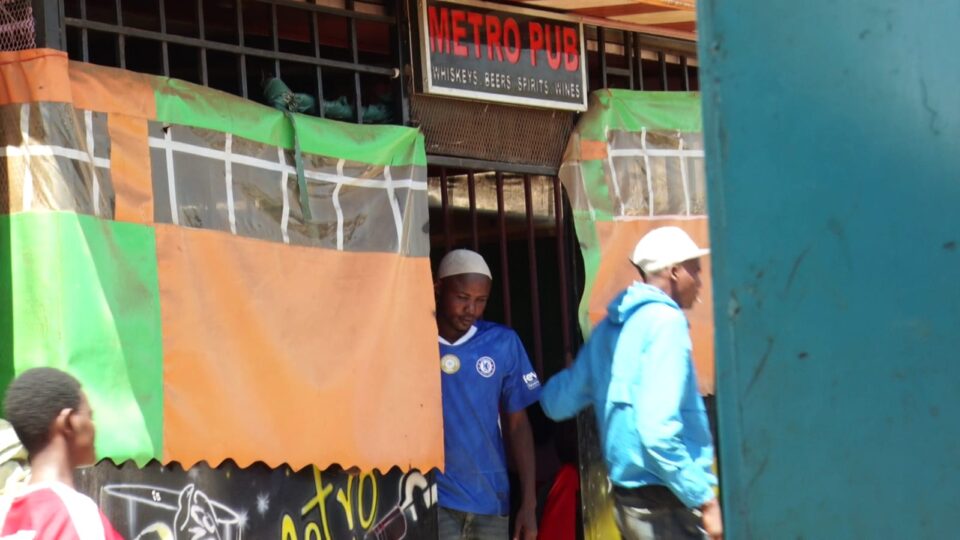
Residents say most of the liquor dens operate under the guise of wines and spirits shops but lack the necessary licences. Despite this, business continues day and night without interruption.
Some of the premises appear closed from the outside but remain accessible to customers, allowing the illegal trade to continue unnoticed.
Many of the customers are touts and casual workers operating at the Witeithie highway stage, who reportedly flock to the outlets from as early as 8 a.m.
Residents were particularly concerned by the presence of underage consumers, some believed to be teenagers.
Villagers further alleged that some chiefs and security officers have been compromised by the traders through regular bribes, allowing the illegal businesses to operate unchecked.
Juja Deputy County Commissioner Daniel Ndege confirmed receiving complaints and said a multi-agency team had been formed to tackle the problem.
“We are taking decisive action through a multi-agency operation. However, I do not want to divulge details because we do not want information leaking to the suspects,” said Ndege.
Juja bar operator Paul Karanja said the sale of second-generation alcohol had severely affected legitimate businesses, as many consumers preferred the cheaper alternatives.
“Unfortunately, consumers of these brews dictate the market. They do not care about the harmful effects; they simply want to get drunk,” said Karanja.
He noted that many licensed liquor businesses were struggling, with some facing closure due to declining customer numbers.
Reports indicate that some operators of the illegal outlets are in panic after learning of an impending crackdown.
One suspected drug and illicit alcohol dealer, popularly known as ‘Bena’, has reportedly been arrested and arraigned in court several times but continues to return to the trade.
Residents claim he is involved in the manufacture of illegal brews that are discreetly supplied to selected outlets before reaching consumers.
Despite previous fines and custodial sentences, the suspect is said to have repeatedly resumed his operations after release.
The issue has also put the spotlight on the Kiambu County Government, which is responsible for licensing liquor outlets.
Efforts to obtain a comment from county officials were unsuccessful, as they could not be reached.
The concerns come amid similar incidents in Murang’a County, where a man was recently fined Sh9.2 million after being convicted of offences related to the illegal manufacture and possession of alcoholic products and counterfeit excise stamps.
Dennis Muiruri Kamande was convicted by Resident Magistrate Renna Jakinda at the Kenol Law Courts in a judgment delivered on June 10, 2026. He was ordered to pay the fine or serve four years in prison.
Kamande faced six charges under the Excise Duty Act, 2015, and the Anti-Counterfeit Act, 2008, including manufacturing excisable goods without a licence, possessing illicit alcoholic products and trading in counterfeit goods.
In her ruling, Magistrate Jakinda said the prosecution, led by Peris Gathu, had proved the case beyond reasonable doubt after presenting evidence from 11 witnesses.
