
By OLIVER MUSEMBI
Medics have raised concerns over a shortage of healthcare workers, emphasizing the need to train and recruit more nurses specializing in the care of patients with chronic wounds, particularly those resulting from cancer surgeries and severe burns.
The concern comes amid statistics showing that Kenya faces a significant shortage of specialized wound-care nurses. Currently, each nurse attends to between 15 and 20 patients daily, far above the World Health Organization’s (WHO) recommended ratio of one nurse to a maximum of six patients.
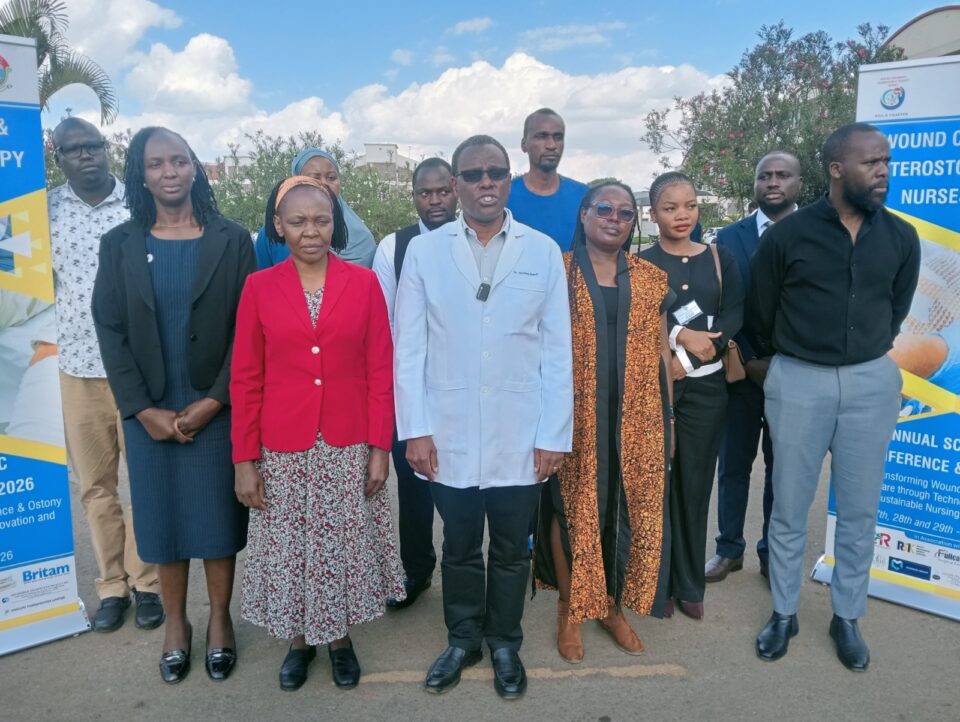
The appeal was made during the second National and Regional Wound Continence and Enterostomal Therapy Nurses (WCETN) Conference held at Kenyatta University Teaching, Referral and Research Hospital (KUTRRH). The conference brought together experts in chronic wound management from across Kenya and beyond.
KUTRRH Director of Clinical Services, Dr Anthony Kamau, said the country must invest in recruiting and training more nurses in the specialized field to bridge the staffing gap and improve patient care.
As an oncology centre that handles a high number of cancer-related surgeries, Dr Kamau noted that nurses play a critical role in patients’ recovery and rehabilitation.
“As an oncology centre, we treat many patients with wounds resulting from cancer-related surgeries, in addition to those suffering from severe burns. Wound care is therefore a critical service, and we have specialized wound-care nurses providing these services daily,” he said.
Dr Kamau added that soon after the hospital was established, management identified the need for specialized wound-care nurses to address a service gap that previously existed.
Reading a speech on behalf of KUTRRH Chief Executive Officer Dr Zeinab Gura, Dr Kamau also called on the government to allocate more resources towards training specialized nurses and supporting local production of wound-care materials, many of which are currently imported at high cost.
“We urge the government to invest more resources in training specialized nurses and encourage local manufacturing of wound-care materials, which are largely imported and therefore expensive,” he said.
Dr Gura noted that the hospital employs more than 800 nurses, many of whom care for patients with wounds resulting from surgeries to remove cancerous tumours.
She further emphasized the importance of collaboration among healthcare institutions and government agencies to strengthen professional development and expand the workforce in specialized nursing fields.
WCETN Conference Chairperson Margaret Mungai, who is also the Deputy Director of Nursing Services at Moi Teaching and Referral Hospital, said there is an urgent need to train and hire more nurses specializing in wound care.
She noted that while WHO recommends that a nurse should care for between one and six patients per day, nurses in Kenya often attend to between 15 and 20 patients daily, highlighting a critical staffing shortage.
“WHO reports indicate a serious shortage of nurses, particularly those with specialized skills. This underscores the need for increased training and recruitment,” Ms Mungai said.
Justin Kinoti, a senior nurse at KUTRRH, urged patients not to delay seeking treatment for chronic wounds, regardless of how long they have lived with the condition or its severity.
