
By Milliam Murigi @millymur1
When James Mwangi fell ill with typhoid last year, he never imagined the fight ahead. What should have been a simple illness turned into a months-long ordeal.
The culprit: multi-drug resistant typhoid. By the time he recovered, he had spent over Sh 150,000 a staggering sum for most Kenyan families.
“That was not the first time I was diagnosed with typhoid. But previously it was very easy to treat. This time, the infection didn’t respond to the usual antibiotics and I had to go through months of expensive treatment that drained my savings and left me physically exhausted.”
James’s story is not unique. Across Kenya and around the world, drug-resistant infections are being reported with increasing frequency, and many are proving fatal. In 2019 alone, 1.27 million deaths were directly linked to antimicrobial resistance (AMR), with millions more affected indirectly.
In Kenya, 8,500 deaths were directly caused by AMR the same year, while 37,000 more were associated with resistant infections, according to the World Health Organization (WHO).
However, amid this growing crisis, health experts are pointing to a surprisingly simple, yet underutilized solution: vaccines. According to experts, vaccines are more than a shield for individual health they are a strategy to protect the effectiveness of our antibiotics for everyone.
“Vaccines prevent the primary illness from occurring. By preventing disease, they reduce the need for treatment and curb the spread of resistant pathogens. Every shilling invested in vaccines today saves lives—and thousands of shillings in treatment costs tomorrow,” said Dr. Robert Onsare, Chairperson of the Technical Working Group on the Global Antimicrobial Resistance Partnership (GARP-Kenya).
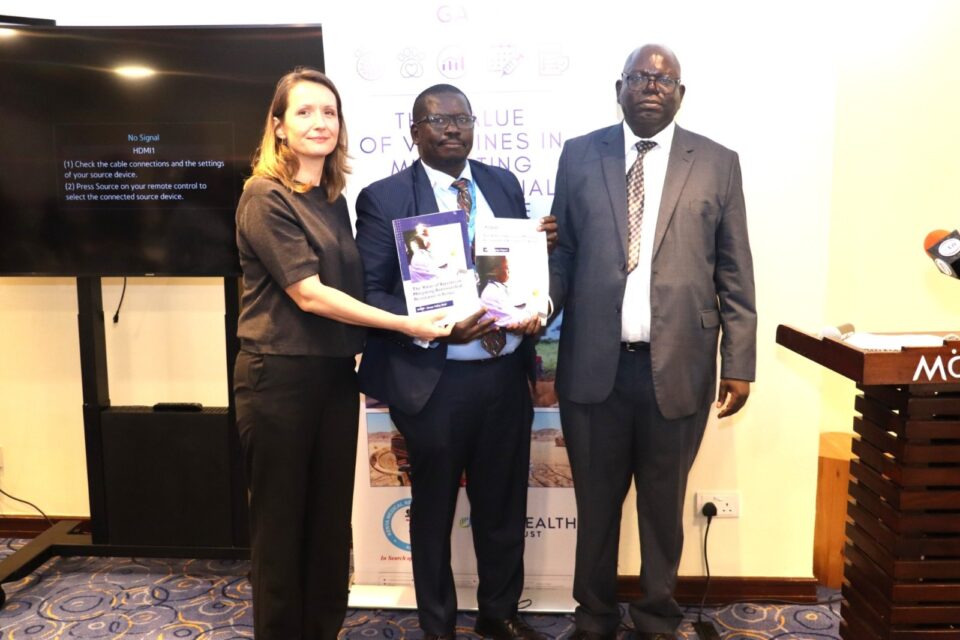
Dr. Onsare was speaking during the launch of a report dubbed the value of vaccines to address antimicrobial resistance in Kenya. The report by Kenya Medical Research Institute (KEMRI) and the One Health Trust (OHT) reveals why vaccines must be promoted to help keep antibiotics effective in Kenya.
“We view vaccines only through the lens of disease prevention, but they are, in fact, one of our most potent weapons against AMR,” said Dr. Onsare.
According to the report, vaccines work on multiple fronts. They stop infections before they start, reduce the need for antibiotics and build herd immunity, shielding entire communities, including those too young, ill, or immunocompromised to be vaccinated.
A striking example is the pneumococcal conjugate vaccine (PCV). Before its rollout, penicillin-resistant pneumococcal strains caused high rates of invasive disease in children under five. After widespread immunization, infections caused by resistant strains dropped sharply and cases of invasive pneumococcal disease fell by over 90 per cent among young children.
The economic argument is equally compelling. Treating drug-resistant infections is expensive, time-consuming and often inaccessible for ordinary Kenyans. For example to treat a multi-drug resistant typhoid case costs one between Sh65, 000 to Sh150, 000. However, preventative vaccination is far cheaper costing only Sh520.
“This is why we are asking the government to improve coverage of vaccines, support introduction of new vaccines and address gaps in vaccine accessibility and distribution,” said Prof. Ramanan Laxminarayan, One Health Trust (OHT) President.
AMR is not confined to Kenya. Across the globe, resistant infections are spreading silently, threatening to roll back decades of progress in modern medicine. Common illnesses from typhoid to pneumonia are becoming harder to treat. Experts warn that without urgent action, the world could enter a post-antibiotic era, where even minor infections become deadly.
According to Prof. Elijah Songok, Ag. Director General & CEO of KEMRI, whose speech was delivered by Erick Muok, Senior Research Officer at KEMRI, AMR threatens to reverse decades of progress in public health and economic development in Kenya.
“We are at a crossroads where the drugs we rely on are losing their power. Without urgent action, common infections that were once easily treatable could become life-threatening, and routine medical procedures from surgeries to childbirth may carry far greater risks,” said Songok.
This is why according to Songok, KEMRI is not just observing the AMR crisis, it is actively shaping solutions. By combining surveillance of resistance patterns, innovation in vaccine development and evidence-based policy guidance, the institute is creating a practical roadmap for Kenya to prevent infections, reduce unnecessary antibiotic use, and preserve the effectiveness of lifesaving drugs.
