
TAX NET | With debt soaring past Sh11.5 trillion, the taxman has turned to micro and small enterprises (MSEs), but trust and complexity remain the stumbling blocks.
Kenya Revenue Authority (KRA) is mounting a new push to expand the tax net, zeroing in on MSEs through digital platforms, decentralized service delivery, and community engagement. The plan is bold, but analysts warn it faces the same old roadblocks that have kept millions of businesses outside the formal tax system. With public debt now above Sh11.5 trillion and debt servicing projected to swallow over 60 percent of revenue in FY2025/26, the government is under pressure to mobilize more local resources.
Kenya’s tax-to-GDP ratio remains under 15 percent, lower than Rwanda’s 16.5 percent and Uganda’s 14 percent, and far behind advanced economies like Sweden, which collect over 35 percent. Fewer than seven million Kenyans actively pay taxes out of 22 million registered, leaving a small group of compliant taxpayers to shoulder the burden. To address this, the taxman has set a revenue target of Sh2.8 trillion for FY2025/26, up from Sh2.6 trillion in 2024/25, and aims to onboard an additional two million taxpayers, largely from the MSE sector. Industry players estimate that formalizing even a portion of these businesses could significantly ease the pressure on existing taxpayers. If 1.5 million MSEs are brought into the formal tax net, each contributing an average of Sh50,000 annually, the move could generate Sh75 billion in new revenue, funds that could support infrastructure, public services, and help reduce the fiscal deficit, reinforcing the government’s goal of increasing the tax-to-Gross Domestic Product (GDP) ratio to 20 percent by 2027.
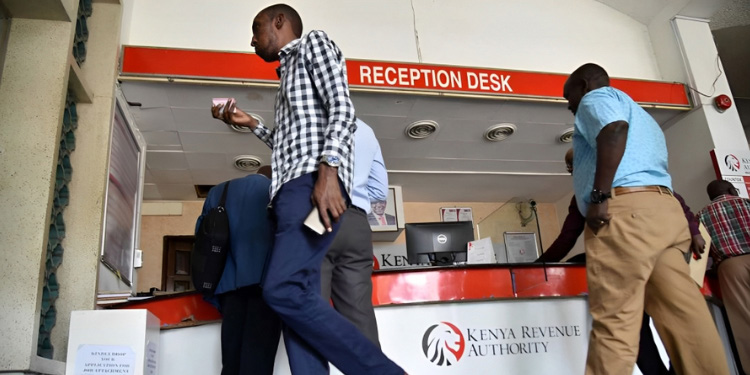
KRA’s strategy rests on three pillars, including low-tech digital access, agent-based decentralization, and citizen engagement. The introduction of USSD (*222#) and a WhatsApp chatbot seeks to overcome limited smartphone penetration, currently around 55 percent of adults, as noted by the Acting Commissioner for Micro and Small Taxpayers. “Persistent challenges we have heard relate to digital access. Not every taxpayer has a smartphone, stable internet, or the digital literacy required to interact with KRA platforms such as iTax or eTIMS,” Obell said. The taxman plans to deploy 10,000 agents nationwide to provide registration, filing, and payment services, drawing on the precedent set by Kenya’s mobile money sector.
Mobile money agents facilitated transactions worth $67.3 billion (Sh8.7 trillion) in 2024, reaching millions of rural and underserved users. The authority is now betting on a similar decentralized network to reach MSEs that have historically struggled to engage with the tax system. According to KRA board director Lydia Rono, the Citizen Assembly initiative is intended to rebuild trust and facilitate dialogue between taxpayers and the authority. “A country that cannot mobilize its own revenue cannot develop at the pace its citizens expect,” she said. Previous modernization efforts, however, reveal the enduring difficulties of integrating MSEs into the formal tax system.
Change your thoughts, you change your world
UN summit press for financial reform
The United Nations has convened its first Biennial Summit for a Sustainable, Inclusive and Resilient Global Economy, bringing together world leaders, international lenders, and trade officials to push for long-overdue reforms in the global financial system. The meeting, held in New York during the High-level Week of the UN General Assembly, follows a warning by Secretary-General Antonio Guterres that current financial structures are outdated, unfair, and ill-equipped to handle modern crises. “There is a huge bias against the interests of developing countries,” Guterres said in his opening remarks. “Without reforming international financial institutions and solving the debt trap, the Sustainable Development Goals will remain out of reach.”
With a $4 trillion funding gap threatening progress on the SDGs, UN General Assembly President Annalena Baerbock urged bolder commitments to give developing nations more influence in financial decision-making. “The truth is without deep reform, we will never deliver on the SDGs,” she told delegates. The summit also marked a step toward closer coordination between the UN and global financial institutions. Lok Bahadur Thapa, president of the UN Economic and Social Council, stressed the need to restore trust in multilateralism, noting that trade frictions have eroded confidence in the system.
Key institutions weighed in on the urgency of reform. IMF chief Kristalina Georgieva pledged continued support for low-income nations, while WTO Director-General Ngozi Okonjo-Iweala called for a reset of global trade rules to ensure more efficient use of scarce resources. Ali Youssouf, chair of the African Union Commission, welcomed the platform as a rare chance for African priorities to shape global action, warning that the continent’s financing needs remain immense.
The summit, first proposed by Guterres in his 2021 Our Common Agenda report, is designed to provide a regular platform for aligning the global financial system with the realities of today’s interconnected economy. Whether it delivers meaningful change, observers say, will depend on whether the calls for inclusivity and fairness translate into action at the IMF, World Bank, WTO, and regional banks.
—Xinhua
