
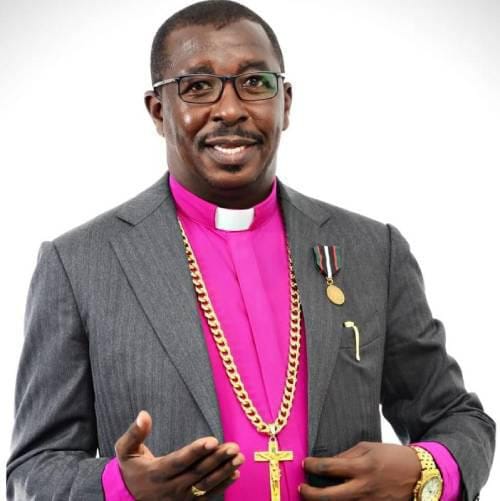
By Bishop Samuel Njiriri, Chairman, FEICCK
We should not wait for another death before we act.
Across Kenya, violent conflicts within relationships and families are increasingly ending in injuries, trauma and, in the most tragic cases, death. Yet too often, domestic violence is treated as a private family matter—a dispute to be settled behind closed doors.
That approach is no longer sustainable.
Domestic violence must be recognised and confronted as a gender-based violence (GBV) and public protection crisis. It requires a coordinated response in which Government leads, but families, churches, communities and institutions all play their part.
The underlying pressures in many relationships are familiar: financial difficulties, substance abuse, mistrust, poor communication, unresolved conflict and emotional distress. These pressures may help explain why relationships deteriorate, but they can never justify violence.
The first responsibility is to break the culture of silence.
Young couples experiencing serious conflict should seek help early through qualified counsellors, trusted family members, pastors, religious leaders or other appropriate professionals. Seeking help is not weakness. It is wisdom.
But we must also be clear about the limits of counselling.
Where violence, coercion, sexual abuse or an immediate threat to life exists, the priority must be safety and protection. Such cases require appropriate medical, psychosocial, legal and security intervention. Survivors should never be pressured to remain in danger in the name of preserving a marriage or family.
The Church Must be Part of the Solution
The Church has a unique role to play because of its presence and influence in communities across the country.
Our churches must strengthen premarital counselling, marriage counselling, youth mentorship, family counselling, conflict resolution, addiction support and referral, as well as emotional and spiritual support.
But pastoral care must be responsible. Church leaders should know when a problem requires specialised professional intervention and should establish clear referral pathways to the appropriate government agencies and professionals.
The Church must be a place where people can seek help safely—not a place where violence is concealed or survivors are encouraged to suffer silently.
PARENTS CANNOT OUTSOURCE THEIR RESPONSIBILITY
Prevention begins in the family.
Parents must take an active role in raising, mentoring and guiding their children. We must know our children’s friends, understand their challenges and pay attention to the influences affecting them both offline and online.
We must teach respect, discipline, integrity, responsibility and non-violent ways of resolving disagreements.
We must also teach our children that violence is not an expression of love, authority or masculinity.
Families should never protect their reputation at the expense of a victim’s safety.
Investing in Young People is also Prevention
Our young people are not a problem to be managed. They are Kenya’s greatest asset and our future.
Government programmes that expand opportunities for young people should therefore continue to receive support and investment, particularly in technical and vocational education, entrepreneurship, digital skills, agriculture and agribusiness, sports and creative industries, apprenticeships, small and medium enterprises and mentorship.
Young people need more than political slogans. They need skills, opportunity, dignity and hope.
Government cannot do this alone. The Church, parents, schools, universities, private sector and communities must all play their part.
Government Must Lead
The responsibility for protecting citizens from GBV ultimately rests with the State and its institutions.
Government must strengthen prevention, protection, survivor support, investigation and access to justice. Institutions must respond promptly when violence is reported, while communities must stop normalising or shielding perpetrators.
The Church and families should support these efforts, not replace them.
We must build stronger referral systems so that a person who seeks help from a church, family member, school or community leader can be connected to the appropriate professional service when necessary.
We Must Choose Prevention
Kenya has enormous challenges, but we also have enormous potential.
We have resilient families, a vibrant private sector, talented young people, a strong Church and institutions capable of working together for the common good.
This is why we must refuse to wait until another family is planning a funeral before we ask what could have been done earlier.
We should not wait for another woman, man or young person to lose their life before we act.
Families must speak up.
Churches must intervene responsibly.
Communities must reject violence.
Institutions must protect survivors and hold perpetrators accountable.
And Government must continue strengthening the systems that prevent GBV and protect those at risk.
The fight against domestic violence is not the responsibility of one institution or one sector. It is a shared national responsibility.
Prevention is better than mourning.
And if we are serious about protecting families, empowering young people and building a peaceful Kenya, then we must act before violence becomes tragedy.
