Religious leaders are calling for a major rethink of Kenya’s boarding school system following a wave of student unrest, school closures, and recent deadly incidents that have shocked the country.
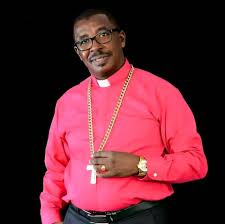
Bishop Samuel Njiriri of Stewards Revival Pentecostal Church, who also serves as chairman of the Federation of Evangelical and Indigenous Christian Churches of Kenya (FEICCK), has proposed that Kenya consider gradually shifting from boarding schools to day schools, similar to some Western countries.
He argues that boarding schools have contributed to rising indiscipline among learners, citing peer pressure, reduced parental supervision, and weakened moral guidance as key factors behind student unrest.
“Boarding schools have become breeding grounds for social misfits due to peer influence and lack of proper parental guidance,” he said.
The Bishop further blamed parents for what he termed as “abandoning their responsibilities,” saying this has left teachers to shoulder the burden of raising children in environments that are often difficult to control. He urged parents to take a more active role in shaping their children’s behaviour, stressing that discipline must begin at home.
Education stakeholders have increasingly debated the role of boarding schools in Kenya, especially following a rise in student unrest, arson attacks, and destruction of property worth millions of shillings in institutions across the country, including Lenana School and others that were forced to close temporarily.
Critics of boarding schools argue that learners are exposed to negative peer influence due to limited adult supervision. They further say that reduced parental involvement in daily upbringing and discipline weakens moral guidance for students. It is also argued that boarding environments tend to encourage group behaviour, which can quickly escalate into unrest or rebellion. In addition, it is said that such settings make it difficult for teachers and administrators to detect early warning signs of emotional or psychological distress among learners. Finally, critics note that large student populations in boarding schools can create situations where conflicts spread rapidly before they are contained.
The debate has intensified following the tragic fire at Utumishi Academy in Gilgil, where 16 students died and several others were injured, raising renewed concerns about safety and discipline in boarding institutions.
Bishop Njiriri also called for the reintroduction of regulated corporal punishment as part of broader efforts to restore discipline in schools.
Supporters of controlled corporal punishment argue that it may help instil discipline and respect for authority among learners. They also believe it can deter repeated indiscipline when used alongside counselling and guidance. In addition, they argue that it can reinforce clear boundaries between acceptable and unacceptable behaviour. Some also say it may support teachers in managing large classes that are sometimes difficult to control, while strengthening accountability among students.
However, the proposal remains highly controversial, with child rights groups previously opposing corporal punishment in schools due to concerns over abuse and potential psychological harm.
Commenting on the Utumishi tragedy, Bishop Njiriri also called for stricter use of CCTV systems in schools. He proposed that surveillance systems should be actively monitored in real time rather than being used only for investigations after incidents have already occurred.
He said CCTV cameras should not simply serve as post-incident tools but should be used to prevent unrest and criminal incidents as they unfold. He urged the government to ensure that monitoring systems are manned by trained personnel capable of responding immediately to suspicious activity in schools.
In recent weeks, several schools across the country have experienced unrest leading to closures, destruction of property, and heightened tension among learners and administrators.
Education stakeholders say the trend reflects deeper challenges, including weakened discipline structures, mental health pressures among students, and strained relationships between parents, teachers, and learners.
As the debate continues, the country now faces difficult questions about the future of boarding schools, the role of parenting in discipline, and the best ways to ensure safety and order in learning institutions.