
By Geraldine Bonareri
For Aisha (not her real name), a 19-year-old single mother from Makindu, the future looked bleak. Rape from a close family member left her depressed and struggling with depression and self-pity on top of her pauperism- she had lost all hope.
She was tired, and at the edge, literally mad, with ropes tied around her.
“My parents separated, leaving me with my father, and older brother,” she narrated to The People Tribune reporter in Makindu, Makueni County, feeling unable to open up further about it.
However, in between sullen moments, after a minute or so of silence, she managed to add something.
“He would sneak into my room at night…,” she said, breaking down.
And this is possibly the moment incest began. “I had no one to tell. I got depressed,” Aisha added.
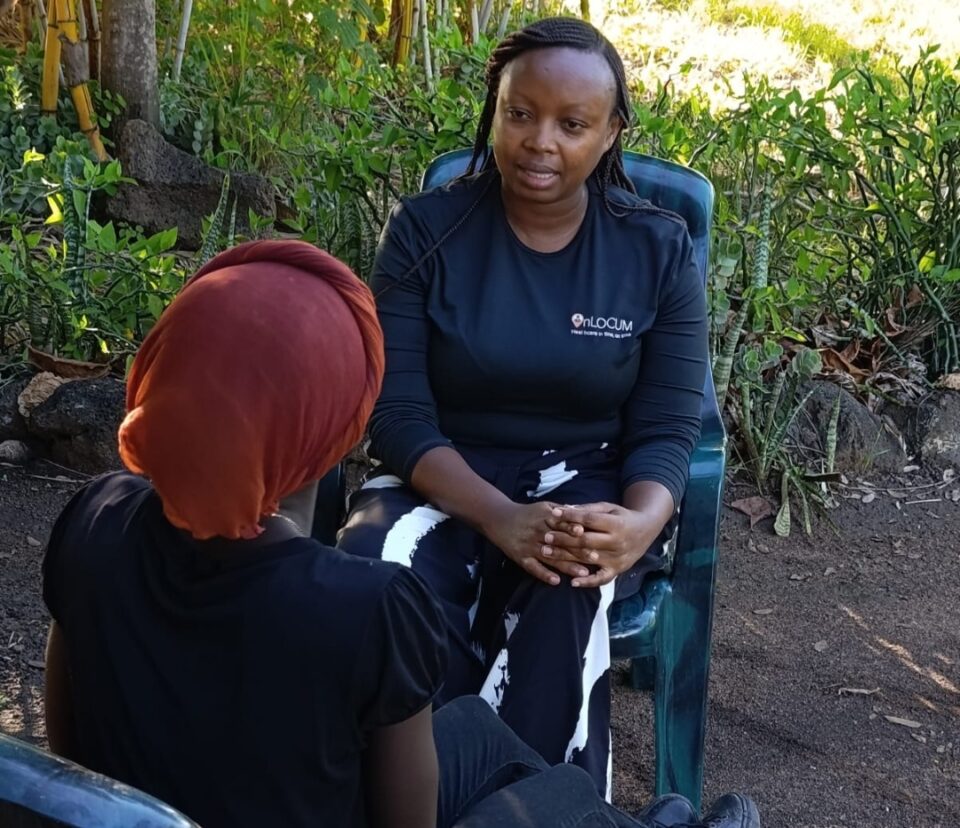
But talk of fate knocking when everything else looks like a total dark night. She met Caroline Muiruri, a compassionate psychologist who changed her life.
“Caroline listened to my story keenly, and took up my case. She counselled me, and helped me find my footing,” Aisha says.
Today, a lady who had almost despaired in life is a confident young woman, pursuing a degree in English Literature and inspiring others in her community, some who have gone through a similar ordeal.
For years, Muiruri has supported vulnerable teens – teenage mothers, drug abuse victims, and mentally unstable youth – in Makindu, a town in Makueni County. “I was drawn to this work because I saw the need,” Caroline explains. “I wanted to make a difference in the lives of these young people, who are often marginalized and forgotten,” she adds.
According to a National Authority for the Campaign Against Alcohol and Drug Abuse (NACADA) report, 11.7 percent of boys and 5.4 percent of girls in schools abuse drugs. Alcohol is the most commonly abused substance with 74.4 percent of students admitting having consumed it, followed by miraa at 62.9 percent.
The NACADA report indicates that cigarettes are also abused by the young scholars at 58.1 percent, followed by prescription drugs at 56.3 percent, with the initiation age being as low as 11 years.
“More teenagers are adopting alcohol and drug abuse as a lifestyle,” Muiruri observes, aligning her insights with the NACAFDA findings.
“Even harder to handle, is the stigma that follows after the community has painted a picture of your situation,” says King’oo, a student at a local secondary school.
He adds, “Mrs. Mulatya (Caroline) is doing a good job. Whenever there’s a case that needs counselling arises, we don’t worry. One call to the Mulatya hospital, and she is ready to make time.”
The hospital has created room for young women to pay their medical bills fully through the Social Health Authority (SHA), without having to worry about additional costs.
“Our young mothers are counselled too. If we can have a handful of people ready to help like this, we would be happy as a community,” states Jackson Kimende, who is the area chief.
Running a family hospital, being a mother and a wife hasn’t deterred Muiruri from her passion and true calling – mental health awareness.
Her work has taken her to the streets, homes, and makeshift shelters, where she meets with young people like Aisha, who were on the brink of giving up.
She also offers pro bono services to victims of drug abuse, helping them overcome addiction and rebuild their lives. “Caroline’s love and support gave me a new lease of life,” says a beneficiary, adding that she helped her overcome a string of struggles, something that was so far-fetched in the community.
John, a 22-year-old recovering addict, echoes Rahma’s sentiments. “Caroline’s counseling sessions helped me address the root causes of my addiction. My mother thought she had lost me. I’m now pursuing a vocational course and looking forward to a brighter future. Her approach is holistic, as she meets the victims where they are, offering counselling and empowerment without judgement.”
“Most of our kids are laughing stocks of the community. Early exposure to drug abuse has taken them from school. You are lucky if you get them through high school. Carol has pushed us to a level we didn’t know. We don’t have to be there. We just send our kids to her, or they meet her at the Chief’s office compound. We can only thank her,” says Amina, who is a leader of a women’s group.
Despite her successes, Muiruri faced a setback when she witnessed mentally unstable individuals being caged in the community. The trauma forced her to step back, but she’s determined to return to her work, stronger and more passionate than ever. “As I turn 40, I hope to inspire others to join me in the fight against mental health stigma and inequality,” she says. She faces significant challenges. Funding constraints limit her reach, and societal stigma still impedes many from seeking help. “It is heartbreaking to see families turn away on their own,” she says. The needs are vast, but Muiruri is undeterred – “I am trying to push for more community-based support systems.” She adds.
Muiruri’s story is a testament to the power of compassion and kindness. Her dedication to empowering young people is a shining example of the impact one person can have on the community.
