
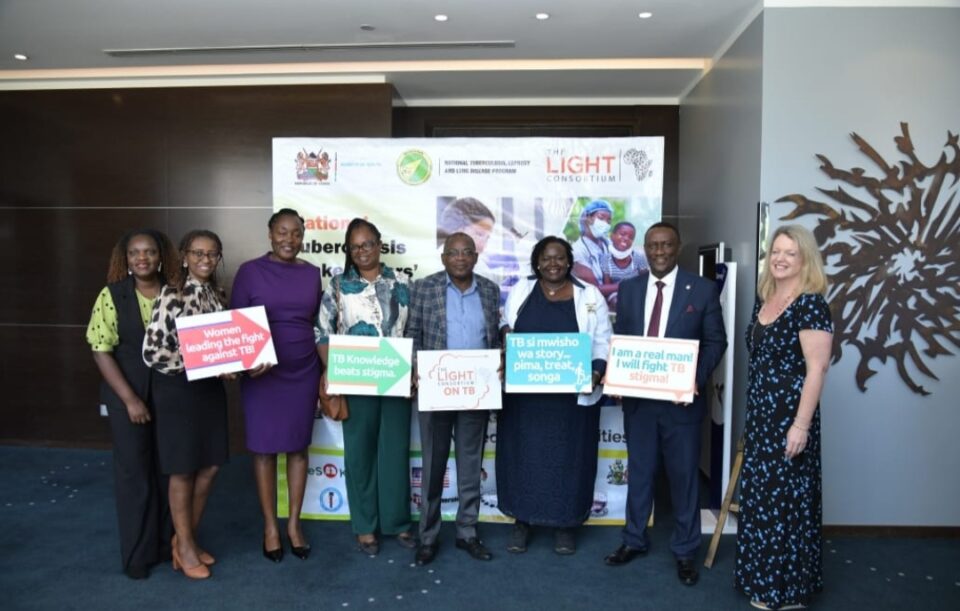
merging statistics on the number of young people continuously being exposed to the impact of Tuberculosis are a stark reality that the right messaging on awareness of the disease is lacking.
An estimated 14, 530 young people aged 15 to 24 were diagnosed with Tuberclosis (TB) in Kenya, numbers in government records almost four years down the line, but nothing significant has been done about it.
In its review of the national TB surveillance TB data covering 2017-2022, a six-year UK-funded research programme also reported that in Nairobi alone – the most populous town in the country – 16, 467 cases were diagnosed during this period. Conducted by the LIGHT Consortium, the survey also found out that 20 percent of people lost to follow-up in Kenya are adolescents and young adults.
“They face unique barriers, including school and work commitments, stigma, and financial constraints, which affect retention in care,” state the findings of the survey, which used a mixed-methods approach.
And this has effectively prompted calls for stakeholders to rethink the messaging, communication and advocacy around this disease, that’s more youth relevant.
The survey identified sustained critical gaps along the TB care, resulting in missed opportunities.
The research findings by the LIGHT Consortium released during the Kenya national Tuberclosis stakeholders’ dissemination forum, showed that due to outdated communication on the disease, many young people miss out on early diagnosis and detection; treatment initiation, and successful treatment completion.
Using national data from the Treatment Information from Basic Unit (TIBU), a national, Android-based digital surveillance system for Tuberculosis (TB) and lung disease, the study found out that a large proportion of health facility attendees were not screened for TB, and many presumptive TB cases were not tested. Presumptive TB refers to an individual with signs or symptoms suggesting tuberculosis, requiring further diagnostic testing.
“Qualitative findings showed that pharmacies were often the first point of care for young people, while delays in diagnosis were common because symptoms were initially treated as other illnesses such as pneumonia, flu, asthma, or tonsilitis,” highlight the study, which conducted in-depth interviews with young people who had disengaged from TB care. The results were also obtained through participatory workshops with those who had completed treatment.
It turned out that young men often delayed seeking care because of work responsibilities, while young women faced caregiving burdens, stigma and family pressures.
The study found out that many people affected by TB, young people dominating, concealed their diagnosis because of fear of discrimination, while some delayed seeking care due to anticipating negative reactions from others.
“Stigma was particularly influenced by fear of infection, misconceptions linking TB with HIV, and weak social support systems,” states the survey, which calls for the continued need for stigma reduction interventions within communities and health facilities.
Zekaria Abdullahi, a fourth-year medical student was candid. A TB survivor, his testimony aligns with the research findings. The young man has endured stigma, isolation and misdiagnosis.
His journey with the disease kicked off in the year 2022 when he joined medical school, which he states was a shocker as he least expected it.
“My journey with TB started in the year 2022, so the diagnosis of the TB itself came as a shock to me, and the initial problems that I encountered during the TB treatment, was stigma,” he told the gathering, revealing that the stigma was coming from fellow students.
He decided to move away from the hostels, and went back home, where he received adequate support from the family as he embarked on his treatment, which was also not easy as he had to tolerate the side effects that came with the drugs.
“One of the main problems was that everybody was afraid that they can get the disease from you. There’s that tendency among young people that the disease is spread through sharing, maybe food or utensils, however, we are changing that narrative,” he added.
As a survivor, he participated in the study that was organized by the Respiratory Society of Kenya (ReSOK) in collaboration with the Light Consortium.
It was a participatory study where young people like him shared their stories, highlighting the problems they encountered while undergoing treatment, and mainly stigma stood out.
“We had a gentleman that was in the study that actually underwent stigma to the extent that the wife left him. He had to fend for himself, and the family that he lived with secluded him,” he narrated.
He called for the establishment of more platforms where survivors can share their stories in order to overcome the stigma. He also recalled how many young people, including him, were misdiagnosed.
“Initially, when I went to a private facility, they told me that I had pneumonia. At that time I was taking some antibiotics, but later they came to find out that I had TB,” he said, further recalling that many of these young patients had to travel long distances to pick their drugs, yet they were working.
However, according to Dr. Immaculate Kathure, the head, National TB Program at the Ministry of Health, as TB transmission continues to affect the young people of the country, access to youth-relevant information is the biggest challenge.
She said, TB being an airborne disease anybody can get it, however, the moment everybody understands that and become comfortable talking about it the same way as diabetes, malaria, and hypertension among other ailments, then it’s easier to seek services and be able to come on time.
“Therefore, the one thing that would be a game-changer for us is information,” Dr. Kathure added her voice on this matter, elaborating that improving communication, information, and generally public awareness and education on the TB symptoms; when people need to go to a hospital, instead of a chemist; when they have a recurring cough, then they can be treated on time.
She advised against self-treatment, calling on people to move away from self-remedies, and seek the help of the healthcare workers.
And above all, Dr. Kathure is keen on messaging, arguing that this depends on the audience since there is a wide array of target audiences. In the current data with the Ministry of Health and various research programmes, TB, for instance, affects more men than women.
It’s highly likely that the message that a man will listen to; she says, may not be on TikTok or Instagram, but maybe they may read the newspaper or watch news. And that would depend on the target audience.
However, for the young people, for example, are not on LinkedIn, but can be found on TikTok.
“So, making sure that we tailor the message platform to the target audience, and that the message that goes aligns with a particular group so that we are not talking very complicated medical jargon on TikTok, because then it will not reach the people that are intended,” she pointed out.
Dr. Kathure is for making the messaging more interesting if it is targeting young people, maybe also by coupling it with a dance or something that is catchy and attractive to the population.
“If, maybe tomorrow we are hearing about a football campaign, then it’s more likely that men are going to listen into that. So then, how do we leverage on the already existing platforms and curate the messages for the specific target audiences?” she posed, explaining that this then can be a medium through which the message will get out there.
“So, what we are saying is that we are encouraging these young people, first to normalise conversations around TB, because it’s not something to be ashamed of, it’s a disease like any other, and it does not necessarily mean that if one has it they have HIV, because that’s usually the fear,” she added.
A lot of people know about TB, but they are misinformed, and so the knowledge is there, although sometimes it’s encumbered with a lot of myths and misconceptions. Secondly, people fear TB because they always think it is associated with HIV.
And according to Stop TB Partnership Kenya Chief National Coordinator, Evaline Kibuchi, all hands must be on the deck to end the status quo, reflecting that the messaging on TB has remained what it was since the disease became public knowledge.
“Our messages are as old as TB itself,” she stated asking, what did we tell people? TB is preventable, treatable, and curable, and if indeed it is, why has it continued to claim millions of lives?
She continued; “does this mean we’re giving the wrong message?”
However, she expressed optimism that the Light Consortium research findings have the required answers to tweak the conversation.
“We are going to repackage our message and say it as it is. If it kills, it kills. But I’m just saying it’s good to inform how we package the messages for the citizens, especially for the age group in focus, the young people,” she said.
Globally, and even locally, the TB landscape has transformed; initially from diagnosis, moving from microscopy to many other technologies, and stakeholders want the messaging to also change with times- to curb transmission.
