
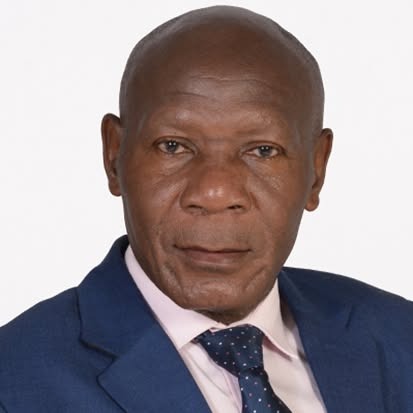
By KENNEDY BUHERE
Some 15 years ago, I attended a burial ceremony in a village in Kakamega County where mourners booed a man who interlaced his tribute to the deceased with stories about how much more intelligent he had been while the two were in school.
The Master of Ceremonies had allowed the man, a close relative of the deceased, to give a tribute.
He told the mourners that the deceased had been his classmate during the colonial days. Fair enough.
However, the mourners refused to swallow his attempt to demonstrate that the deceased was not as bright as he was. He irked them when he claimed that he had not only beaten the deceased in school-level examinations, but had also beaten him in the Common Entrance Examination (CEE) and the Kenya African Preliminary Examination (KAPE) in Class Four and Class Eight, respectively.
The remarks drew sneers from the mourners. He was forced to readjust the tenor of his speech.
I smiled when they mocked the speaker, a long-serving primary school teacher who had by then retired from the service.
I smiled for two reasons. First, here was an experienced former primary school teacher who had certainly taught English to an entire generation, but did not know the protocols and manners that inform public speaking in general and eulogies in particular.
Secondly, I smiled because the mourners knew better than he did, despite his education.
The mourners knew something about eulogies or tributes that this teacher either did not know or had ignored. A eulogy is a spoken or written tribute praising the life and accomplishments of a person who has passed away. It is certainly not about the living. It does not matter how much more intelligent or better positioned in life the speaker may have been than the deceased. It does not matter how much the speaker helped the deceased. What the speaker did for the deceased is not the theme of a tribute. Tawe.
The deceased may have been an exalted or great person in society. It does not matter. Those who eulogise him or her are normally close relatives, family friends or workmates.
Members of these groups may have shared a life, experiences and insights with the deceased. It is the substance of the impressions the deceased left on them, or the impressions the living had of the deceased, that forms the substance of the tribute.
These impressions are unavoidably personal, reflective and tasteful. In many ways, eulogies are intangible mementoes, memorabilia or gifts to both the departed and the attendees. They help mourners, through the speakers chosen, to reflect on and remember their loved one.
Eulogies also provide a way for loved ones to express their grief, share memories and celebrate the life of the deceased.
The tributes affirm certain traits, values and visions of life that guided the deceased in his family, career or life in general. A eulogy provides a perfect opportunity to share the legacy of the deceased.
Mourners ask questions such as: What did the deceased value in life? Which virtues did he or she demonstrate? How did the deceased handle strife “in the world’s broad field of battle”? How did he manage the difficulties associated with marriage? How did he or she manage those things that husbands and wives face in the family?
What about professional success or failure? How did he manage success, or what society considers success? Was he amiable or a loner?
A eulogy is not about the successes of the speaker or those still living. It does not matter how bright the speaker may have been. Nor does it matter how well educated, widely travelled or highly placed he was in his prime.
The tribute is about the man or woman lying in the casket—the person about to be interred. The presumed more intelligent or generous living will have his or her time when it is their turn to lie in a casket. They must wait for their time. The family members, friends and relatives who outlive them will talk about them.
For now, we should let the deceased have his or her moment in the sun.
It is time for speakers to talk about how they knew the deceased. The perspective each speaker brings to bear on the deceased is almost always personal, so that each mourner present comes to know bits and pieces of information about the deceased that were previously unknown to them.
The overall picture of the deceased is inevitably composite and all-rounded. Unless politicians hijack the burial ceremony to market themselves, mourners leave the home enriched and ennobled.
The same principles that inform eulogies at the village level are what inform the substance of eulogies at the national level. The speakers might be presidents, governors, Cabinet secretaries, kings or ambassadors. The referent, the object of the speech, must be the deceased: what he accomplished and what kind of person he was.
Consider two examples from the history of public speaking or rhetoric: one non-fictional and the other fictional.
When US statesman Senator Edward Kennedy died, President Barack Obama stepped forth to eulogise him. He dwelt on the long public service Senator Kennedy had given the United States and enumerated some of his achievements, concluding:
“Ted Kennedy has gone home now, guided by his faith and by the light of those he has loved and lost. At last he is with them once more, leaving those of us who grieve his passing with the memories he gave, the good he did, the dream he kept alive, and a single, enduring image—the image of a man on a boat; white mane tousled; smiling broadly as he sails into the wind, ready for what storms may come, carrying on toward some new and wondrous place just beyond the horizon.”
Then there is Mark Antony in William Shakespeare’s Julius Caesar. I refer not to his well-known “I come to bury Caesar, not to praise him,” in which he condemned Brutus and his co-conspirators, but to his tribute to Brutus, who was killed during the civil war that followed Caesar’s assassination.
Coming upon the body of Brutus a few minutes after his fall, Antony speaks immediately, saying:
“This was the noblest Roman of them all.
All the conspirators save only he
Did that they did in envy of great Caesar.
He only, in a general honest thought
And common good to all, made one of them.
His life was gentle, and the elements
So mix’d in him that Nature might stand up
And say to all the world ‘This was a man!’”
Tributes are about the good utterances and good deeds wrought by the deceased, not those still living.
Little wonder that priests who preside over burials invoke Philippians 4:8 in the New Testament:
“Finally, brothers and sisters, whatever is true, whatever is noble, whatever is right, whatever is pure, whatever is lovely, whatever is admirable—if anything is excellent or praiseworthy—think about such things.”
The deceased is always the silent guest of honour during a funeral. The focus is always on him or her, not the living.
It does not matter how mighty a mourner might be, nor how beneficent he or she was to the deceased. Let the mourner tell us a story about the deceased. The attendees at the funeral will lend the speaker their ears.
Kennedy Buhere
Communication Specialist
