
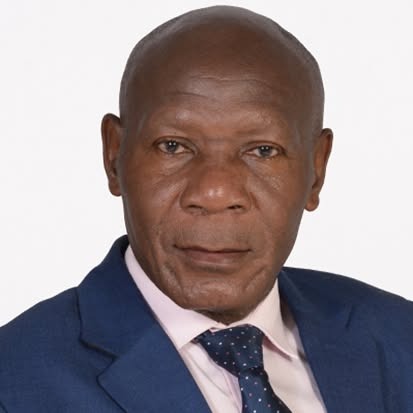
By KENNEDY BUHERE
The Basic Education Bill, 2026 has restored the County Commissioner, formerly known as the District Commissioner, to the position of chairperson of the County Education Board (CEB)—the successor to the District Education Board (DEB) under the repealed Education Act, Cap 211.
This is welcome.
The Basic Education Act, 2013, which is set to be repealed, had virtually excluded National Government Administrative Officers (NGAO) from the management of education affairs in the counties.
This was odd. The functions vested in County Education Boards require coordination with the County Commissioner to be effectively realised. The CEB must work with other government departments to implement policies, regulations and rules governing basic education. The County Commissioner is the focal point of the National Government at the county level. His exclusion from the CEB was therefore regrettable.
County Directors of Education and their officers at sub-county level regularly consult County Commissioners on matters concerning the safety and health of learners.
The reinstatement of the County Commissioner at the centre of County Education Boards could help address some of the persistent problems that have affected children’s access to equitable and quality education across the country.
Section 30(2) of the Basic Education Bill states that the County Education Board shall be an agent of the National Government. From this perspective, the CEB is the mind, eyes, ears and hands of the National Government in the county. It is therefore only natural that the County Commissioner, as coordinator of National Government operations at the county level, should help steer it.
Under the proposed law, as was the case under the Basic Education Act, 2013, County Education Boards have substantial responsibilities.
Every CEB will be expected to submit annual reports to the Cabinet Secretary for Education. Ideally, these reports will provide a comprehensive picture of the state of education in each county.
They could cover the quality of education, factors facilitating or impeding educational excellence, and the extent to which learners have equitable access to education based on gender and other relevant variables.
The reports will be a mine of information and insights with the potential to guide the Cabinet Secretary in policymaking and decision-making. Apart from reports on emergencies, the annual submissions are likely to be substantial, covering both structural and curriculum aspects of education.
The structural aspects could address school financing from the National Treasury and households, and how those resources are utilised. They could also examine the adequacy of infrastructure, including classrooms, desks, sanitation facilities, laboratories, libraries and teachers’ offices.
The reports would also need to address teacher shortages, teacher motivation, management structures responsible for administering education at the county level, and the adequacy of inspection and supervision of schools in relation to access, equity and inclusivity.
The Boards will also inevitably address curriculum matters.
Arising from their functions under the law, the Boards should report on the state of beginning reading instruction at the lower primary level and whether learners are attaining the expected reading proficiency at each grade.
The reports should also assess how effectively numeracy skills are being imparted at the earliest levels of learning. Above all, they should examine whether learners are acquiring the basic knowledge prescribed by the curriculum as the foundation for the skills, attitudes, values and reasoning that define education.
Suffice it to say that the functions and responsibilities envisioned for County Education Boards under the Basic Education Bill are considerable.
They strike at the heart of not only educational excellence, but also the provision of quality education for all children, regardless of whether they attend public or private schools, live in rural or urban areas, or come from low- or high-potential regions.
There are two important implications from this.
First, the National Government must empower County Education Boards with adequate funding and personnel at the secretariat level to enable them to fulfil their mandates.
County Education Offices and their sub-county counterparts suffer from serious staff shortages. District Education Offices in the early 1990s were relatively well staffed. This is no longer the case, partly because of restrictions on recruitment into the public service.
The Bill, like the Basic Education Act, 2013, designates the County Director of Education as secretary to the County Education Board. Yet the workload assigned to the Board is enormous.
The CDE therefore needs additional staff. In many counties, education offices operate with skeletal teams, hampering the delivery of services to schools and the public.
The specialised committees envisaged by the Bill—covering planning, finance, audit and human resources, registration and management, curriculum, quality assurance and assessment, and discipline and dispute resolution—will require considerable expertise, tact, analytical ability and writing skills.
The committees and Boards will need to interpret their mandates flexibly rather than narrowly. The law allows Boards to engage experts to help them examine policy and operational issues before them.
Implicit in this mandate is the power to raise questions concerning both the structural and curricular aspects of education, with a view to addressing the legitimate expectations of learners, parents, guardians, educators and policymakers.
Therefore, the 47 County Education Boards should not merely submit routine briefs to the Cabinet Secretary for Education.
The spirit of the basic education law, relevant regulations and international conventions on education and the rights of the child should require the Boards to act as impartial brokers in education decision-making.
They should examine the fundamental purpose of basic education against the constraints they identify and make policy proposals to the Cabinet Secretary aimed at removing barriers to children’s access to inclusive, quality education.
Conversely, the Boards should identify opportunities that can be harnessed to nurture the potential of all school-going children to the greatest possible extent.
The second implication of the extensive functions assigned to County Education Boards is that the 47 Boards require an independent entity at the national level with which they can work.
Such an entity would serve as a liaison office, coordinating the activities of the Boards and, crucially, receiving the reports they prepare for consideration by the Cabinet Secretary.
The independent entity would receive, analyse and consolidate the reports before submitting them to the Cabinet Secretary.
The case for such an office is supported by two education laws that have shaped Kenya’s education system.
The Basic Education Act, 2013, which is set to be repealed, provides for a National Education Board. Section 5(2) assigns the Board the function of advising the Cabinet Secretary, the State Department responsible for education and related departments on policy matters concerning various aspects of education.
Former Education Cabinet Secretary Prof Jacob Kaimenyi appointed members of the Board, but a new board was not appointed after the tenure of the first one expired.
The government should not have allowed the Board to disappear. As long as the County Education Boards are retained with their extensive functions, there is a strong case for retaining the National Education Board—or establishing another entity outside the day-to-day management structures of the Ministry—to coordinate and support the work of the County Education Boards.
The repealed Education Act, Cap 211—the law that shaped Kenya’s education system from 1968 until its repeal in 2013—also provided for an independent advisory mechanism.
Section 4(1) stated that the Minister could establish an advisory council to advise on matters concerning education in Kenya or in particular parts of the country, including different councils for different areas or aspects of education.
Former Quality Assurance and Standards Officer Majani Baridi told me that successive Ministers of Education never established the office. It meant that Ministers largely relied on Permanent Secretaries and education technocrats to manage the sector.
Perhaps they managed because the education environment was relatively simple. The number of basic education institutions, the learner population and the demands placed on the education system were considerably less complex than they are today.
The educational landscape has since become far more complex.
The management structures in place today already have considerable responsibilities. They may not have sufficient time, capacity and institutional space to analyse and consolidate reports from all 47 County Education Boards.
An independent office, sufficiently removed from the distractions of day-to-day operations, would have the time and capacity to analyse the reports and prepare quality briefs for the Cabinet Secretary.
What the Cabinet Secretary for Education needs is not simply a collection of reports, but well-researched reports accompanied by sound policy advice for consideration by the Principal Secretary and other technocrats.
Such advice could form the basis for the preparation of Cabinet memoranda and, where necessary, policy interventions by the Government.
The success of County Education Boards will therefore depend not only on the functions assigned to them by the Basic Education Bill, but also on whether the Government provides them with adequate resources, personnel and an effective national mechanism for coordinating and translating their findings into policy.
Kennedy Buhere
Communication Specialist
