
Kenya is turning to the banking sector and private investors to help finance its biodiversity and green-growth ambitions, as the government acknowledges that limited funding and weak capacity at county level could undermine implementation of the country’s environmental commitments.
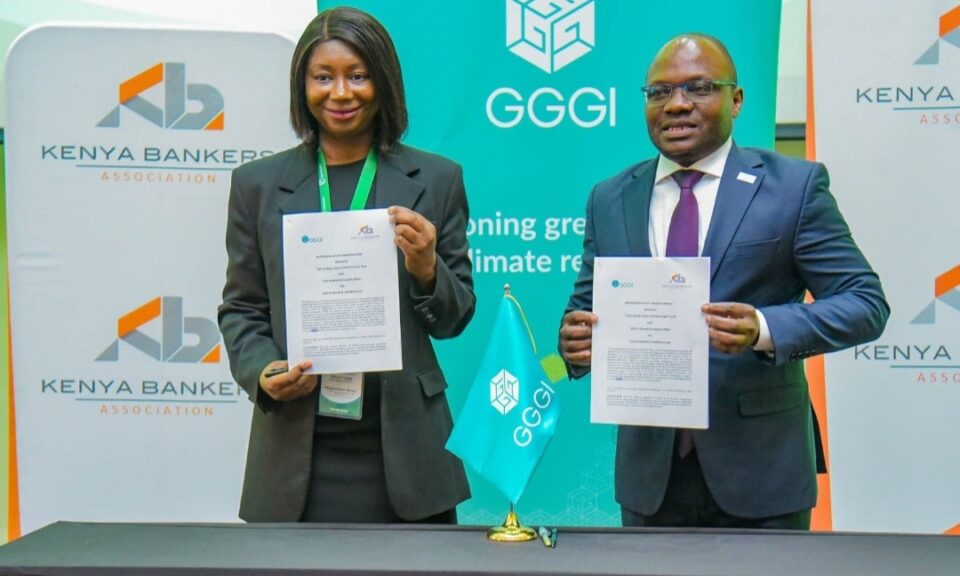
The push brings together a new five-year partnership between the Global Green Growth Institute (GGGI) and the Kenya Bankers Association (KBA) and the launch of the Systemic Learning and Mainstreaming of Biodiversity Targets for Innovative Transformation and Behavioral Change (SYMBIOTIC) project.
Together, the initiatives seek to address a central challenge facing Kenya’s biodiversity agenda, hence seeking a fresh strategy how environmental commitments can be transformed into projects that can attract commercial finance.
The GGGI-KBA partnership will work to strengthen sustainable finance, develop bankable green projects and improve the ability of financial institutions to assess and finance investments that support sustainable development.
At the same time, the five-year SYMBIOTIC project will support Kenya in translating biodiversity commitments into practical action through better planning, financing, private-sector investment and ecosystem restoration.
Nagnouma Kone, GGGI manager for Africa strategy and partnerships and head of the Kenya office, said the partnership with KBA was designed to close a longstanding gap between businesses seeking finance and banks looking for investment-ready projects.
“For too long, entrepreneurs have said banks are not lending, while banks have said there are not enough bankable green projects. This partnership is about closing that gap,” Kone said during the signing of the agreement in Nairobi.
The partnership will focus on reducing risks associated with green lending, improving understanding of nature-positive investments and helping businesses meet the requirements needed to access commercial finance.
It will also explore instruments such as green loans and sustainability-linked bonds to direct more capital toward sustainable and biodiversity-positive investments.
Making biodiversity bankable
For Kenya, the challenge is no longer simply setting biodiversity targets.
The country has translated the 23 global targets under the Kunming-Montreal Global Biodiversity Framework into 25 national targets. But turning those commitments into programmes requires money, technical capacity and coordination across national and county governments, businesses and communities.
Mayiani Saino, deputy director at the State Department for Climate Change and Forestry, said counties face particular difficulties in translating national and global commitments into everyday planning and budgets.
“When the commitments get to the counties, two key issues arise: the capacity to unpack those commitments and embed them into everyday operations, and the financing required to implement them,” Saino said.
She said the government was working to mainstream biodiversity into national and county planning, public finance, business and investment decisions.
But biodiversity often struggles to compete with other development priorities for public funding.
“Biodiversity hardly makes it to the top five in the list of investments in the country,” Saino said. “Yet a country that is 48 per cent dependent on nature for its GDP does not invest enough back into its natural capital.”
The SYMBIOTIC project is intended to help address that problem by strengthening policy and coordination while examining how public finance and private investment can support biodiversity.
It will assess existing legislation, incentives and subsidies to determine whether they encourage biodiversity investments and work with businesses and financial institutions to promote nature-positive practices.
Banks as a bridge to private capital
The GGGI-KBA agreement gives that ambition a direct link to Kenya’s financial sector.
Under the five-year MoU, the two organisations will work on sustainable finance policies and market practices, strengthen the capacity of financial institutions and support businesses in developing investment-ready projects.
The partnership will also facilitate technical assistance, training, research, knowledge sharing and investment facilitation.
KBA Chief Executive Officer Raimond Molenje said banks had a critical role in financing Kenya’s sustainable development ambitions.
He said the partnership would strengthen market readiness, build institutional capacity and support financing solutions capable of unlocking investment in green-growth opportunities.
The focus on bankability is particularly important for small and medium-sized enterprises, which may have viable environmental businesses but lack the technical expertise, financial structures or documentation required by commercial lenders.
Helping such enterprises develop bankable projects could expand the pipeline available to banks while giving smaller businesses greater access to capital.
The approach could apply across sectors including clean energy, sustainable agriculture, waste management, circular economy activities and ecosystem restoration.
Expanding the financing toolbox
GGGI said conventional lending alone would not be sufficient to meet the scale of investment needed.
Kone said Kenya needed to make greater use of emerging financial instruments to accelerate investment in biodiversity.
“We need to innovatively think beyond the box and use effective instruments that are now new, and plug and play those into biodiversity in order to accelerate that uptake,” she said.
The partners will explore instruments including green and sustainability-linked bonds, carbon finance and debt-for-nature swaps.
Such instruments could provide additional channels for mobilising capital beyond government budgets and traditional donor financing.
Nature Kenya Executive Director Dr. Paul Matiku said Kenya had yet to establish its actual biodiversity financing gap but warned that the shortfall was substantial.
He cited an estimated global financing requirement of about $200 billion annually to implement the biodiversity framework, highlighting the scale of the challenge facing countries seeking to meet their commitments.
For Kenya, the question is how much of that investment can be mobilised domestically and how much can come from private capital.
Bringing business into conservation
The SYMBIOTIC project is also designed to bring businesses into discussions that have traditionally been dominated by government, conservation organisations and development partners.
GGGI Kenya Project Manager Lavenda Ondere said the initiative would support dialogue between government and businesses to accelerate implementation of Kenya’s National Biodiversity Strategy and Action Plan.
“We want to accelerate NBSAP implementation, but we also want to bring business into the conversation,” Ondere said.
The project will support natural capital accounting, biodiversity-friendly investments and ecosystem restoration while strengthening the participation of communities and other stakeholders in conservation and decision-making.
That approach reflects a broader effort to integrate the value of nature into economic planning rather than treating biodiversity as separate from development.
From policy to investment
Kenya is simultaneously building a wider policy architecture around nature and sustainable finance.
The country’s updated National Biodiversity Strategy and Action Plan is aligned with the Kunming-Montreal Global Biodiversity Framework and is being complemented by the National Bioeconomy Strategy 2026-2036, the National Plan for Advancing Environmental-Economic Accounting 2025-2028 and the Kenya Green Finance Taxonomy.
The frameworks are intended to strengthen the integration of biodiversity, natural capital and environmental considerations into economic and financial decision-making.
However, the argument is that policy frameworks alone do not guarantee investment.
A biodiversity project still needs a credible business model, measurable outcomes, appropriate risk assessment and a structure that gives lenders or investors’ confidence that their capital can be recovered or generate a return.
That is where the GGGI-KBA partnership intersects with SYMBIOTIC.
One initiative is focused on creating the conditions for biodiversity investment; the other is helping build the financial-sector capacity and project pipeline needed to channel capital into those opportunities.
The five-year SYMBIOTIC project, led by the Nature and Biodiversity Conservation Union (NABU) and implemented by GGGI, is being rolled out in Kenya, Ethiopia, Madagascar, Indonesia and Kyrgyzstan from February 2026 to January 2031.
It is funded by the German government through the International Climate Initiative.
For Kenya, the challenge now is to move biodiversity from policy documents and international commitments into national and county budgets, corporate strategies and bank lending decisions.
The country has set its biodiversity targets, and now according to the partners, it is trying to make them financeable, investable and implementable.
