For the first time since Kenya attained independence in 1963, the North Eastern region will host a national celebration, marking a historic milestone in the country’s journey toward inclusion and equitable development.
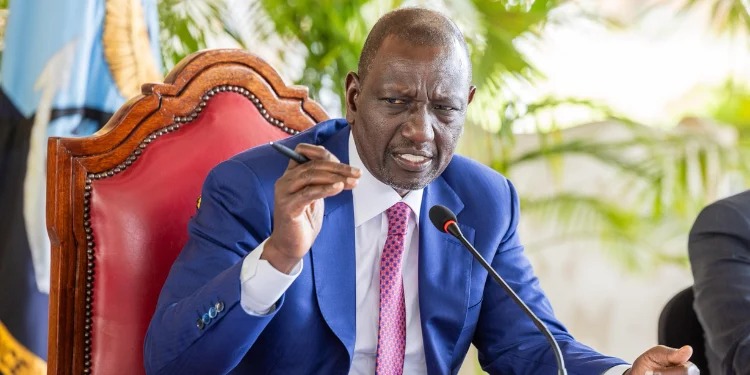
On Monday, Wajir County will make history as it hosts this year’s Madaraka Day celebrations, presided over by President William Ruto at the newly constructed Wajir Stadium. The event represents far more than a national holiday celebration; it symbolizes the government’s deliberate efforts to integrate a region that for decades remained on the periphery of Kenya’s political, economic and social landscape.
Madaraka Day, celebrated annually on June 1, commemorates the day in 1963 when Kenya attained internal self-rule from British colonial administration before achieving full independence later that year. Traditionally, national celebrations such as Madaraka Day, Jamhuri Day, Mashujaa Day and Labour Day have largely been hosted in major urban centres and regional capitals including Nairobi, Mombasa, Nakuru, Kisumu, Nyeri, Embu, Kakamega and Kericho.
The decision to bring the country’s most important national celebrations to Wajir underscores a changing national narrative—one that recognizes North Eastern not as a distant frontier but as an integral part of Kenya’s development story.
“This is a defining moment not only for Wajir but for the entire North Eastern region,” said a senior government official involved in preparations. “Hosting Madaraka Day here demonstrates the government’s commitment to ensuring that every Kenyan region enjoys equal recognition and opportunities.”
The President is expected to spend at least four additional days in Wajir and neighboring Garissa counties inspecting key development projects, further highlighting the administration’s growing focus on the region.
For many years, North Eastern counties faced significant challenges stemming from insecurity, underinvestment and inadequate infrastructure. Previous administrations under Presidents Daniel arap Moi, Mwai Kibaki and Uhuru Kenyatta rarely made extended visits to the region outside election campaign periods.
However, since assuming office, President Ruto has adopted a more proactive approach aimed at unlocking the region’s potential through improved security, infrastructure development, education reforms and poverty reduction initiatives.
The government’s renewed interest in transforming North Eastern gained momentum following the tragic 2015 Garissa University terrorist attack, which exposed the devastating impact of insecurity on development and investment.
Since then, successive interventions have significantly improved the security situation.
Among the strategies adopted by the government to combat terrorism and restore stability are enhanced intelligence gathering and coordination among security agencies, recruitment of local reservists and security personnel familiar with the terrain, deployment of advanced surveillance technology along the Kenya-Somalia border, strengthening of border control measures, increased military operations targeting Al-Shabaab hideouts, and deeper collaboration with local communities to identify and counter radicalization.
The government has also invested heavily in community-based peacebuilding programs, youth empowerment initiatives and education opportunities aimed at reducing vulnerability to extremist recruitment.
As security improved, development projects quickly followed.
Major road infrastructure projects have transformed connectivity across previously isolated parts of the region. Improved road networks linking Isiolo, Marsabit, Moyale, Mandera, Garissa and Wajir have enhanced the movement of people, goods and services while opening new economic opportunities.
New schools, healthcare facilities, water projects and digital connectivity programs have further accelerated social and economic transformation.
The improved security environment is now enabling North Eastern to host national events that were once considered impossible in the region.
A notable example was the successful hosting of the 62nd Kenya Science and Engineering Fair (KSEF) at Garissa High School two months ago.
The event attracted more than 2,000 students from across the country and showcased Kenya’s growing emphasis on science, technology, engineering and mathematics (STEM) education. Participants exhibited innovative projects in robotics, artificial intelligence, environmental sustainability and applied sciences.
The fair marked another milestone by officially integrating Junior School learners alongside Senior School participants.
Maranda High School emerged as the overall national winner in the senior school category, while St. Mary’s Nyabururu Junior School claimed top honors in the Grades 7 to 9 division.
Kabianga Boys High School from Kericho County also distinguished itself by securing an opportunity to represent Kenya at an international competition in Los Angeles, United States.
Education stakeholders hailed the event as proof that North Eastern had become a viable destination for major national educational activities.
“The successful hosting of the science fair demonstrated that Garissa and the wider region can comfortably host national events involving thousands of participants from every corner of the country,” said an education official.
Buoyed by this success, the government is now exploring plans to bring other major educational and cultural events to the region, including the National Music and Drama Festival and the Kenya Secondary Schools Sports Association national games.
Officials believe such events will not only stimulate local economies but also strengthen national cohesion by encouraging interaction among young people from diverse regions and backgrounds.
Local business owners are already experiencing the benefits of increased government attention and national events.
Hotels, transport operators, restaurants and small-scale traders in Wajir and Garissa have reported increased business activity as visitors, contractors and government officials stream into the region.
Residents say the hosting of Madaraka Day sends a powerful message that North Eastern’s fortunes are changing.
“For many years we felt forgotten,” said a community elder in Wajir. “Today, the entire country is coming to Wajir. It shows that we are part of Kenya’s future and development.”
As Kenya celebrates Madaraka Day, the significance of the event will extend beyond commemorating self-governance. In Wajir, it will represent another form of liberation—the breaking of historical barriers that once isolated an entire region from the national mainstream.
The celebrations will serve as a powerful reminder that security, infrastructure and education can transform communities and create opportunities where challenges once existed.
For North Eastern, Monday’s celebrations may well mark the beginning of a new chapter—one defined not by marginalization, but by inclusion, opportunity and national recognition.