
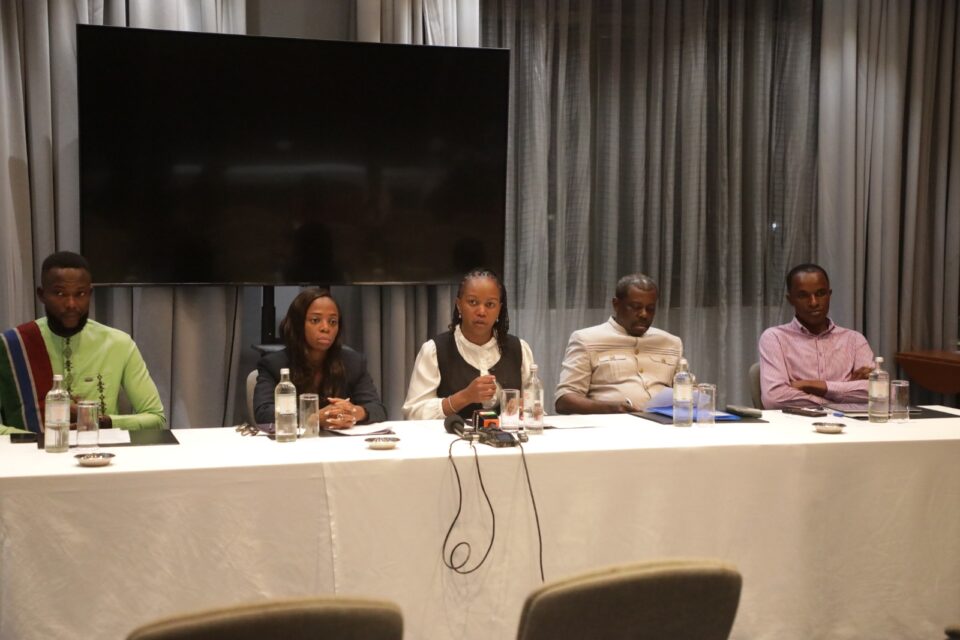
A shortfall of US$5.36 billion (Sh692.2 billion) Global Fund replenishment to cushion the gains made in the fight against HIV, Tuberclosis (TB) and malaria is a major concern for a coalition of over 100 Civil Society Organisations (CSOs) attending the Africa Forward Summit in Nairobi.
Against the target of US$18 billion (Sh2.3 trillion), the Global Fund’s 8th Replenishment in 2025 secured US$12.64 billion (Sh1.6 trillion), prompting calls by CSOs to the Summit’s leadership to ensure that the Africa Forward final outcome must prioritise people-centred investments in health.
The Summit lands at a moment when the partnership model that underpinned two decades of progress against HIV, tuberculosis (TB) and malaria, and which prioritized health sovereignty, at risk.
“No health sovereignty without people-centred partnerships,” the Coalition stated.
According to the CSOs, because of the partnership that has been there, 70 million lives were protected over the last two decades, but now the funding gap threatens the progress toward ending the three epidemics.
The shortfall, Coalition says is also a reflection of a broader trend of funding cuts for health and development. The Coalition brings together African Civil Society Organisations, and their French counterparts. At the Summit together the continent’s Parliamentarians are keen to see that their demands are not shortchanged.
The organisations are currently assessing the direction of the discussions in the two-day meeting whose curtains come down later today with a Nairobi declaration. However, for the CSOs, Africa Forward final outcome must prioritise people-centred investments in health.
“Africa Forward? Not Without Us,” state Civil society demands people-centred investments in health on the eve of the Nairobi Summit, calling on Heads of State to place equity, and community-led priorities at the heart of the Nairobi Declaration and carry that agenda forward to the G7 Summit in Évian (Évian-les-Bains), a communal town in eastern part of the country from June 15–17, 2026.
The Group of Seven (G7) consist of Canada, France, Germany, Italy, Japan, the United Kingdom, and the United States, including the European Union (EU) as an observer.
During a meeting with health journalists in Nairobi on the eve of the ongoing meeting, the coalition also demanded that the hosts ensure that partnerships are built on equity, country leadership, and the lived realities of the people, health systems are meant to serve.
The Summit is co-hosted by President William Ruto and his French counterpart; Emmanuel Macron, who have named resilient health systems as one of the themes of the Summit and its outcome document, the Nairobi Declaration, will feed into the upcoming G7 Heads of State Summit.
“You cannot drive Africa forward without strengthening health systems, and you cannot speak about health without putting people at the centre,” said Executive Director, WACI Health, Rosemary Mburu.
She said that sovereignty is a pathway with milestones, while solidarity means partners journeying with African nations guided by national priorities, and not isolation.
Signed by over 100 civil society organisations from 32 countries, the statement calls on the leaders gathered in Nairobi to treat health as a strategic driver of security and shared prosperity.
“Invest in the people who deliver care, and ensure innovations reach vulnerable communities,” the organisations further demanded.
In the context of global health architecture reform, the CSOs want the leaders to prioritise national priorities and center the perspectives of communities and civil society.
“Optimise financing for global health security by ensuring that external financing catalyses sovereignty, including by strengthening local and regional manufacturing, and by increasing domestic investments in health,” the organisations further stated.
The Summit lands when the impact of the U.S. funding cuts in 2025 is taking toll on communities that are paying the price with disrupted treatments, stockouts, and rising out-of-pocket costs for the poorest patients. This is also punctuated by the collapsing contracts of already-underpaid community health workers.
The organization believe that resilient health systems start with the people, highlighting that the question facing leaders in Nairobi is not whether global solidarity still matters, but whether the next generation of cooperation for health will be designed in partnership with communities, reflecting lived realities.
“African parliaments are watching this Summit closely. We want to see results translate into functioning clinics and mothers who survive childbirth,” said Hon. Modou Lamin B. Bah, Member of the National Assembly of The Gambia and Chairman of the Network of African Parliamentary Committees on Health (NEAPACOH). “Sovereignty cannot be declared from a podium. It has to be legislated and accounted for at home.”
The statement reaffirms that health sovereignty and global solidarity are two expressions of the same commitment to a healthier, safer world. Sovereignty is built through domestic investments that center people’s needs and external financing that is aligned with those national priorities.
“When our African leaders commit to sovereignty and partners such as France commit to equitable partnerships, communities are not looking for new language. We are looking for a real change in our daily lives,” added Carol Nawina Nyirenda, executive director of the Community Initiative for Tuberculosis, HIV/AIDS and Malaria (CITAMplus) based in Zambia, “The true test for the Summit is simple – will a woman in our community still have to choose between her health and her livelihood?”
Civil society partners also noted that the statement builds on a series of regional and global processes in recent months, including the One Health Summit in Lyon in April, the World Health Summit Regional Meeting in Nairobi, the C7 Global Health Working Group declaration to the G7, and the Africa Health Security and Sovereignty Agenda adopted at the African Union Summit.
The statement is being shared with African and French delegations at the Summit and will travel into the broader G7 process leading to the June Heads of State Summit.
