
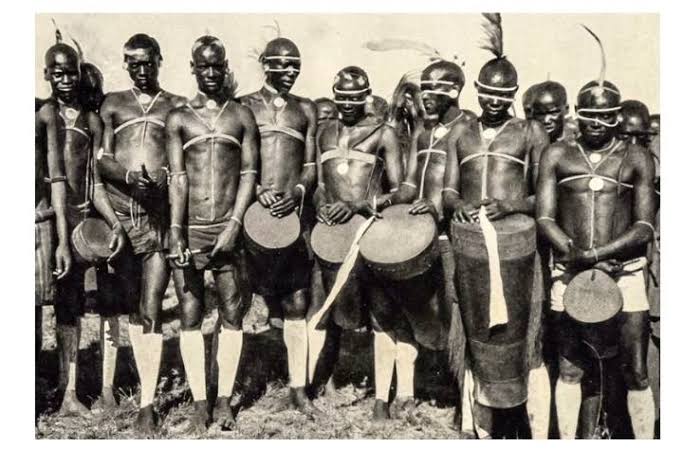
The Akambaà community boasting more than 5 million residents of Kitui, Machakos and Makueni are seeking the assistance of international and local lawyers to urgently conduct a legal assessment of about 12 claims against the British colonial authorities.
They are urgently seeking an initial legal assessment for a group claim against the UK Government for systematic environmental, economic, cultural, governance, and political destruction.
The group – led by Dr. Augustus Kyalo Muli, the National Patron of the Anzauni Clan – is saying this deprivation is as a result of British colonial policies 1893-1963, with ongoing harm through 2026.
In the 12 claims they have tabled before Leigh Day International Claims Team, Bosek & Co. Advocates, and the Kenya Human Rights Commission (KHRC) Legal Team Under the title: From Masters of Trade to Political Subjection 1893-2026, the group is seeking compensations similar to other legal successes made in the past.
“I am Augustus Kyalo Muli, National Patron of the Anzauni Clan, writing on behalf of the Anzauni Clan with over 400,000 members and a coalition of 21 other Akamba clans representing over 5 million people across Kitui, Machakos, and Makueni counties,” he wrote.
Leigh Day is a prominent UK-based law firm specializing in human rights, personal injury, clinical negligence, employment, and group claims, founded in 1987 by Sarah Leigh and Martyn Day.
According to Muli, the letter to the lawyers represents the initial assessment on the Akamba Group Claim, which involves more than 5M victims of colonial suppression, including the criminalization of the community’s local brew, Kaluvu.
“The Akamba are like fish out of water. From leaders and masters of trade and industry, the Akamba have been forced to be servants and subjects.
“British colonial policy removed us from our natural environment, destroyed every means of income, and abandoned us in semi-arid reserves with no chance of survival except subjection,” wrote Dr. Muli, describing this as the group’s core argument.
He proceeded to claim that the community is now a tool for vote seekers; locally and nationally to help other communities to win and lead.
Dr. Muli further claimed that this is because the Kamba no longer have the power or financial muscle to lead on their own.
“Kambas never wanted to be employed; the British forced us into employment by making it the only option after economic strangulation,” he stated.
He referenced a legal precedent and scale where Leigh Day secured an estimated Sh4 billion (£19.9M), including an apology for 5,228 Mau Mau claimants; the ongoing case filed by Bosek & Co. in 2022 for ∼100,000 Kipsigis/Talai; and Ogiek v Kenya 2022 where the African Court ordered land restitution.
“Our claim represents the largest potential claimant group to date,” Dr. Muli stated.
He claims in the letter that Akamba were masters of caravan trade controlling routes to coast before the colonialists arrived in East Africa, where even the modern roads/rail still follow 19thC Kamba caravan routes.
The Akamba,.he argues were wealthy, owning cattle, honey and wax from bee keeping; iron, and earned income from Kaluvu brewing. All these were made possible by a governed system through the Nzama councils under the Thome forums.
Under environmental exploitation of 1893-1963, Dr. Muli claims in the letter that the colonial authorities confined the community to ‘Kitui Native Reserve’ while rich agricultural and grazing lands were declared ‘Crown Lands’, lands open to Europeans only”.
The areas where the Kamba were pushed to, he argues have low rainfall of 500-800mm as compared to those declared crown lands of 1500-2000mm evapotranspiration.
“Soils shallow, acidic, low fertility. No cash crops possible — unlike tea/coffee highlands, further reflects the deprivation of the Akamba,” he says.
Another claim the community want the lawyers to assess urgently is the destruction of pastoral economy in the 1920s-1950s, and interference of caravan trade, where the British built railways over Kamba routes, then monopolized transport, effectively excluding the community from merchant economy.
There was also forced villagization of 1954-1960, when the colonial District Commissioner (DC) ordered burning of dispersed homesteads, destroyed the natural habitat of Akamba governance.
And as if that was not enough, the colonial government criminalized the community’s traditional brew, Kaluvu in the 1900s, setting a precedent to date.
“Brewing was banned to break ritual/economic systems regulated by the Nzama elders, which is still illegal in 2026,” he argues in the latter.
In April 2024, Dr. Muli in a constitutional petition which was captured by local press he sought a government decree to make Kamba traditional brews legal.
There were also other forms of colonialism where the locals were subjected to forced labor through martial race policy.
He is requesting the legal teams to carry out a joint initial assessment, advise the UK High Court to expedite the restitution on environmental/forced labor/political exclusion elements.
“I am also requesting the legal teams to confirm willingness to act no-win-no-fee given precedent and claimant numbers,” he wrote.
Dr. Muli has also proposed to the legal teams to start with 10 test claimants from Anzauni Clan, then expand., and also advise on consolidation of his 2024 petition to decriminalize Kaluvu, including restitution of the Makueni 5,048-acre case with this wider claim for economic plus political restoration.
“We have organised claimant registers and can mobilise witnesses. I am available for a call this week. Kindly advise earliest consultation date,” concludes Dr. Muli.
