
TECHNOLOGY | In the glow of laptops and the hum of recording gear, rural Kenya is no longer a spectator in the digital age—it is a creator, a competitor, and a storyteller rewriting its own future.
In the early hours of the morning, before the village stirs fully to life, a group of young people gathers at the edge of the local trading centre. The dew still clings to the grass, and the sun has yet to climb past the acacia trees, but already, their energy is unmistakable. They are not waiting for a matatu to town or lining up for casual work. They are here for something different. Something new. They have come to create.
Inside the converted community hall, the hum of a laptop fills the air. A young woman adjusts a microphone on a wooden desk. Her friend checks the camera’s focus, while another scrolls through a script on a phone with a cracked screen. They are recording a podcast—raw, real, and deeply rooted in the stories of their village. A year ago, none of them would have imagined this possible. But now, things have changed.
Across Kenya’s rural heartland, from Kisii to Kitui, from Vihiga to Voi, something is shifting. Villages once silenced by distance and disconnection are coming alive—not through brick and mortar, but through light, sound, and signal. The arrival of Studio Mashinani and public Wi-Fi has opened a window into a world that for too long felt just out of reach.
Makeshift spaces
Where idle afternoons once lingered and dreams were spoken in whispers, now songs are being recorded, skits filmed, and online gigs submitted before sunset. Young people who once stood in the shade of kiosks wondering what the future held now gather in makeshift spaces to create, to tell stories in their own voices, and to learn how to edit, narrate, publish, and earn.
Studio Mashinani, a government initiative designed to decentralise creative infrastructure, has sparked a quiet revolution. With basic equipment, training, and workspace, these studios have become catalysts for confidence and self-trust. They have not only given rural youth tools but also reignited their belief that their voices matter. And then came the connection.
The spread of public Wi-Fi into rural Kenya may be less visible than a new road or dispensary, but its impact is profound. According to the Communications Authority of Kenya, by 2024 more than half of rural public institutions—including schools and libraries—had access to free or affordable Wi-Fi.
For the first time, young people in villages can access the internet without barriers. No longer reliant on costly mobile data or long treks to cybercafés, they now sit under trees or beside kiosks uploading content, attending virtual workshops, or pitching for digital jobs through Ajira Digital—a government-backed platform that links skilled Kenyans to the global gig economy.
This shift is no accident. It is part of the government’s broader vision under the BETA Programme, a national strategy anchored on four pillars: Business, Education, Technology, and Arts. Through BETA, rural youth are being intentionally targeted, their challenges acknowledged, and their creativity recognised as both cultural and economic capital.
At the forefront of this transformation is Stephen Isaboke, Principal Secretary in the State Department for Broadcasting and Telecommunications. Deeply committed to leveraging technology for inclusive growth, he has championed the rollout of Studio Mashinani and public Wi-Fi as tools to empower young Kenyans in every corner of the country.

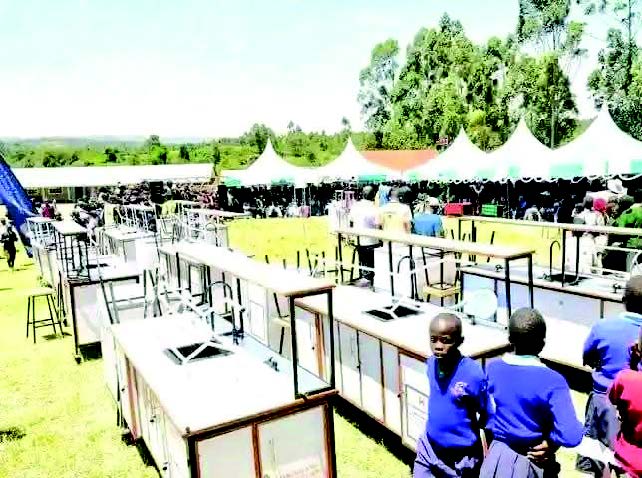
Government launching a digital hub. PHOTO | COURTESY | TRBN |
Leadership
Under his leadership, the government has prioritised not only infrastructure but also mentorship and digital skills training, ensuring young people have the knowledge and platforms to turn creativity into opportunity. Stephen understands what it means to have potential locked away for lack of the simplest tools. He believes no youth should be forced to leave home in search of work—the opportunity, he insists, must come to them.
Every day, more young people are turning creativity into careers. Some record music; others design graphics, run blogs, edit wedding videos, or work remotely for clients they will never meet in countries they will never visit—and earn decent incomes. Their work is being monetised, their content shared, their skills sharpened—not in Nairobi or Mombasa studios, but in rooms with cracked floors and handwritten signs, powered by vision and free Wi-Fi.
The numbers give weight to this movement. Each year, more than 800,000 young Kenyans graduate into a job market that can only absorb a fraction of them. Data from the Kenya National Bureau of Statistics shows that youth unemployment remains high at about 22.3% nationally, with rural youth facing even stiffer odds. Formal jobs remain elusive especially in rural areas where options are few.
But digital platforms like Ajira Digital and support programmes such as KYEOP (Kenya Youth Employment and Opportunities Project)—which has already reached over 155,000 youth and helped create more than 125,000 jobs—are enabling young people to carve out their own paths. The upcoming NYOTA Project, targeting 800,000 more youth, promises to deepen this impact and broaden access further.
Global students tutor
Where a sense of being left behind once lingered, now pride is taking root. A boy in Siaya no longer explains why he stayed in the village; he shows the music video he shot, edited, and shared with the world. A girl in Baringo, once mocked for staying home after Form Four, now tutors global students online in maths and earns more than her siblings in town. These stories are no longer rare—they are signs of a system beginning to work, not perfectly, but with purpose.
In a village in Western Kenya, the sun begins to set. A small group of youths wraps up a shoot outside the local shopping centre. They laugh as they review footage, adjusting lighting, critiquing sound, debating whether to reshoot a scene. Around them, curious villagers look on.
KENYA’S DIGITAL CREATIVE SHIFT
Government initiative decentralising creative infrastructure with basic equipment, training, and space. By 2024, over 50% of rural schools and libraries had free or affordable Wi-Fi (CAK data). Ajira Digital: Platform linking youth to online jobs globally. KYEOP: Reached 155,000+ youth, created 125,000+ jobs. NYOTA Project: Targets 800,000 youth for digital skills and opportunities. Youth unemployment: Stands at 22.3% nationally, higher in rural areas (KNBS). BETA Programme: National strategy built on Business, Education, Technology & Arts pillars. Impact: Rural youth now producing music, podcasts, films, graphics, and earning through digital gigs—without leaving their villages.
Change your thoughts, you change your world
