
By ERIC JUMA
The national government, in partnership with the Water Services Regulatory Board (WASREB) and the Council of Governors, is seeking to establish why counties have been slow to implement the 2019 rural water guidelines.
The guidelines were developed to strengthen the management and operations of rural water schemes, which continue to face numerous challenges across the country.
The initiative seeks to identify gaps hindering the implementation of the guidelines while documenting challenges affecting the growth and sustainability of rural water schemes in eight counties.
Since the regulations were introduced in 2019, implementation has reportedly remained slow in several counties, frustrating efforts to improve the management and delivery of rural water services.
The guidelines were intended to address persistent challenges facing rural water schemes, but their implementation has yielded mixed results.
Some counties have established rural water service providers, while others have engaged private operators. In other areas, the schemes remain under community management, with many continuing to struggle.
World Bank water specialist Cliff Nyaga said the programme was targeting eight of the 47 counties to assess the performance of rural water schemes and identify ways of improving their operations.
“Siaya is the sixth county we have visited, and it was targeted because of the existence of a good number of rural water schemes. Our purpose is to focus on rural water operations and maintenance and determine what should be done differently by examining the WASREB guidelines and experiences on the ground,” Nyaga said.
He said the findings would be combined to develop a toolkit and supplementary materials that counties could adopt to improve the performance of the schemes.
“Traditionally, rural water schemes were managed by communities, but their performance stagnated because of operational and management challenges. In many cases, communities collected money without proper accountability. That is a challenge county governments must address,” he added.
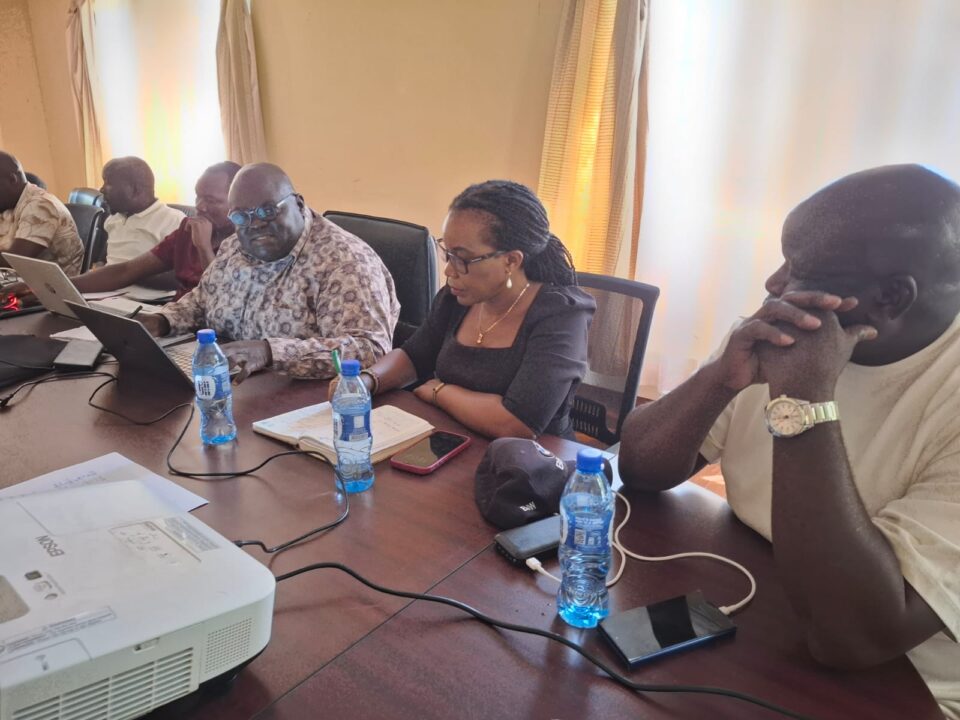
Nyaga spoke during a water stakeholders’ meeting chaired by Siaya County Water Chief Officer Judy Oyugi.
He was accompanied by water consultant Arthur Omollo, who said the team would profile the schemes according to their operational status after completing the assessment.
Omollo said a conference bringing together stakeholders from the eight targeted counties would be convened to share experiences and identify best practices that could be replicated elsewhere.
The counties targeted by the programme include Makueni, Laikipia, Kitui, Tharaka Nithi, Siaya, Turkana and Mandera. The eighth county was not identified in the information provided.
Omollo listed some of the challenges documented in the five other counties visited, including high levels of non-revenue water, inadequate water supply and the concentration of water service providers in urban and peri-urban areas, leaving rural communities with limited access to safe water.
He urged county water officials to accelerate the adoption of the WASREB guidelines and review existing policies and legal frameworks to ensure they support effective rural water service delivery.
“Water officials in the counties should establish whether a water policy and the Water Act, 2016, are in place and ensure the relevant provisions are domesticated to address Siaya’s needs in rural water service provision,” Omollo said.
He added that counties should assess their water assets and technical operations, noting that water service providers required investment in infrastructure, operations and maintenance.
He said it was also necessary to establish the production capacity of existing water facilities to determine whether they could adequately meet demand.
Oyugi said the county government was working on a water policy and master plan to improve water service delivery.
Siaya County Director of Water Henry Juma welcomed the assessment, saying the initiative would help revive struggling rural water schemes and improve their efficiency.
Juma said Siaya-Bondo Water and Sanitation Company (SIBOWASCO) was the only licensed water service provider in the county, managing nine water schemes, including Penwa Rural Water Scheme. He added that the county government owned 99 per cent of the company’s shares.
However, he said the company was facing financial constraints that had undermined its ability to supply water effectively to residents.
